
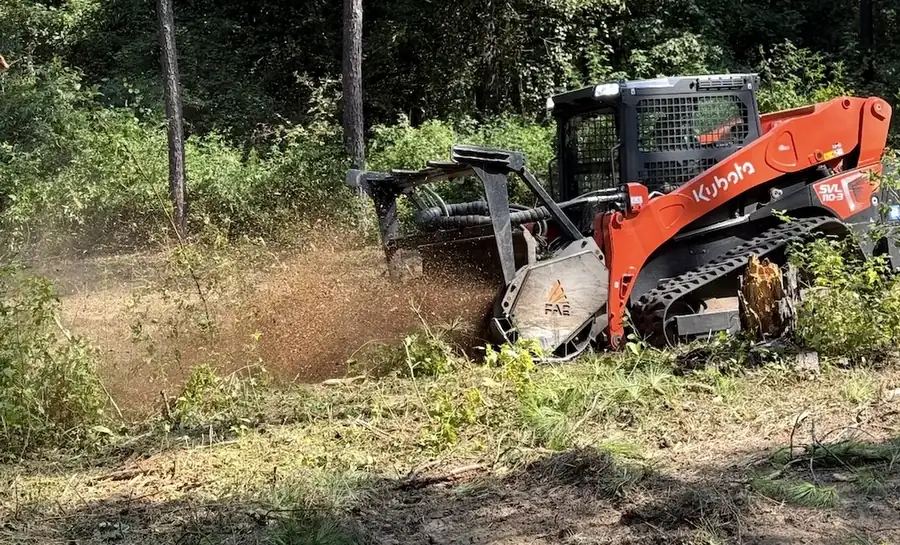
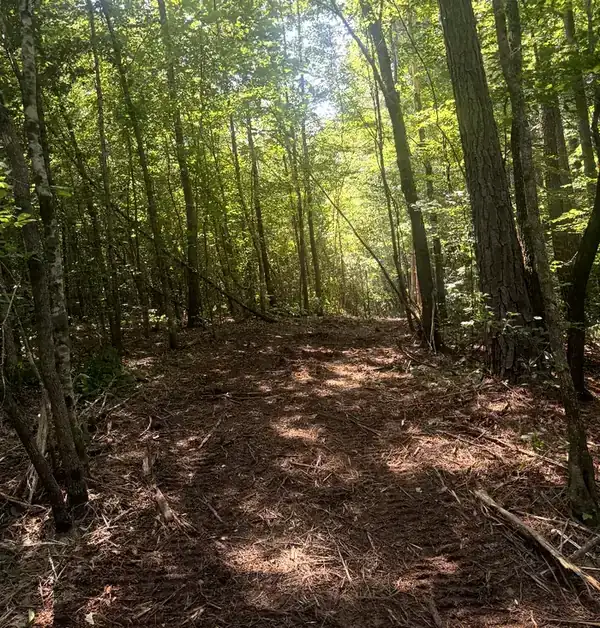
Forestry mulching is the fastest way to knock down privet, kudzu and thick underbrush and get the ground back, because one machine grinds it where it stands. It does not kill them, since both sprout again from the root, so plan the follow-up from the start.
What you are up against
Chinese privet is the worst offender in west Alabama. It fills a creek bottom faster than anything else that grows here. Alabama Extension puts that down to copious seed production, birds spreading the seed, and prolific sprouting from roots and stumps. Kudzu comes next. Extension explains that it grows back from root crowns, the knots of buds at or just under the soil where a vine has rooted. Cut the vine and the crown is still alive. Around them is everything else: briars, greenbrier, honeysuckle and sweetgum whips. Most of that sprouts from the root too, though less fiercely.
What mulching does
A mulching head is a steel drum with carbide teeth that grinds standing brush and small trees where they stand and leaves them on the ground as chips. On a privet thicket, that turns a wall you cannot walk through into open ground. It works under trees. The head goes below the canopy and around the trunks, so the hardwood and pine you want to keep stay standing. What you get back is woods you can walk, hunt and see across. That job is our underbrush removal service. It also keeps the soil. Nothing is scraped off, and the chips cover the ground through the next hard rains.
What mulching leaves in the ground
The roots. Extension is blunt about this for privet: skid steer mulchers can quickly grind dense stands to the ground, but they do not remove the root system, and sprouting will inevitably occur. Kudzu is the same story from the root crown. So one pass is a reset, not a cure. Anyone who promises a permanent kill from a single visit is guessing. What mulching gives you is ground you can use right now, and plants cut down small enough that a follow-up can reach them. That is a real gain on land you could not walk across the week before.
What grows back, and how fast
On heavy privet or kudzu, expect green sprouts the next growing season and real regrowth within a year or two if nothing else is done. Extension also notes a flush of new privet seedlings in the year after intensive control, which is why it recommends monitoring and spot treatment afterward. On lighter mixed brush it can be several years before the ground needs attention. A second mulching pass is much quicker and cheaper than the first, because the big material is already gone and the machine is only cutting sprouts. Land goes back fast here, so put the follow-up on the calendar the day the first pass is finished.
Follow-up choices
There are three, and they can be combined. Mulch or mow again: Extension notes that mowing which takes off most of the kudzu leaf area every month of the growing season for a few years can weaken or kill a stand, which is a lot of mowing. Treat the regrowth: Extension gives late fall to early winter as the window for foliar treatment of privet, and late summer through early fall as the optimal period for kudzu, and says older kudzu crowns may need repeated treatment for three to five years. Put the ground to work: grass that is mowed and pasture that is grazed give brush less room. For product and rate, talk to your county Extension office.
When clearing is the better answer
If the ground is going to be a house site, a pad or a field you will plow, mulching is the wrong tool. Clearing pulls the roots and root balls out with the dozer's root rake and the excavator, which removes most of the sprouting problem in that spot. It costs more and it leaves bare dirt, so it only makes sense where you need bare dirt. Our guide to forestry mulching vs bulldozing goes through the choice by what the land is for. On most properties the answer is some of each: clear where you build, mulch everywhere else.
Old fields and fence rows
Pasture that has been left a few years goes to sweetgum, briars and privet. Mulching takes the woody growth off without scraping the topsoil, and then the field needs grazing or mowing to stay in grass. See pasture reclamation. Fence rows are where privet starts, because birds sit on the wire and drop the seed. Cleaning the fence line on the same visit slows it coming back into the field. If the old wire is still in there, say so before the machine arrives so the operator can work accordingly. A line wide enough to drive is easier to keep than one cut narrow.
Common Questions
Does forestry mulching kill privet?
No. It grinds the plant to the ground, but Alabama Extension says mulchers do not remove the root system and sprouting will follow. Mulching makes the ground usable and cuts the privet down small enough for follow-up treatment, mowing or grazing to keep it from taking over again.
How do you get rid of kudzu for good in Alabama?
With patience. Kudzu regrows from root crowns, and Alabama Extension says older crowns may need repeated treatment for three to five years. Mulching the vines first opens the patch so the crowns can be reached. After that it takes repeated mowing, treatment of the regrowth, or both, until the crowns give out.
Will mulching privet hurt the trees I want to keep?
The mulching head works below the canopy and around the trunks, so the timber you are keeping stays standing. The operator works at a pace that lets the bark be seen and missed. Mark the trees you care most about, or walk the ground with us and point them out before the machine starts.
What to Do Next
Tell us where the land is, about how many acres, and what has taken over. Call or text (205) 535-6376 and we will look at it and price the first pass, free. If your project needs more than what is described here, tell us about it.
See our underbrush removal page or call or text (205) 535-6376.