House Pads & Building Pads in West Alabama
House pads cut, filled and compacted to grade, so your slab crew shows up to something they can work on instead of something they have to fix first. Built where the plans put it, with the water running away.
House Pads, Start to Finish
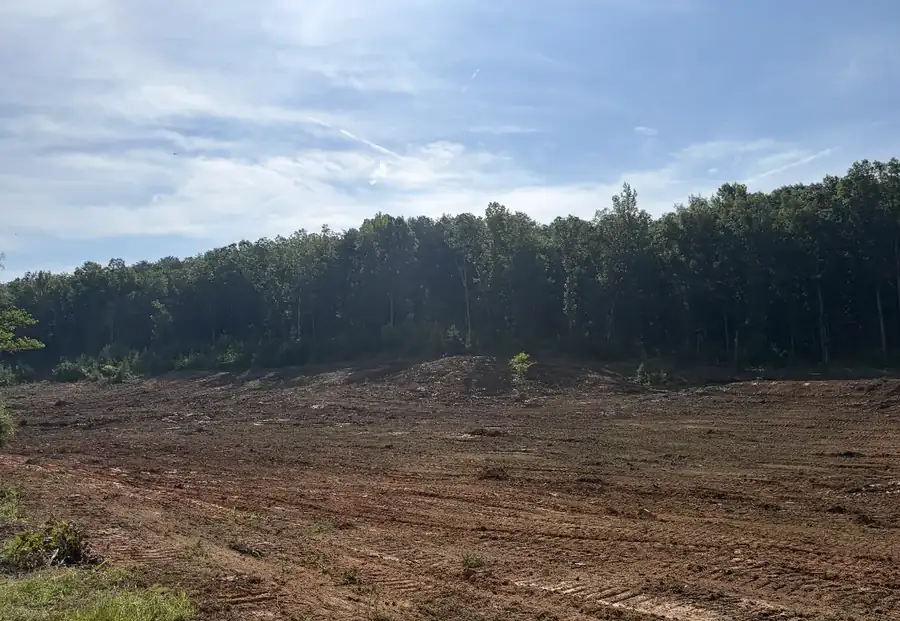
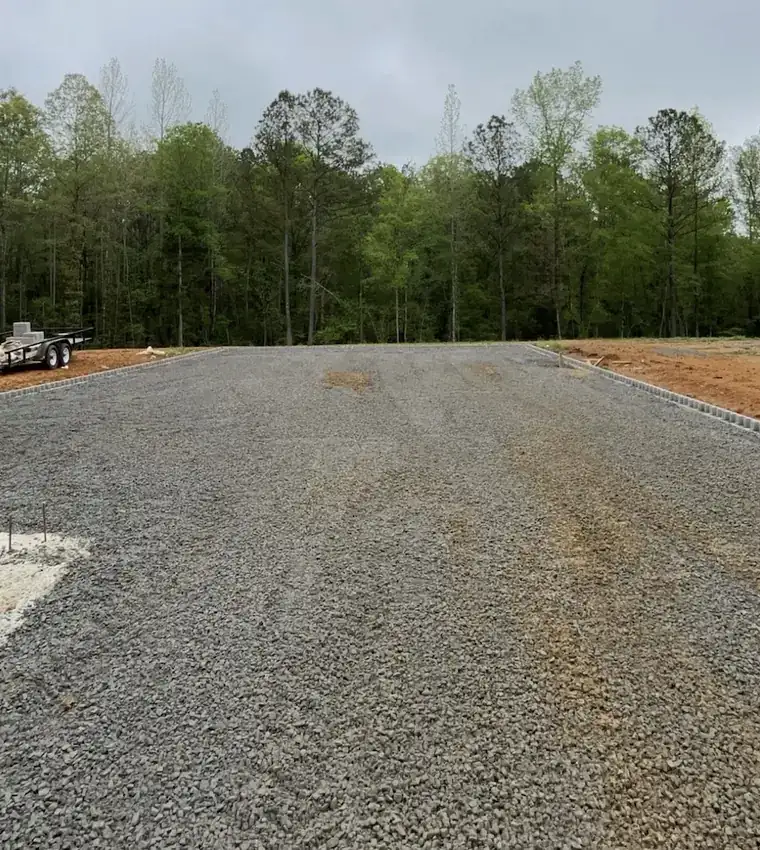
A pad is not just a flat spot. It has to sit where the plans say, at the elevation the plans say, big enough to work around, with the fall running away from the building in every direction that matters. Get that wrong and you find out when the footing crew shows up, or the first time it rains hard. Get it right and nobody thinks about the pad again.
Most pads here are part cut and part fill, because very little of this country is flat. The cut side is taken down to firm ground. The fill side is built up in lifts and compacted as it goes, not dumped in one push and hoped over. Fill that was not compacted settles, and a settled pad under a slab is an expensive problem that shows up later as a crack.
Down South builds pads with a Cat dozer, an excavator and compact track loaders, all our own, across Fayette, Walker, Tuscaloosa, Marion, Lamar, Pickens, Cullman and Winston counties. We are based in Berry. Estimates are free and priced off the property after a look. Call or text (205) 535-6376 with the size of the building, whether you have plans or stakes, and how a trailer gets to the site.
What goes into a pad
- Site cleared and stumps taken out
- Pad built to your plans or stakes
- Cut side taken down to firm ground
- Fill placed in lifts and compacted
- Pad graded so water runs away
- Spoil spread, stacked or hauled
Built where the plans put it
If you have plans or a surveyor's stakes, we build to them. If you do not, we set the pad off the existing grade so water runs away from the building and the drive comes in at a workable slope, and we tell you what we did. Think about more than the footprint. The pad needs working room around it for the framing crew and the concrete truck. The septic field, the well and the power each need their own place, and the layout on your septic permit shows which ground the machines should stay off. Sorting that out before dirt moves saves a second trip.
Cut, fill and compaction
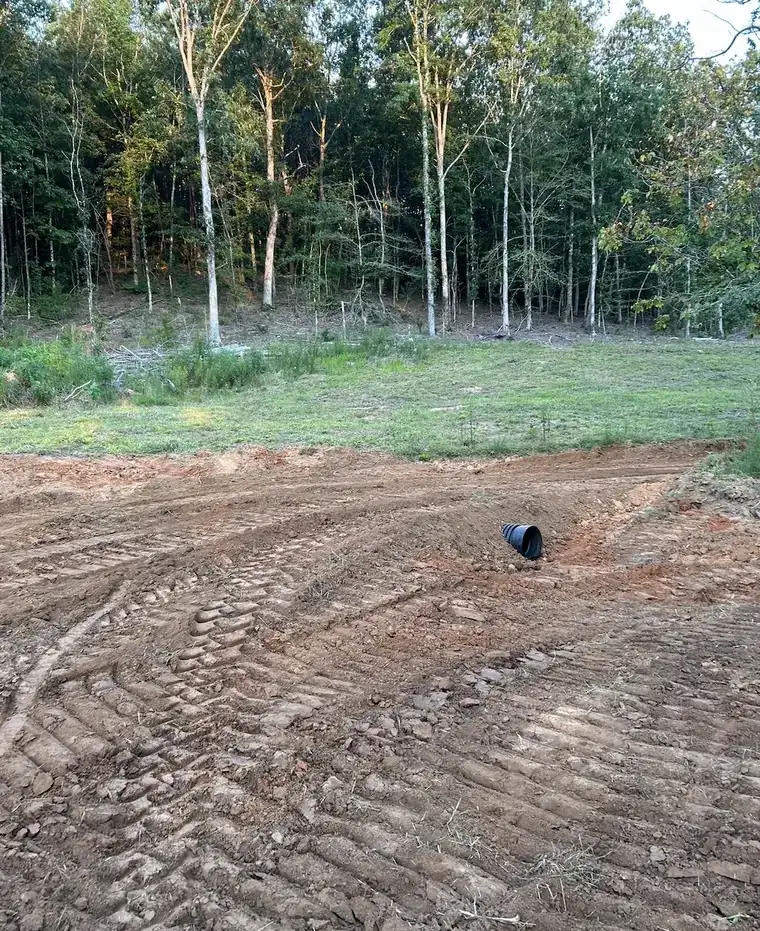
This is the part you cannot see when it is done, and the part that matters most. Roots and stumps come out first, because roots left under a slab rot and settle. The cut side goes down to firm ground. The fill side goes up in lifts, each one packed before the next is placed. Red clay packs well when the moisture is right and badly when it is soaked, so a wet week can mean waiting, and waiting is the right call. Spoil that comes off the cut gets spread, stacked or hauled, whichever you want. It does not get left in a pile in the middle of your yard.
Pads for more than houses
Shop and barn pads, mobile home and manufactured home pads, pole barn sites, equipment and laydown pads, and shipping container pads are the same work with a different footprint. Mobile home sites are common out here, and the pad, the drive in and the drainage around it often go in on one trip. If an old home is on the spot now, mobile home removal and the new pad can be one job. For outbuildings, see shop and barn pads. Tell us what is going on the pad, because a slab, piers and a gravel floor each ask something different of the dirt.
From woods to pad, in order
On a wooded lot the pad is the middle of the job, not the start. First comes clearing, with the stumps out. Then the drive is roughed in so trucks can reach the site. Then the pad is cut, filled and compacted, and the drainage around it is shaped. One outfit doing all of it means nobody is waiting on anybody. The full sequence is in clearing land for a house or mobile home pad in Alabama, and the things that raise or lower the number are in what moves house pad cost. Once the pad is done, your builder or concrete crew takes it from there.
Real Job Photos
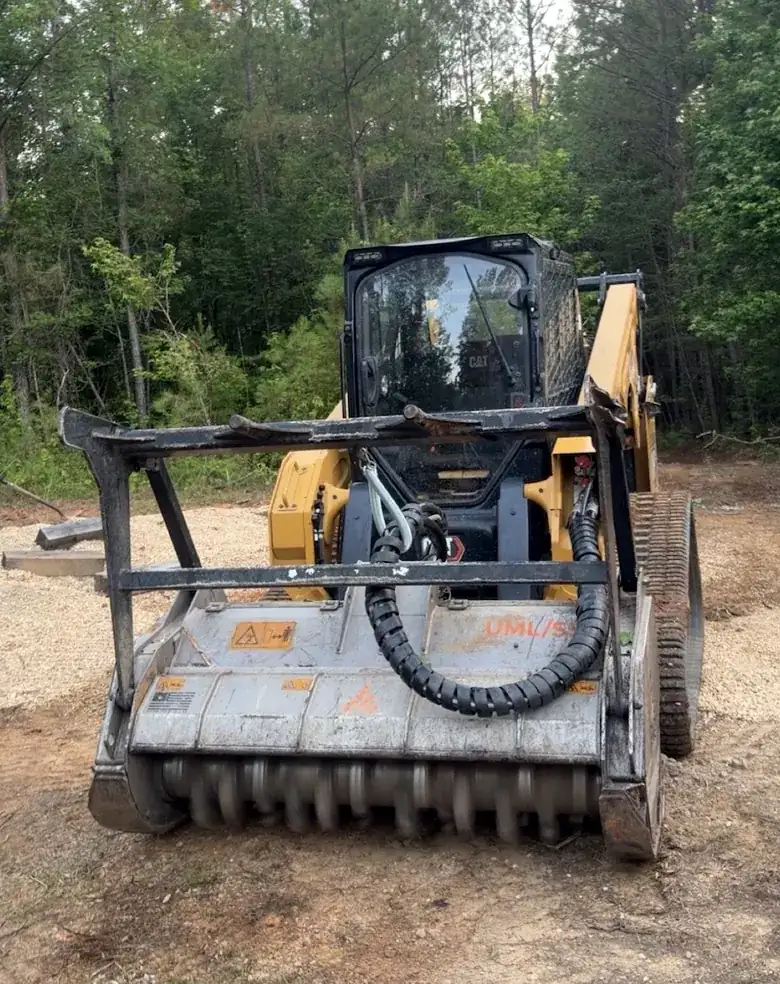
Phone pictures from real jobs, captioned with what they show. See more recent work.
Can you build a pad for a mobile home or manufactured home?
Yes. It is common work out here. Usually it is the pad, the drive in and the drainage around it in one trip. Tell us the size of the home, which way it will face, and whether the power and septic locations are already set. If an old single-wide or double-wide is sitting on the spot now, taking it down and building the new pad can be one job.
Who sets the elevation of a house pad, the builder or the dirt contractor?
Whoever you want. If you have plans or a surveyor's stakes, we build to them. If you do not, we set the pad off the existing grade so water runs away from the building and the drive comes in at a workable slope, and we tell you what we did. If your lender, builder or city requires a set elevation, find that out before the dirt moves.
What happens to the dirt that comes off a house pad cut?
Your call. It can be spread somewhere useful, such as a low spot in the yard or along the drive, stacked out of the way for later, or hauled off. Say which before the work starts and it saves everybody a second move. Good dirt from the cut often becomes the fill on the low side of the same pad.
How long should a dirt pad sit before a slab is poured?
A pad built in lifts and compacted as it goes is made to be built on, not left to settle on its own. How soon concrete can go down is a call for your builder, your concrete crew and any engineer or inspector on the job, and it depends on the fill depth, the dirt and the weather. Ask them before you set a pour date. Ask us how the pad was built so they can decide.
Do I need fill dirt brought in for a house pad on a slope?
Often the site supplies its own. On a slope the uphill side is cut and that dirt becomes the fill on the downhill side. Whether yours balances depends on how steep the ground is, how big the pad is and how high it has to sit. We work that out when we look at the site and tell you before you commit. If your pad needs more than the site can give, tell us and we will talk it through.
How a Job Runs
Tell Us What You Have
Call, text or send the form. County, rough acreage, what is growing on it and how a truck and trailer gets in.
We Look at the Ground
Close by, we come and look. Farther off, we can go over it with you on satellite first, then see it on the ground before the work starts.
A Number to Plan Around
Estimates are free and priced off the property. Small jobs carry a minimum, and you hear the figure before you commit.
The Machines Go to Work
We settle what comes out and what stays. Mark the trees you want kept, or walk it with us and point them out.
Finished, Not Just Knocked Down
Holes filled, ground pulled back to grade, and the fall set so water leaves the site instead of standing on it.
House Pads Near You
Based in Berry, in Fayette County. Eight west Alabama counties. Pick your county or town, or call or text and ask.
Towns
Pages for your town
Specific house pads jobs
More services
Driveways
Gravel drives and access roads cut in, based, crowned and ditched so they last.
DetailsHouse Demolition
Old houses and outbuildings torn down, hauled off, slab out, lot filled and graded.
DetailsMobile Home Removal
Old single-wides and double-wides torn down on site, hauled off, and the ground left graded.
DetailsNeed House Pads?
Call or text, or send a few details. Estimates are free and priced off the property.