
Gravel Driveways & Access Roads in West Alabama
Drives and access roads cut in, based, crowned and ditched so the water leaves instead of running down the middle of them. New drives, long farm roads and lake lot access across eight west Alabama counties.
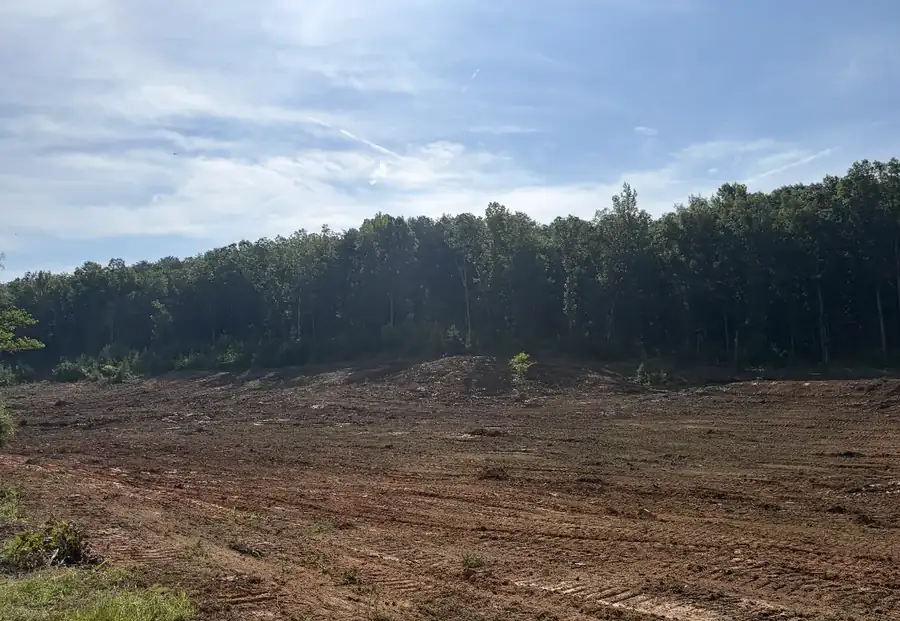
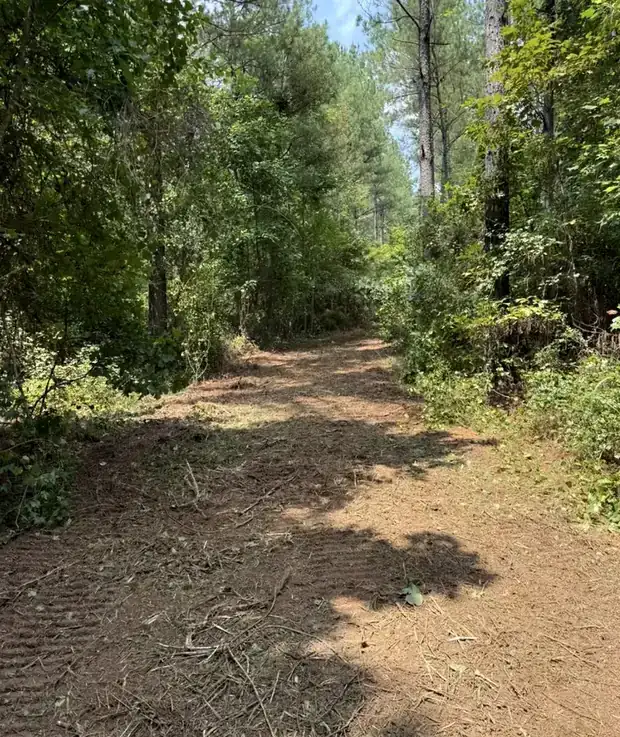
Driveways, Start to Finish
Every gravel drive that fails, fails the same way: water got on it and had nowhere to go. It runs down the wheel tracks, takes the fines with it, and leaves you with a washboard and a gully. Then somebody dumps more rock on it, and the next storm carries that off too. Adding more gravel to a drive with no crown just gives the water more to carry off.
A drive is a drainage structure. The fix is built in from the start: a crown in the middle so water sheds to the sides, ditches either side to carry it away, culverts wherever it has to cross, and a base course under the surface gravel so the top layer is not doing structural work it was never meant to do. Build it that way once and the rock stays where you paid to put it.
We cut in driveways and access roads with our own Cat dozer, excavator and compact track loaders, working out of Berry across Fayette, Walker, Tuscaloosa, Marion, Lamar, Pickens, Cullman and Winston counties. Estimates are free and priced off the property after a look. Call or text (205) 535-6376 and tell us how long the drive is, what it crosses, and what has to drive on it.
What a driveway job covers
- Route cleared and stumps taken out
- Roadbed cut and shaped to grade
- Crown built so water sheds off
- Ditches cut along both sides
- Culverts set where water crosses
- Base rock and surface gravel placed
New drives, from woods to gravel
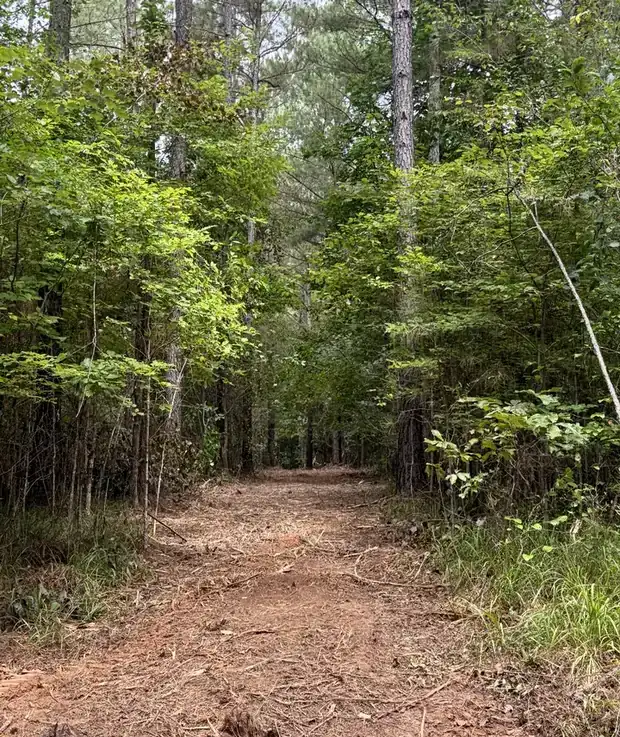
A new drive starts with the route. The shortest line is not always the right one: a drive that runs straight up a hill turns into a creek bed, while one that angles across the slope sheds water and climbs easier. We clear the route, take the stumps out, cut the roadbed and shape it. Then come the ditches, the culverts, the base and the surface. The usual build is a crusher run base with a surface layer over it, and the exact rock depends on the soil and what is driving on it. You can have the rock delivered or ask us about bringing it in. For what moves the number, see gravel driveway cost in Alabama.
Long drives, hollows and hills
Rural drives out here often run a quarter mile and cross a hollow or two on the way. Water picks up speed on a long run, so those drives need turnouts to break the run of water before it builds enough force to cut. Every low spot where water crosses needs a pipe sized for the water above it. See culvert installation for how those are set. And the grade has to work for a delivery truck, a concrete truck and a fire truck, not just your own pickup. That goes double on steep lake lots, where the drive is often the hardest part of the build.
Drives that already wash
A drive that ruts and gullies nearly always comes down to crown and ditches. The middle has worn lower than the edges, the ditches have filled in, or a culvert has silted shut and the water has taken the road instead. The repair is to reshape the roadbed, put the crown back, reopen the ditches, clear or reset the pipe, and then add rock where it is needed. Rock goes on last, not first. That work has its own page: gravel driveway repair and regrading. If you want to understand the cause before you call, read why your gravel driveway keeps washing out.
Where the drive meets the road
The end of your drive sits on somebody else's right of way. ALDOT permits driveway turnouts onto state highways, and its permits start in the district offices, so ask your ALDOT district office about a drive onto a state route. For a county road, ask the county engineer. Inside a city, ask the city. Find out what pipe and what kind of tie-in they require before anything is set, because that costs far less to learn first than after. Nothing gets dug until the public utility lines are located. A locate request through Alabama 811 is free and is required by law before excavation.
Real Job Photos
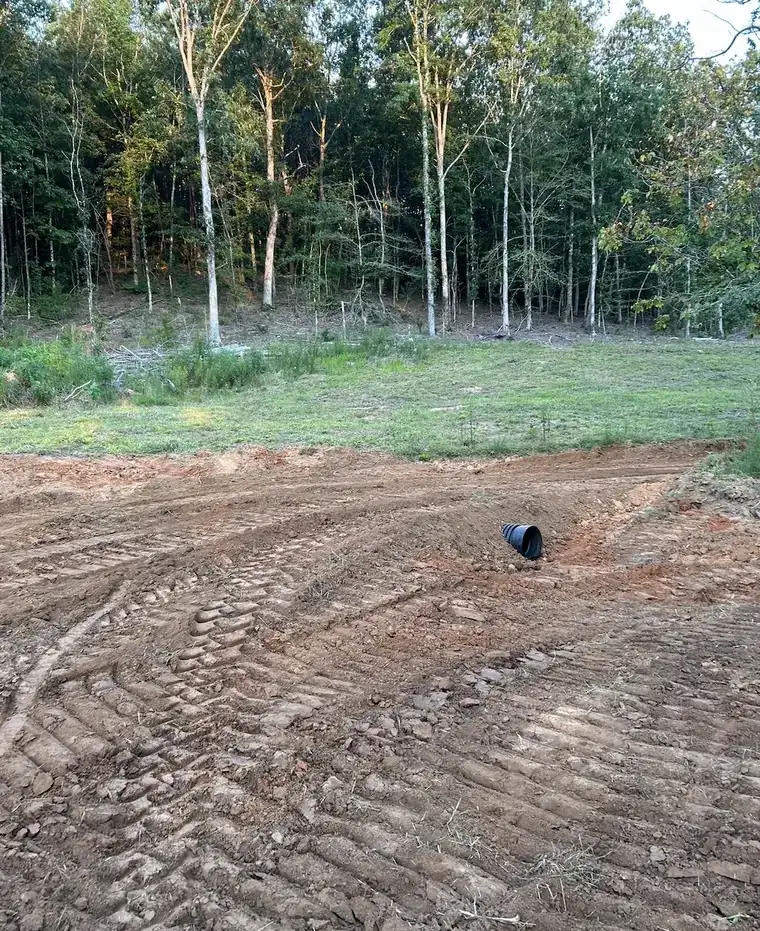
Phone pictures from real jobs, captioned with what they show. See more recent work.
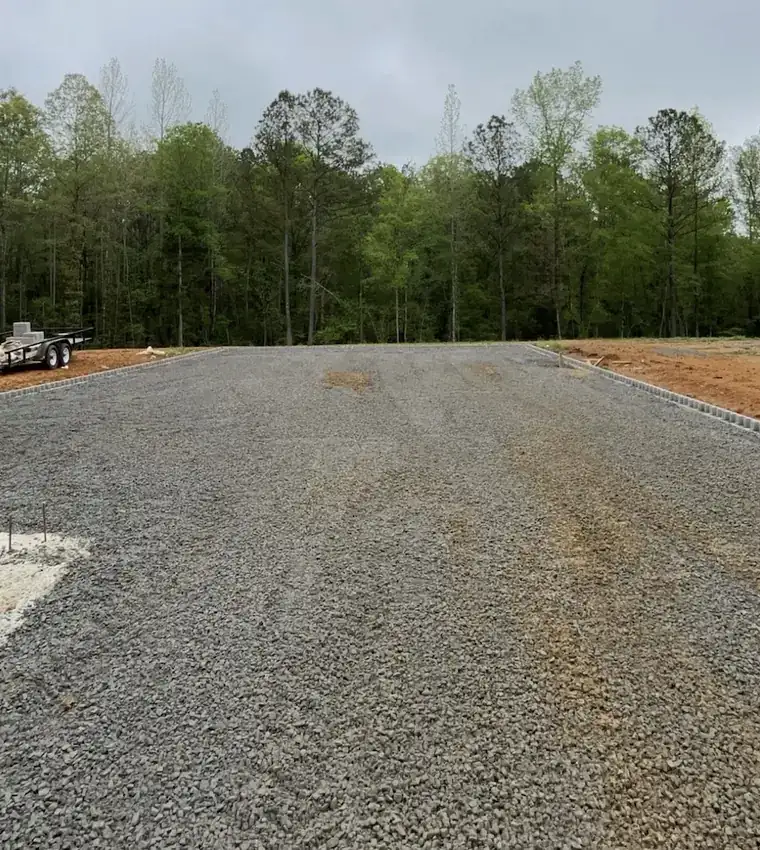
What gravel do you use for a driveway on red clay?
Usually a crusher run base with a surface layer over it. Crusher run has fines in it, so it packs tight once it is shaped and driven on. The exact mix and depth depend on the soil under it and what is driving on it: a car, a loaded farm trailer and a concrete truck ask different things of a road. The rock can be delivered to the site, or you can ask us about bringing it in.
Can you fix a gravel driveway that keeps washing out?
Usually, yes. It nearly always comes down to crown and ditches. The roadbed is reshaped so water sheds to the sides, the ditches are reopened, and any pipe that has silted shut is cleared or reset. Then rock goes on where it is needed. Adding more gravel to a drive with no crown just gives the water more to carry off.
Do you set the culvert at the end of a driveway?
Yes. The pipe is sized for the water above it, bedded right, covered so it can carry traffic and left with both ends open. Before it goes in at the road, ask whoever owns the right of way what they require: ALDOT on a state highway, the county engineer on a county road, or the city inside city limits.
Can you build a driveway up a steep hill or on a lake lot?
Often, yes. The route matters more than anything. A drive that angles across the slope climbs easier and sheds water, where one that runs straight up becomes a ditch. Steep drives need turnouts to break the run of water, a solid base, and a grade a loaded delivery truck can climb. We look at the lot and tell you what route works before any trees come down.
Do I need a permit to connect a driveway to a county road or state highway in Alabama?
Ask before you build. ALDOT permits turnouts from private property onto state highways, and its permits start in the district offices. For a county road, the county engineer's office is the place to ask, and inside a city it is the city. Each can tell you what pipe and tie-in it requires. We build to what your permit says. Rules differ from one county and city to the next, so check for your own road.
How a Job Runs
Tell Us What You Have
Call, text or send the form. County, rough acreage, what is growing on it and how a truck and trailer gets in.
We Look at the Ground
Close by, we come and look. Farther off, we can go over it with you on satellite first, then see it on the ground before the work starts.
A Number to Plan Around
Estimates are free and priced off the property. Small jobs carry a minimum, and you hear the figure before you commit.
The Machines Go to Work
We settle what comes out and what stays. Mark the trees you want kept, or walk it with us and point them out.
Finished, Not Just Knocked Down
Holes filled, ground pulled back to grade, and the fall set so water leaves the site instead of standing on it.
Driveways Near You
Based in Berry, in Fayette County. Eight west Alabama counties. Pick your county or town, or call or text and ask.
Towns
Pages for your town
Specific driveways jobs
Culvert Installation
Driveway and field-road culverts set, bedded, backfilled and covered.
DetailsDriveway Repair
Rutted and washed gravel drives regraded, crowned, ditched and re-rocked.
DetailsMore services
House Demolition
Old houses and outbuildings torn down, hauled off, slab out, lot filled and graded.
DetailsMobile Home Removal
Old single-wides and double-wides torn down on site, hauled off, and the ground left graded.
DetailsRetaining Walls
Block and boulder walls that hold a bank, built on a packed base with drainage behind.
DetailsGravel Driveways where you are
Each town has its own page: what the ground is like there, who issues the permit, and what Down South gets called for most.
Need Driveways?
Call or text, or send a few details. Estimates are free and priced off the property.