
Fence Line & Survey Line Clearing
Fence lines, survey lines and property lines cut straight, clean and wide enough to work in. Brush, briars, privet and saplings are mulched in place so you can pull wire, set posts and drive the line.
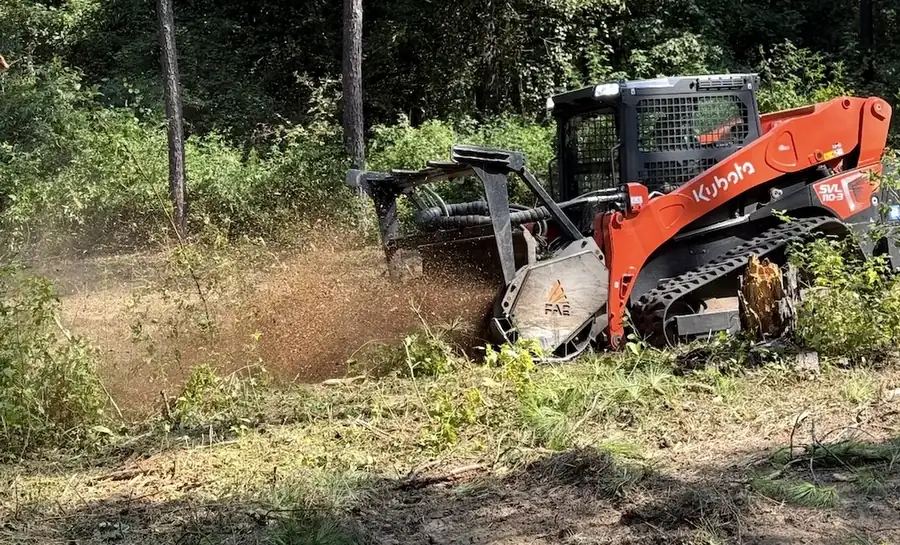
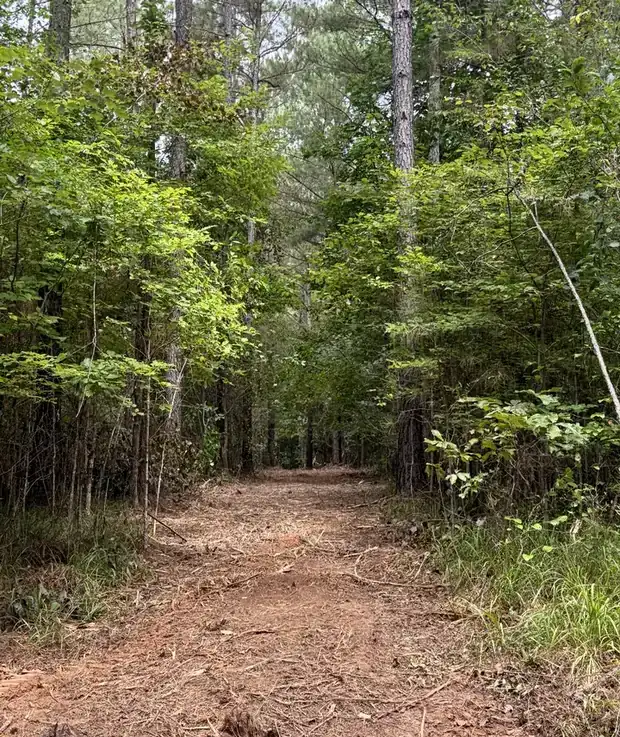
Fence Line Clearing, Start to Finish
A fence row left alone turns into a hedge, then a tree line. Privet and sweetgum come up through the wire, briars and honeysuckle tie it together, and sooner or later a pine lays down across it and takes the fence with it. By then you cannot see the wire, cannot get a truck down it, and cannot build a new fence until the old row is gone. A grown-over property line is the same story with a different ending: nobody can find the pins, and nobody is sure whose trees are whose.
This is mulcher work. A tracked loader with a mulching head runs the line and grinds what is standing, up to roughly six to eight inches on the stump, into chips on the ground. No piles, no burning, no hauling. Most people want eight to twelve feet, enough to get a truck or a tractor down. Wider costs more but makes the line easier to keep. Trees too big for the head, and stumps that have to come out of the post line, are handled with the excavator or the dozer.
We run out of Berry in Fayette County and take fence line and survey line work across Fayette, Walker, Tuscaloosa, Marion, Lamar, Pickens, Cullman and Winston counties. Estimates are free. Tell us how long the run is, how wide you want it, what is growing on it, whether there is old wire in it, and where a truck and trailer can get to it. Call or text (205) 535-6376. For utility easements and longer corridors, see right-of-way and survey line clearing.
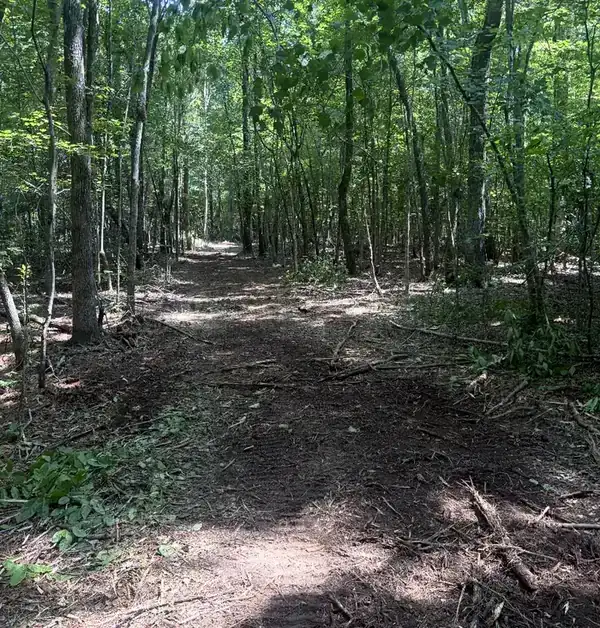
What fence line clearing covers
- Grown-up fence rows mulched back
- Survey and property lines opened to the flagging
- Lines cut wide enough for a truck
- Rows cleared with old wire in them
- Oversize trees and stumps taken out by machine
- Chip floor left flat enough to drive
Old fence lines
A fence line that has grown shut is one of the quicker jobs there is and one of the most useful. Clearing it back gives you room to pull wire, set posts and drive the line to check it, and it stops the next round of trees growing into the fence and taking it down. If there is old wire in the growth, tell us. It does not stop the job, but it changes how the operator works, because barbed wire and T-posts are hard on a mulching head. If the old fence is coming out anyway, say that too. A row with the wire already pulled clears faster, and faster is less money.
Survey and property lines
If you have had a survey done, a cleared line makes the pins findable and the boundary obvious to everybody either side of it. Bring the plat or the flagging and we cut to it. The line itself comes from your surveyor, and we clear to the line you show us. If the pins are lost or the neighbors do not agree where it runs, get the survey first and the clearing second. It is also worth a word with the neighbor before the machine shows up. A clean line is easier on everybody when nobody is surprised by it, and some neighbors will split the cost of a row they share.
What moves the price of fence line clearing
Fence lines are priced off the run, not off a chart. Length comes first. Then what is on it: a row of briars and privet goes quickly, and a row of six-inch sweetgum and cedar goes slowly. Width matters, since twelve feet is half again the work of eight. Old wire slows it down. So do creek crossings, steep pitches, and gaps the machine has to be walked around. One long run costs less per foot than four short ones on different sides of the farm. Small jobs carry a minimum, and you hear the figure before you commit. The same drivers are explained in our forestry mulching cost guide. On a working farm, fence and brush work can sometimes be shared through NRCS: see EQIP cost share for brush clearing in Alabama.
Keeping the line open
A cleared line is not a finished one. Privet and sweetgum sprout from the stump, and a fence row has years of seed in it. The low-cost way to keep it is to make it wide enough to mow, then mow it. A line you can get a tractor and bush hog down once or twice a year stays open. One too narrow to drive grows shut again. If it does get ahead of you, a second mulching pass a year or two later is far quicker than the first. Fence rows are often the first step in bringing a whole field back: see pasture reclamation.
Real Job Photos
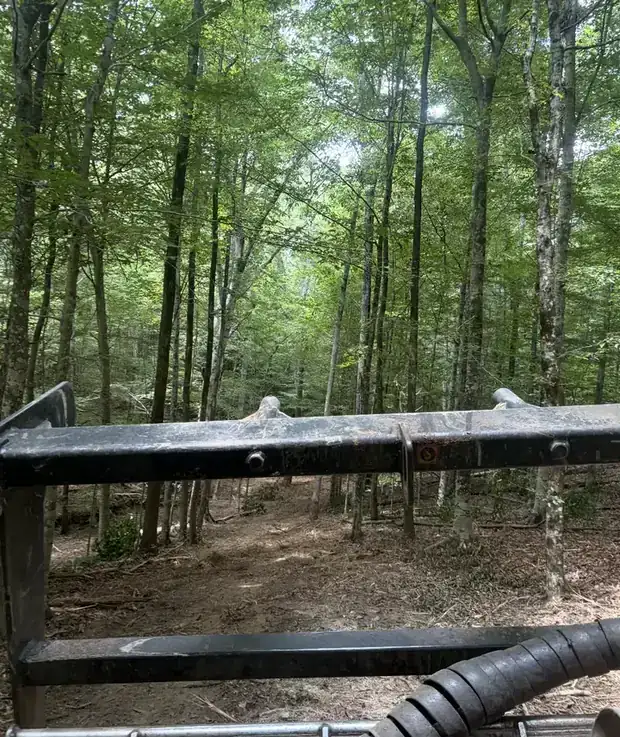
Phone pictures from real jobs, captioned with what they show. See more recent work.
How wide should a fence line be cleared?
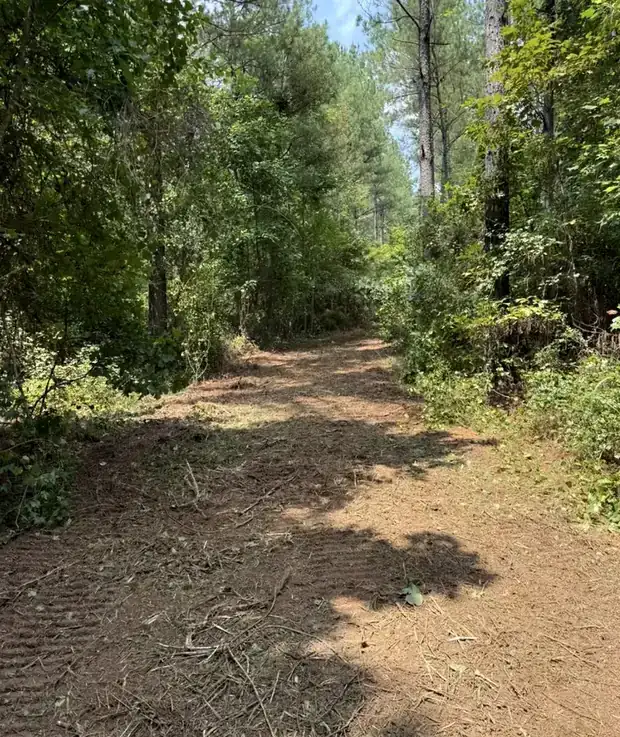
Most people want eight to twelve feet, enough to get a truck or a tractor down one side. If you are building new fence, think about the equipment that will set the posts and stretch the wire, and about the bush hog that will keep the row afterward. Wider costs more on the day but makes the line far easier to keep open.
Can you clear a fence line with old barbed wire still in it?
Yes. It just needs knowing about first so the operator can work to it. Wire and steel posts are hard on a mulching head, so a row with wire in it is worked more slowly than a clean one. If the old fence is coming out anyway, pulling the wire ahead of the machine makes the clearing quicker.
How much does fence line clearing cost per foot?
There is no honest per-foot number without seeing the row. Length, width, what is growing on it, old wire, slope, creek crossings and access decide it, and a long single run is less per foot than several short ones. Send the length of the run and a few photos by text to (205) 535-6376, and we can tell you where it falls before we come look.
Can you clear right on the property line or only on my side?
We clear to the line you show us, on the side you tell us. If the line is marked by a survey, bring the plat or flag the pins and the cut follows them. If you want the row cleared on both sides, get the neighbor's say-so first. When nobody is sure where the line runs, have a surveyor mark it before anything is cut.
Does forestry mulching a fence row take the stumps out?
No. The mulching head grinds a stem flush with the ground and a little below, and the root ball stays in the dirt. That is fine for a line you plan to drive and mow. If stumps sit right where new posts have to go, tell us, and those come out with the excavator and the holes get filled.
How a Job Runs
Tell Us What You Have
Call, text or send the form. County, rough acreage, what is growing on it and how a truck and trailer gets in.
We Look at the Ground
Close by, we come and look. Farther off, we can go over it with you on satellite first, then see it on the ground before the work starts.
A Number to Plan Around
Estimates are free and priced off the property. Small jobs carry a minimum, and you hear the figure before you commit.
The Machines Go to Work
We settle what comes out and what stays. Mark the trees you want kept, or walk it with us and point them out.
Finished, Not Just Knocked Down
Holes filled, ground pulled back to grade, and the fall set so water leaves the site instead of standing on it.
Fence Line Clearing Near You
Based in Berry, in Fayette County. Eight west Alabama counties. Pick your county or town, or call or text and ask.
Towns
Specific fence line clearing jobs
More services
Hunting Lanes & Food Plots
Shooting lanes, trails and food plots cut on hunting land and left ready to plant.
DetailsFirebreaks
Firebreaks and fire lanes cut around homes, timber and property lines before you need them.
DetailsForestry Mulching
Brush, briars and small timber ground to mulch where they stand. No piles, no hauling.
DetailsNeed Fence Line Clearing?
Call or text, or send a few details. Estimates are free and priced off the property.