Cut hunting lanes and clear food plots between late winter and summer, not in October. The ground is drier, the deer are not being pushed around right before the season, and a fall plot has time to be limed and planted.
Why timing matters
Most people think about lanes and plots in September, when the season is close. That is the hard way to do it. By early fall, a machine working the property moves deer off it just when you want them settled. A plot cleared that late is planted late or not at all. Cutting earlier in the year avoids both problems, and wet winter ground has usually dried out enough to carry a machine. If September is when you can do it, it can still be done. It is the expensive way round, and you should expect less from that first season.
Count back from planting day
Alabama Extension says most cool-season food plots in Alabama are planted in September and October, depending on temperature and soil moisture. It treats a soil test as an integral part of the job, and notes that lime raises the pH but can take six months or longer to take full effect. Put those together and the clearing date falls out. For a fall plot, the ground wants to be open by spring, so there is time to test, lime and work up a seedbed. Your county Extension office handles soil tests and can tell you what your ground needs. That call is worth making before you buy seed.
Laying out shooting lanes
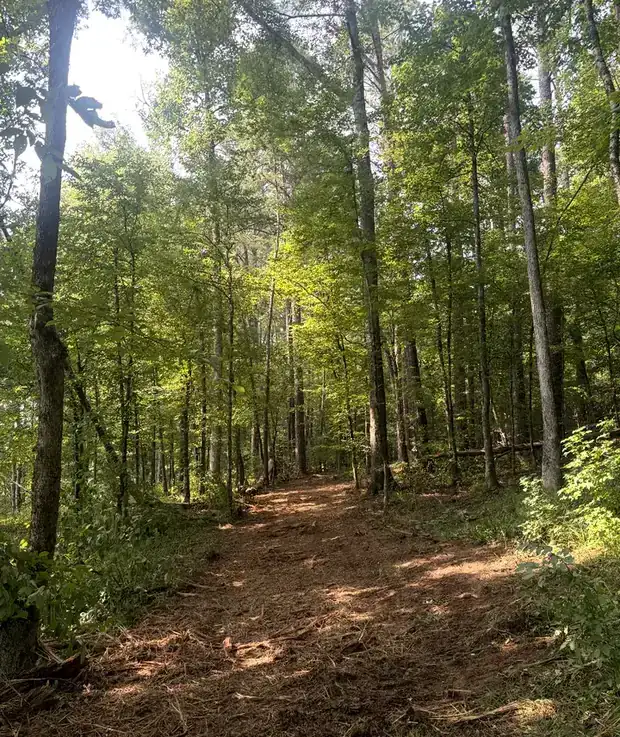
A shooting lane is cut from the stand outward, not from the nearest road inward. Its direction and width should match what you can see and shoot from where you sit. Flag it before the machine comes. Better still, ride the property with us. Twenty minutes on a four-wheeler saves cutting a lane in the wrong place. Most people end up wanting a lane wider than they first asked for, and it is easier to take that width while the machine is there. Lanes are mulched: one machine grinds the brush and small trees and leaves the roots, which is all a lane needs. See hunting lanes and food plots.
Trails that work all season
Access trails do a different job from lanes. They get you and your equipment in and out quietly. Make them wide enough for a four-wheeler and a trailer. Run them where the ground drains, not through the low wet spots, or you will be rutting them by December. Loop them where you can, so you reach a stand without walking the whole property and without crossing the ground you plan to hunt. A trail cut along a contour holds up better than one run straight down a hill, where water follows the wheel tracks. Our trail and ATV path clearing page covers the work.
Clearing a food plot
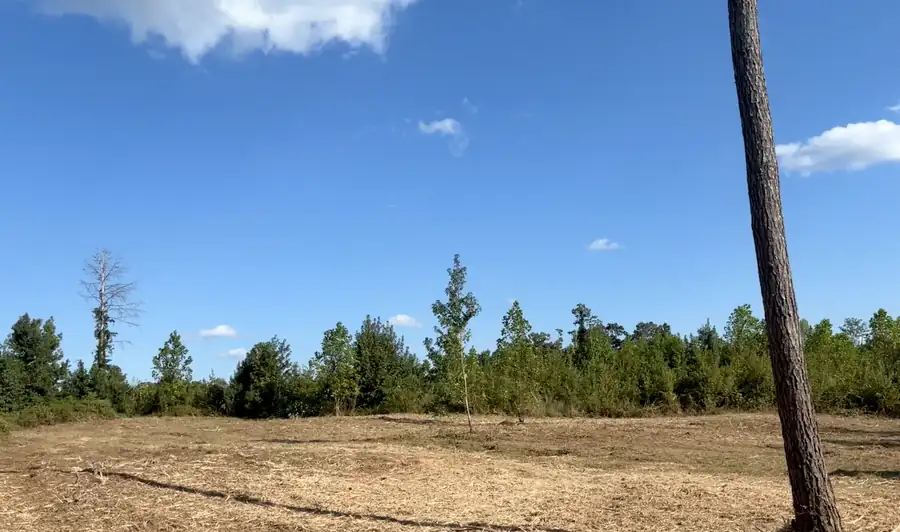
A plot needs sun, soil that drains and a way to get equipment to it. Pick the spot for those three things first. Alabama Extension says to avoid poorly drained areas and spots near property lines or in view of public roads, and that plots placed near bedding cover and seldom disturbed are typically used more by deer. It also favors rectangular, square or round plots over irregular shapes. Then decide how the plot will be planted, because that sets how it is cleared. If you plan to disc it, the stumps have to be dealt with. If you plan to plant this season, the mulch is spread thin or pushed to the edges. Tell us what you are planting and when.
Firebreaks and lanes can be the same cut
A mulched break around a stand of timber or along a property line also works as a trail and a sight line. If you are thinking about burning as part of managing the land, the break goes in first, down to mineral soil. See firebreaks and fire lanes. The burn itself is yours to plan with a burn manager, and it needs a permit from the Alabama Forestry Commission when it covers more than a quarter of an acre. Our guide to burn permits in Alabama has the phone number and what the Commission asks for.
Keeping it open
A lane or a trail starts growing back the first spring. Sweetgum, privet and briars sprout from the root, and by the second summer the edges are closing in. A quick pass every year or two keeps it open and costs far less than starting over, because the big material is already gone. Plots hold better if they are planted and mowed. A plot left empty for a summer is brush again by fall. Put the upkeep pass on the calendar for late winter, when the leaves are off, the ground is firming up and the season is behind you.
Common Questions
What is the best time of year to cut hunting lanes in Alabama?
Late winter through summer. The ground is drier and you are not disturbing deer right before the season opens. It can be done in September, but that is the harder and more expensive way round, and the deer need time to settle after a machine has worked the property.
When should I clear ground for a fall food plot in Alabama?
By spring if you can. Alabama Extension says most cool-season plots in the state are planted in September and October, and that lime can take six months or longer to take full effect. Clearing early leaves time for a soil test, lime and a seedbed before planting day.
Can I plant a food plot straight into mulched ground?
Only if the mulch is thin enough to work through. Tell us before the machine starts that you are planting this season, and the mulch is spread thin or pushed to the edges. If you plan to disc the plot, the stumps have to be dealt with as well.
What to Do Next
Flag the stands and the lanes you want, or plan to ride the property with us. Call or text (205) 535-6376 with the county, the acreage and what you want cut, and we will look at it and price it, free.
See our hunting lanes & food plots page or call or text (205) 535-6376.