Forestry mulching cost per acre in Alabama depends mainly on how thick the growth is, how big the stems are, how steep and wet the ground is, how the machine gets in, and how many acres there are. No single per-acre figure fits every tract, so Down South Land Solutions gives a free estimate after looking at the property, in person or on satellite.
Why a per-acre figure off the internet will not fit your land
Per-acre numbers are easy to find online. They are averages built from thousands of jobs that look nothing like yours: flat ground in one state, hillside hardwood in another, all blended together. Quote that average back at a contractor and one of two things happens. The number is too low and it climbs once the machine is in your brush, or it is padded to cover the worst case and you overpay for an easy job. A fair per-acre price exists for your tract. It just has to be built from your ground, and the six things below are what it is built from.
Density and stem size: what goes through the head
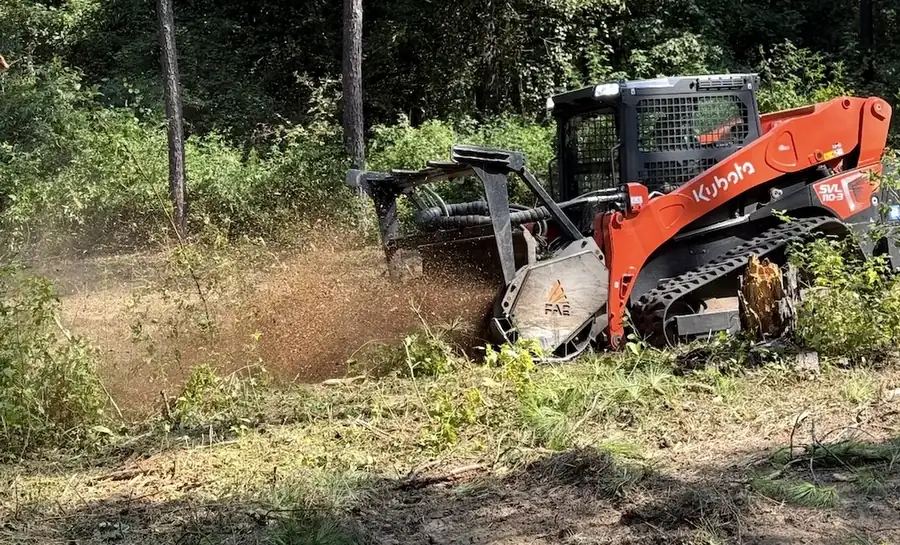
Density is how much is standing on each acre. Scattered brush with room between it goes quickly. A solid thicket of privet and greenbrier means every foot has to be ground down. Stem size is the other half. Briars and saplings disappear into the head. Stems near the top of the working range, roughly six to eight inches on the stump, take several times as long each. An acre of thumb-size sweetgum and an acre of six-inch hardwood can be the same size on paper and far apart on the invoice. Timber past that range is clearing work, which is priced differently. See forestry mulching for what the machines take.
Slope, wet ground and access
A machine works slower on a hill, and there are fewer directions it can safely run, so steep acres cost more than flat ones. Wet ground means waiting, or working slower so the site is not torn up. Tracked loaders have low ground pressure and handle soft ground better than wheels, but a bottom that will not carry the machine still has to dry out. Access is the third piece. The machine comes on a trailer. If the trailer can stop next to the work, the day starts right away. If the machine has to track a long way in, or a gate or bridge has to be worked around, that time is part of the price.
Acreage and the minimum
Getting the equipment there and back costs the same for one acre as for twenty. On a larger tract that cost is spread thinner, so the per-acre figure comes down as the acreage goes up. On a very small job it cannot be spread at all, which is why small jobs carry a minimum. We tell you that figure before you commit. If you have a small job, look for other work the machine can do on the same trip: the fence row, the trail to the back field, the brush behind the shop. Adding work while the machine is already unloaded is the cheapest way to buy it.
Finish: one pass or ground you can mow
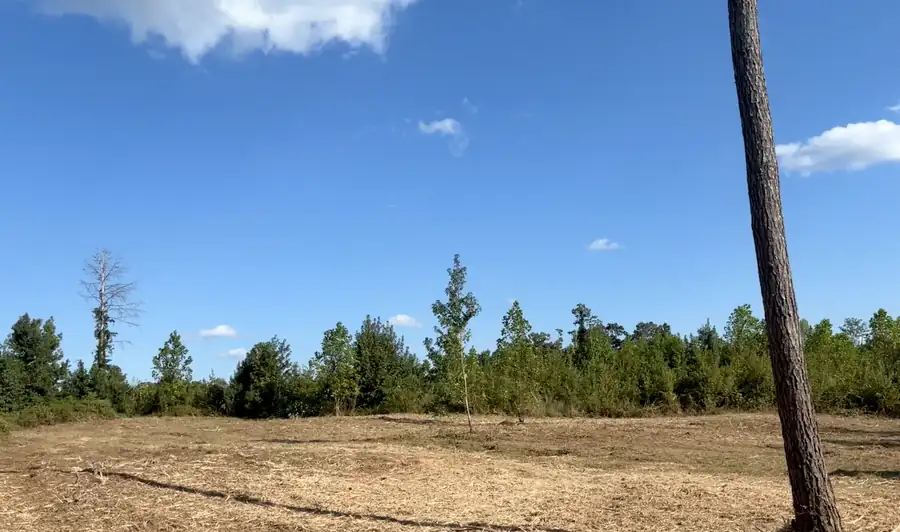
Knocked down and walkable takes one pass. Ground fine enough to run a mower over next season takes more time on the same acre, because the chips are worked smaller and the stubs are taken lower. Ask for the finish you need and no more. A shooting lane or a trail does not need a lawn finish. Pasture you plan to mow does. If you are opening a view or thinning under timber, the finish also includes working carefully around the trees you are keeping, and that pace is slower than open-field work. Say what the ground is for and the price can be set to it.
Fence lines, lanes and trails are priced by length and width
Not every mulching job is an acreage job. A fence line, a survey line, a shooting lane or a four-wheeler trail is a strip, so the price follows how long it is, how wide you want it and what is growing in it. Wider costs more, and it also makes the line easier to keep open. Old wire in a fence row slows the work and has to be known about before the machine starts. Give us the length and width in feet or paces, or mark it on a map. Our fence line and survey line clearing page has more on widths and what the line is left like.
Per acre, per day or per job: comparing quotes
Mulching is quoted three ways, and none of them is wrong. A per-acre or whole-job price puts the risk on the contractor, so it needs clear edges. A day rate puts the risk on you, so ask what a day covers and what happens when the day ends and the tract is not finished. To compare, turn every quote into the same thing: this ground, to this finish, for this total. Ask whether haul-in is extra and whether there is a minimum. Our wider land clearing cost guide covers the jobs where stumps have to come out.
What to have ready for a fast, accurate estimate
Five things get you a real number quickly. The county the property is in. Roughly how many acres, or the length and width if it is a line or a trail. What is growing on it: briars and saplings, or real timber. Whether a truck and trailer can get to it. Any date you are working toward. A few photos taken from inside the growth help more than one shot from the road. If you live away from the land, we can go over it with you on satellite first and get close on price, then look at it on the ground before the work starts.
Common Questions
How much does forestry mulching cost per acre?
A per-acre average is not much use, because light briars on flat ground and thick six-inch hardwood on a hillside are nowhere near each other in price. Density and stem size set most of it, then slope, wet ground, access, acreage and finish. An estimate from us is free after a look at the property.
Is it cheaper to pay for forestry mulching by the day or by the acre?
Neither is cheaper by itself. A day rate suits open-ended clean-up where the edges are loose. A per-acre or job price suits a tract with clear boundaries. Compare them by asking what the whole job will total, what finish you get and what happens if the day ends before the work does.
How much does fence line clearing cost with a forestry mulcher?
It is priced by the length of the line, the width you want and what has grown up in it, not by the acre. Wider costs more but is easier to keep open. Old wire and steep or wet stretches add time. Tell us the length and width and we will look at it and price it, free.
Want a Number for Your Ground?
Send the county, the acreage and a few photos, and we can tell you where your ground falls. Call or text (205) 535-6376 or use the form. The estimate is free, and you know the figure before you commit to anything.
A guide can only show what moves the price. The number for your job comes from a look at your property, and estimates are free.
See our forestry mulching page or call or text (205) 535-6376.