Pasture Reclamation: Overgrown Fields Brought Back
Fields that have grown up in sweetgum, briars and privet, brought back to ground you can run cattle on or cut hay off again. Mulched in place, with the topsoil left where it is.
Pasture Reclamation, Start to Finish
Land goes back fast. Two or three seasons out of use and an open field in this part of Alabama is knee-deep in sweetgum and blackberry. Five and it is a thicket. Ten and there is real timber in it. The fence disappears first, then the gate, then the view across the field. And the longer it sits, the more the fix costs, because every year the stems get thicker and slower to grind. That is the whole argument for dealing with it this year instead of next.
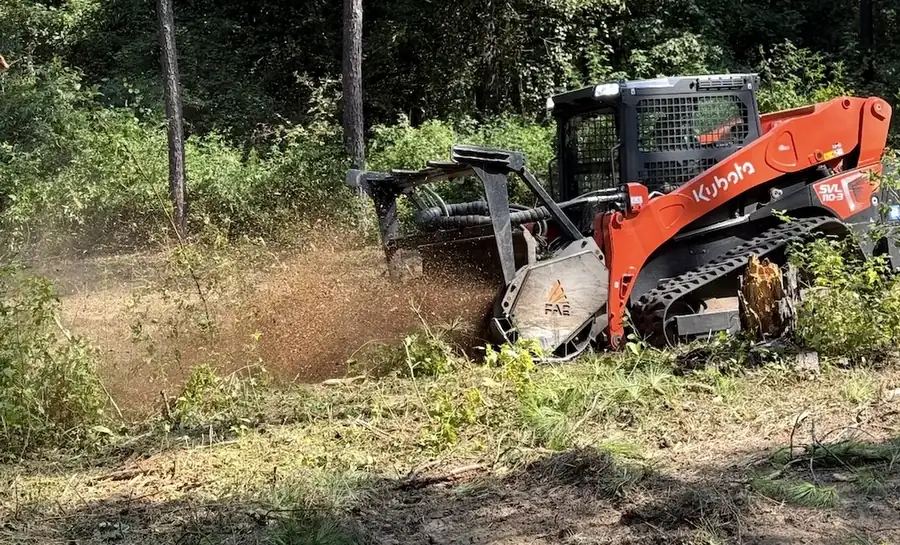
For most grown-up pasture the right tool is the mulcher. A tracked loader with a mulching head grinds briars, privet, pine saplings and sweetgum up to roughly six to eight inches on the stump and leaves the chips on the ground. Nothing is piled, nothing is burned, and the topsoil stays where it is, which matters on a field you want grass on again. Where the timber has got past that size, or you plan to plow, it becomes a clearing job with the dozer and root rake so the stumps come out. We do both.
We work out of Berry in Fayette County and take pasture work in Fayette, Walker, Tuscaloosa, Marion, Lamar, Pickens, Cullman and Winston counties. Estimates are free and priced off the field after a look. Tell us the county, the acreage, how long it has been out of use, and whether a truck and trailer can get to the gate. Call or text (205) 535-6376. If you live away from the land, we can go over it with you on satellite first and look at it on the ground before work starts.
What pasture reclamation covers
- Sweetgum, pine saplings and briars mulched
- Privet and brush taken off the field edges
- Topsoil left in place under the chips
- Bigger timber pushed and stumps raked out
- Gates, gaps and field roads reopened
- Washes and wet spots regraded to drain
Mulch it or doze it? Start with what the field is for
If the plan is grazing or hay on ground you will keep mowed, mulch it. The woody growth comes off, the sod and topsoil underneath are not scraped away, and the chips break down over time. If the plan is to plow, disc deep or plant in rows, the stumps have to come out, and that is dozer and root rake work. Plenty of fields are both: mulch the open middle, push the grown-up corner where the sweetgum got big. We walk it with you and say which parts are which. The whole sequence is in our guide to clearing land for pasture in Alabama.
What the field looks like when we pull off
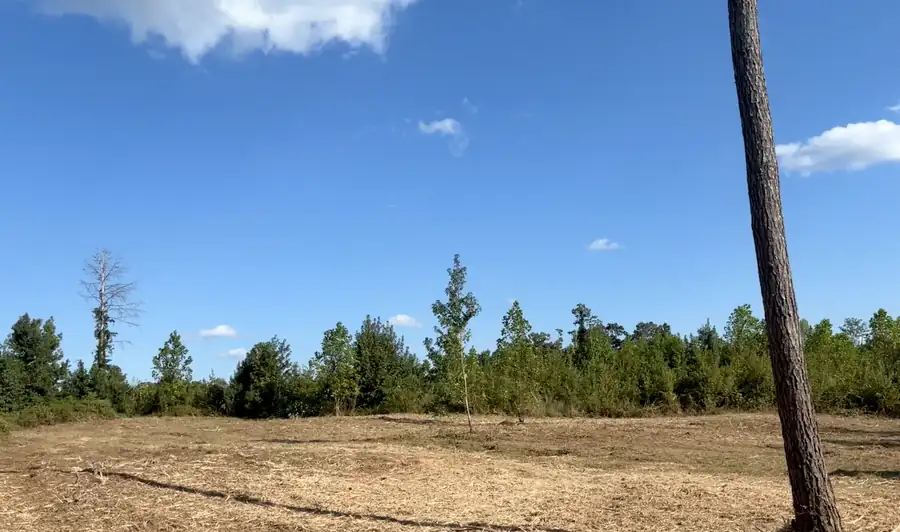
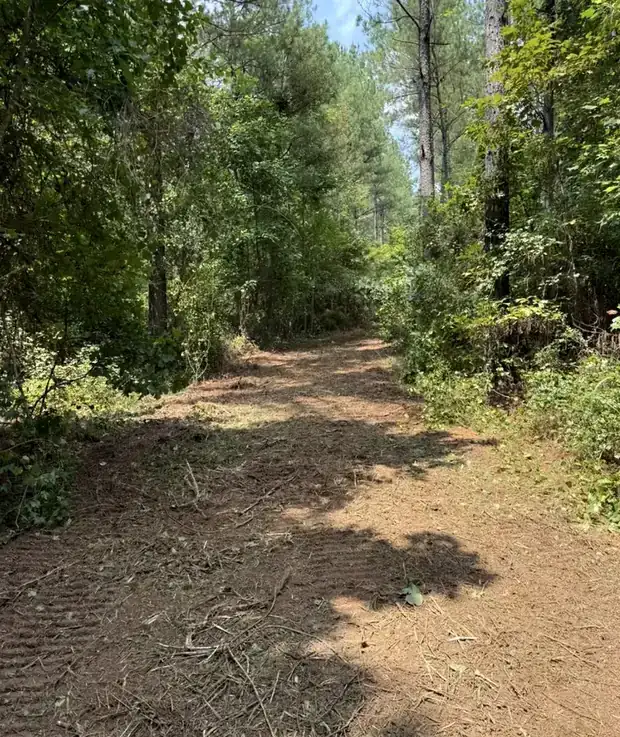
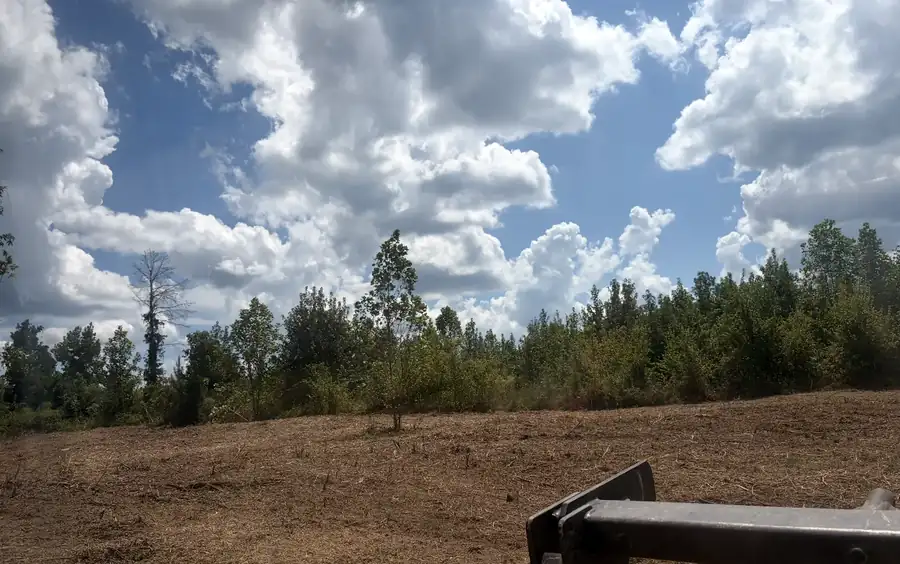
Open, walkable and covered in a layer of chips. Stems are ground low, down to the dirt and a little below. The root balls stay in the ground under mulched growth, which is what holds the soil on a slope. On thick sweetgum, expect some stobs the first year, and expect a few passes of your mower to knock them down. Most people can get a bush hog over mulched ground the following season, which is usually the goal. If you are weighing a tractor and bush hog against a mulcher for the first cut, read bush hog vs forestry mulching before you tear up a gearbox.
After we leave: the follow-up decides it
Mulching is a reset, not a cure. Sweetgum and privet sprout from the stump and the root, and briars come back from seed already in the ground. A field that is mulched and then left alone is headed straight back to brush. What holds it is what you do next: keeping it mowed or grazed, and getting grass established. A soil test through your county Extension office tells you what that particular ground needs in lime and fertilizer to carry grass again, and it is worth the phone call before you spend money on seed. Tell us your plan, and the surface is left to suit it.
Fences, gates and the wet end of the field
Old pasture comes with old fence. We clear around it and along it, and fence line clearing has its own page. If the old wire is coming out anyway, say so, because clearing goes a lot faster without it. If it is staying, tell us where it runs so the operator can work to it. Low ground is the other thing. Bottom land that stays soft is worked when it is dry enough to carry a tracked machine without rutting. And if a wash or a wet spot is what took the field out of use in the first place, it can be regraded while the machines are there.
Real Job Photos
Phone pictures from real jobs, captioned with what they show. See more recent work.
Can you bush hog a field after it has been forestry mulched?
That is usually the goal. Mulched stems are ground low enough to get a mower over the following season. On heavy sweetgum, expect stobs the first year and a rougher ride until a few mowings knock them down. If you want it smooth enough to cut hay right away, tell us, because that changes how fine the ground is finished.
Will sweetgum and briars grow back after a pasture is mulched?
Yes, if nothing follows the mulcher. Sweetgum and privet sprout from stumps and roots, and briar seed is already in the soil. Anybody promising a permanent kill in one visit is guessing. Mowing, grazing and a good stand of grass are what hold a field open, and a second mulching pass a year or two later is far quicker than the first.
What does it cost to reclaim an overgrown pasture in Alabama?
It depends on what is standing and how thick. A field of briars and thumb-size saplings mulches fast. One with six-inch sweetgum takes several times as long per acre. Slope, wet ground, old wire, and whether a truck and trailer can reach the gate all move the figure. Bigger fields cost less per acre because the trip costs the same either way. We price it after a look.
Should I burn, bulldoze or mulch an overgrown field?
For pasture and hay ground, mulching is usually the answer: it keeps the topsoil, leaves no piles and needs one machine. Bulldozing is right when stumps must come out for plowing. Burning piles means a clearing job first, and brush burning in Alabama comes under Alabama Forestry Commission permit rules. Lighter growth is covered on our brush clearing page.
What is the best time of year to reclaim an overgrown pasture?
Whenever the ground will carry the machine. Mulching works all year, but dry ground means no ruts and faster work, so low and wet fields are better cut in the dry months. Think backward from planting too. Your county Extension office can tell you when your grass should go in, and the clearing needs to be done ahead of that.
How a Job Runs
Tell Us What You Have
Call, text or send the form. County, rough acreage, what is growing on it and how a truck and trailer gets in.
We Look at the Ground
Close by, we come and look. Farther off, we can go over it with you on satellite first, then see it on the ground before the work starts.
A Number to Plan Around
Estimates are free and priced off the property. Small jobs carry a minimum, and you hear the figure before you commit.
The Machines Go to Work
We settle what comes out and what stays. Mark the trees you want kept, or walk it with us and point them out.
Finished, Not Just Knocked Down
Holes filled, ground pulled back to grade, and the fall set so water leaves the site instead of standing on it.
Pasture Reclamation Near You
Based in Berry, in Fayette County. Eight west Alabama counties. Pick your county or town, or call or text and ask.
Towns
More services
Fence Line Clearing
Fence rows and survey lines mulched straight and wide enough to drive and work in.
DetailsHunting Lanes & Food Plots
Shooting lanes, trails and food plots cut on hunting land and left ready to plant.
DetailsFirebreaks
Firebreaks and fire lanes cut around homes, timber and property lines before you need them.
DetailsNeed Pasture Reclamation?
Call or text, or send a few details. Estimates are free and priced off the property.