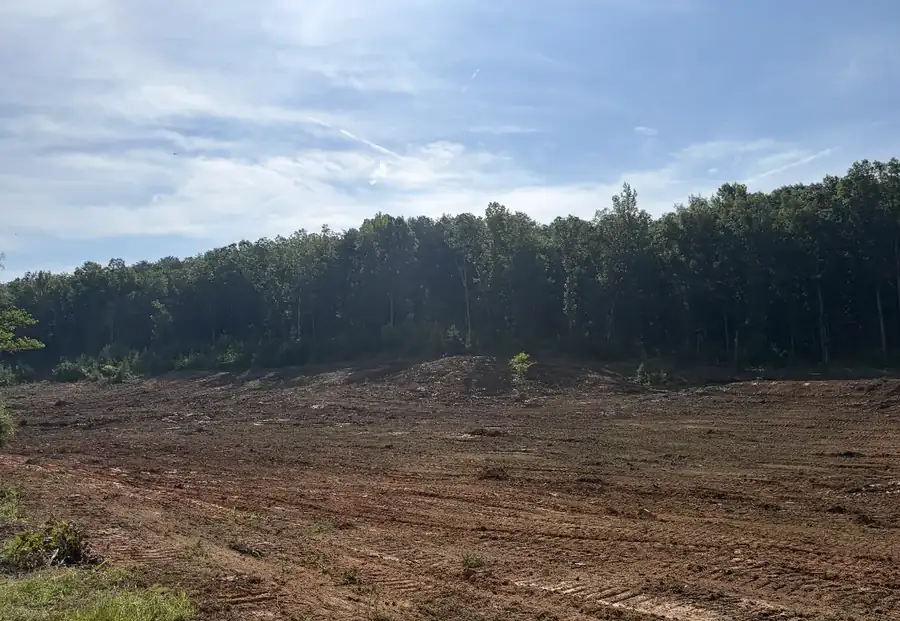
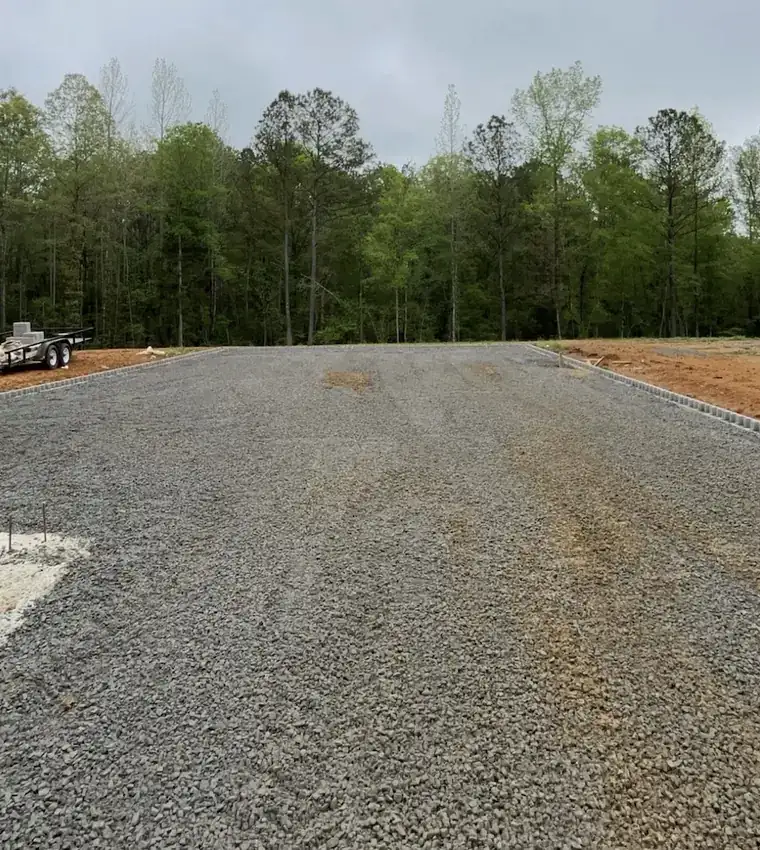
The order is: mark the house site, ask about permits, get a road in, clear the trees and pull the stumps, deal with the debris, rough grade, then build and compact the pad. Doing those steps out of order is what makes a wooded lot cost more than it should.
1. Walk it and mark it
Before a machine arrives, settle where the house or mobile home goes. Stake the corners, or have a surveyor do it, and mark the property lines if they are not obvious. Then mark the trees you want to keep. A shade oak is easy to work around when the operator knows about it first, and it cannot be put back once it is down. Think about the septic system now as well. The tank and field lines need their own spot, and heavy machines should stay off ground that is meant for field lines. Whoever puts in the septic system follows the layout on your permit.
2. Ask about permits early
Permits depend on the county, the city and what the work touches. ADEM, the state environmental agency, requires coverage under its construction stormwater general permit for land disturbance of one acre or more, and for smaller jobs that are part of a larger development of an acre or more. ALDOT requires a permit for a driveway turnout onto a state highway, so ask ALDOT before the entrance is built. For a county road, ask the county engineer's office. Inside a city, ask the building department. Work in a stream or a wetland is a question for the U.S. Army Corps of Engineers. Ask before the work starts. Have your permit in hand, or ask us what to line up first.
3. Get a road in
Access comes first, not last. The clearing machines arrive on a trailer. After them come the gravel trucks, the concrete truck or the mobile home itself. The drive is cut along the route that drains, based with rock, crowned so water sheds to the sides, and ditched. Where it crosses a ditch or a draw, a culvert goes in. On a hill it needs breaks to turn the water off before it picks up speed. A roughed-in drive at this stage saves every truck that follows from sinking in red clay. See driveways and access roads.
4. Clear the site and pull the stumps
The house site, the drive and room to work around them are cleared. This is clearing, not mulching. The dozer pushes the trees, and the root rake and excavator bring the stumps and root balls out of the ground. Stumps have to come out from under anything you build, because roots left in the ground rot and the dirt above them sinks. The rest of the lot does not need this. Where nothing is being built, mulching the brush is quicker and keeps the soil covered. Our page on lot clearing for new homes covers how the two are split on a wooded lot.
5. Deal with the debris
Cleared trees and stumps are pushed into rows. Then they are burned on site, if the rules and the weather allow, or loaded and hauled away. Burning is cheaper. Hauling is cleaner and does not wait on a burn day. Burning has its own rules in Alabama. The Forestry Commission requires a permit for burning newly cleared ground above a quarter of an acre, and ADEM's guidance asks for 500 feet between the fire and the nearest occupied dwelling, which rules it out on many house lots. Decide which way the debris goes before the price is set, because it is one of the larger lines on the quote.
6. Rough grade and fix the water
Clearing leaves stump holes and ruts. They are filled, and the ground is pulled back to a rough grade with the slope set so rain runs away from where the house will sit. Water is the thing to get right at this stage. A site that holds water now will hold it under the house later. Swales and ditches go in while the dozer is there, and the low spot under the drive gets its culvert. Fixing drainage after the slab is poured costs far more than shaping the dirt while it is still bare and the machine is on site.
7. Build and compact the pad
A pad is more than a level patch of dirt. It sits where the plans put it, at the height the plans call for, and it is big enough to work around. Most pads are part cut and part fill. The cut side is taken down to firm ground. The fill side is built up in lifts, and each lift is compacted before the next goes on. Fill dumped in one push settles later, and so does whatever sits on it. The finished pad falls away from the building on every side. What moves the price of this step is set out in our house pad cost guide, and the work is on the house pads page.
What is different for a mobile home pad, and what comes next
The steps are the same for a manufactured home. Tell us the size of the home and whether the power pole and the septic are already set. The drive matters more than people expect: a home on a truck needs a wide, firm way in with room to swing and no low limbs over it. Often the pad, the drive and the drainage are done in one trip. If an old home sits on the spot now, it comes out first. Once the pad is built, your builder or concrete crew takes it from there. Footings and trenches come next, and Alabama 811 has to be contacted before any digging, including on your own land.
Common Questions
Should I forestry mulch or clear land for a house site?
Clear it where the house, the pad and the drive go. Mulching leaves the stumps and root balls in the ground, and they rot and settle under a building. The rest of the lot can be mulched, which is quicker, costs less and keeps the soil covered on the slopes around the house.
Does the driveway go in before or after clearing a house lot?
Before, or at least roughed in first. The clearing machines, the gravel trucks and the concrete truck or the home itself all need a firm way in. A drive cut early along the route that drains also shows you where the water goes before the pad is built.
Do I need a permit to clear a lot for a house in Alabama?
It depends on where the lot is and what the work touches. ADEM requires construction stormwater permit coverage for land disturbance of one acre or more, and for smaller sites that are part of a larger development. Cities, counties, state highway entrances, streams and wetlands each have their own office. Ask your county or city before work starts.
What to Do Next
Stake the house site, mark the trees you are keeping and note how a truck gets in. Then call or text (205) 535-6376 with the county and what is growing on the lot. We will look at it and price the clearing, the drive and the pad together, free.
See our house pads page or call or text (205) 535-6376.