Choose forestry mulching if you want brush and small trees gone and the ground left covered and usable. Choose bulldozing if you are going to build on it or plow it, because only clearing takes the stumps and roots out.
The short version
The two jobs answer different questions. Mulching asks: how do I open this ground up quickly without tearing it up? Bulldozing asks: how do I get this ground bare and buildable? Mulching is one machine and one pass. Nothing is hauled off and nothing is burned. Bulldozing takes more machines, more time and a plan for the debris. It costs more because it does more. Neither one is the better method in general. The right one depends on what the ground is for next year, and on most properties the honest answer is some of each.
What forestry mulching does
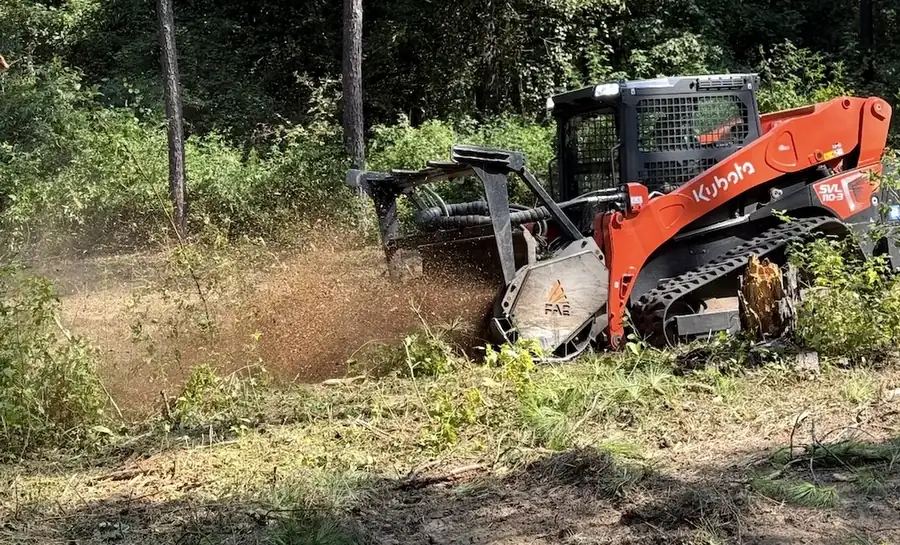
A mulching head is a steel drum studded with carbide teeth. It spins fast enough to grind standing brush and small trees right where they are. Ours run on tracked loaders, which spread the weight and work soft ground without cutting ruts. Briars, privet, kudzu, saplings and standing hardwood up to roughly six to eight inches on the stump are inside the range. What is left is a layer of chipped wood. That chip layer is the reason to choose it. It covers the soil through the first hard rain, rots down over a season or two, and slows the sprouts that jump up on bare dirt. More is on our forestry mulching page.
What bulldozing does
Bulldozing is what most people mean by land clearing. The dozer pushes the trees over. A root rake combs the stumps and root balls out of the dirt, and an excavator lifts out the big ones whole. The debris is pushed into rows. Then it has to go somewhere. It is burned on site if the rules and the weather allow, or loaded and hauled off. Burning is cheaper. Hauling is cleaner and does not wait on a burn day. Last, the ground is put back. Stump holes are filled, the surface is pulled to grade and the fall is set so water runs off. What you get is bare dirt you can build on.
Pick by what the land is for
Start with the end use, not the machine. A house, a shop, a barn or a mobile home pad: bulldoze, because roots left under a slab rot and settle. A field you plan to disc or plow: bulldoze, so the stumps are out. Trails, four-wheeler paths and shooting lanes: mulch. Fence lines and survey lines that have grown shut: mulch. Pasture that has gone to brush: mulch, then follow up. Thick woods you want to walk through and see across: mulch the understory and keep the trees. A steep bank or a lake lot slope: mulch, so the dirt stays covered.
What the ground looks like afterward
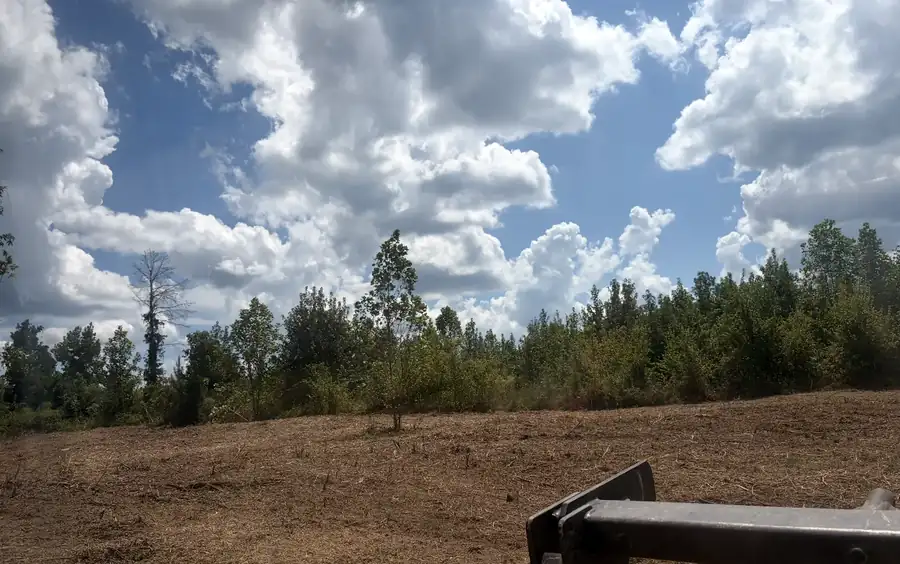
After mulching, the ground is brown with chips and you can walk it as soon as the machine moves on. Low stubs of the bigger stems may show for the first year, and on heavy sweetgum you should expect to see them. The following season most people can get a mower over it. After bulldozing, the ground is bare dirt, smooth and graded. It needs something on it soon: a pad, gravel or grass. Bare red clay on a slope washes in the first big rain, and fixing a gully later is a separate job that costs more than covering the dirt would have.
Will it grow back, and what about the stumps?
After mulching, some of it will. Privet, sweetgum and kudzu sprout again from the root. The chip layer slows them, and a second pass a year or two later is much quicker than the first. Mulching leaves the root ball in the ground. The head can take a stump flush with the dirt, and if the stumps have to come out whole, that is stump removal, and we do that too. After bulldozing, the roots are gone, so regrowth comes from seed and is easier to hold with mowing or grazing. Left alone, a cleared field in Alabama is back in brush within a few seasons.
Most jobs are both
On a typical home site, the house spot and the drive are bulldozed and the rest of the tract is mulched. That puts the money where the stumps truly have to come out and keeps the soil covered everywhere else. Tell us what each part of the land is for and we will split it that way. If mulching is the wrong answer for your property we will say so, even though it is the service we would sooner sell. What each method does to the price is laid out in our guide to forestry mulching cost per acre.
Common Questions
Is forestry mulching cheaper than bulldozing in Alabama?
On the right job, yes, and usually by a wide margin. It is one machine and there is nothing to haul or burn. But mulching leaves the roots in the ground, so it is not a cheaper way to get a building site. Where stumps must come out, clearing costs more because it does more.
Can I build a house on land that was forestry mulched?
Not where the building sits. Stumps and roots under a slab rot and the ground settles. Clear the house site and the drive so the stumps come out, build the pad on firm ground, and mulch the rest of the lot to keep the soil covered.
What size trees are too big for a mulcher and need a dozer instead?
On our machines, standing hardwood up to roughly six to eight inches on the stump is the working range, along with briars, privet, kudzu and saplings. Bigger timber is a clearing job for the dozer, the root rake and the excavator, and we do that work too.
What to Do Next
Not sure which one your ground needs? Tell us what the land is for and what is growing on it. Call or text (205) 535-6376 and we will look at it and price the right method, or the right split of both, free.
See our forestry mulching page or call or text (205) 535-6376.