
Underbrush Removal in West Alabama
Take the junk out and leave the timber standing. Privet, briars, greenbrier, kudzu, honeysuckle and sapling growth mulched out from under the trees you want to keep, in one pass, with nothing piled or hauled.
Underbrush Removal, Start to Finish
A lot of land out here is not overgrown so much as choked. The canopy is fine: good hardwood, healthy pine. But you cannot walk through it, cannot hunt it, cannot see across it, and the young timber cannot get going because the understory has taken everything. Privet fills the bottoms. Greenbrier and honeysuckle tie it all together. Sweetgum whips come up wherever light reaches the ground.
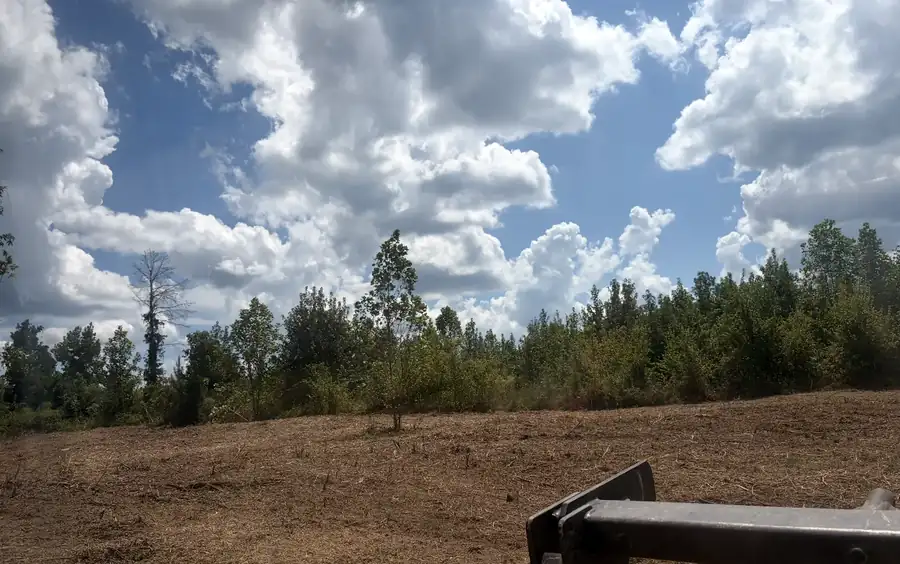
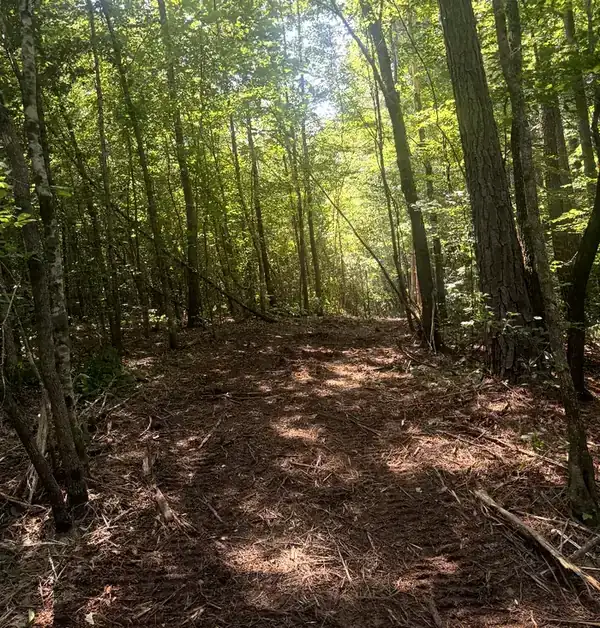
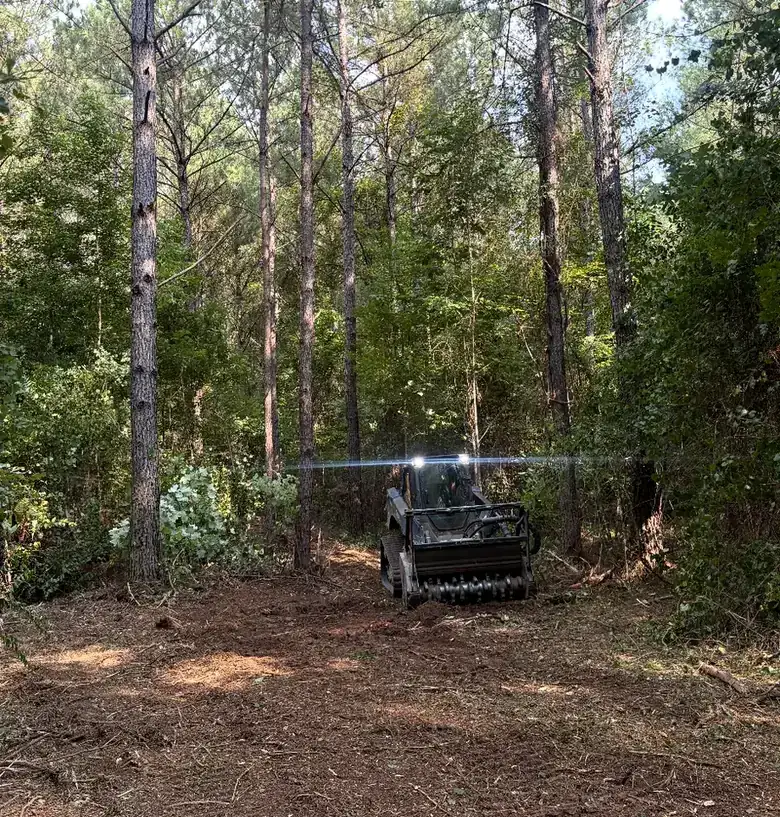
Underbrush removal, which plenty of people call brush clearing or brush removal, is clearing under, not clearing off. A tracked mulcher works below the canopy and around the trunks, grinding the brush where it stands and leaving a floor of chips. The trees you are keeping stay. What you get back is open woods: you can see the lay of the land, walk it, ride it, hunt it, and tell which trees are worth keeping. Nothing is piled and nothing leaves the property.
We are a Berry, Alabama outfit, and we mulch underbrush across Fayette, Walker, Tuscaloosa, Marion, Lamar, Pickens, Cullman and Winston counties. Estimates are free and priced off the property after a look. Looking for the same work on an open lot or a field edge with no timber to save? That is on our brush clearing page. Either way, call or text (205) 535-6376 and tell us what you are looking at.
What comes out from under your trees
- Chinese privet thickets in creek bottoms
- Briars, blackberry and greenbrier tangles
- Kudzu and honeysuckle knocked back to dirt
- Sweetgum whips and pine saplings
- Hardwood understory to six to eight inches
- Keeper trees left standing and worked around
Privet and kudzu, and what one pass does
Chinese privet is the worst offender in west Alabama woods, and kudzu is close behind. Alabama Extension puts privet's spread down to heavy seed production, seed carried by birds and other animals, and stumps and roots that sprout fast. So neither one dies from a single pass. What mulching does is knock them down to nothing, give you the ground back, and put you where follow-up work can reach what sprouts. One pass is a reset, not a cure. Anyone promising a permanent kill in one visit is guessing. Our guide on clearing privet, kudzu and underbrush covers what works and what grows back.
How we work around the trees you keep
Mark the keepers or walk the woods with us before the machine starts. Tell us what you want it to look like: park-like with everything under the canopy gone, or thinned with the dogwoods and young oaks left. The head works below the limbs and around the trunks, and the operator runs at a pace that lets him see what he is doing instead of making time and scarring bark. We mulch with a Cat compact track loader with a drum head and a Kubota SVL110-3 with an FAE head. Both run on tracks with low ground pressure, which matters on soft bottom ground and over the roots of the trees you are keeping.
Who calls us for this
Hunters who want to see past the first ten yards and move through the woods quietly. Homeowners with a wooded lot behind the yard that has turned into a snake and tick thicket. Timber owners who want the competition off young pine and hardwood. Lake lot owners who want a view through the trees without baring the bank. Families who inherited a home place and want to find the old fence, the well and the property corners again. If the trees are worth keeping and the mess under them is the problem, forestry mulching the understory is the tool for it.
What it looks like after, and keeping it that way
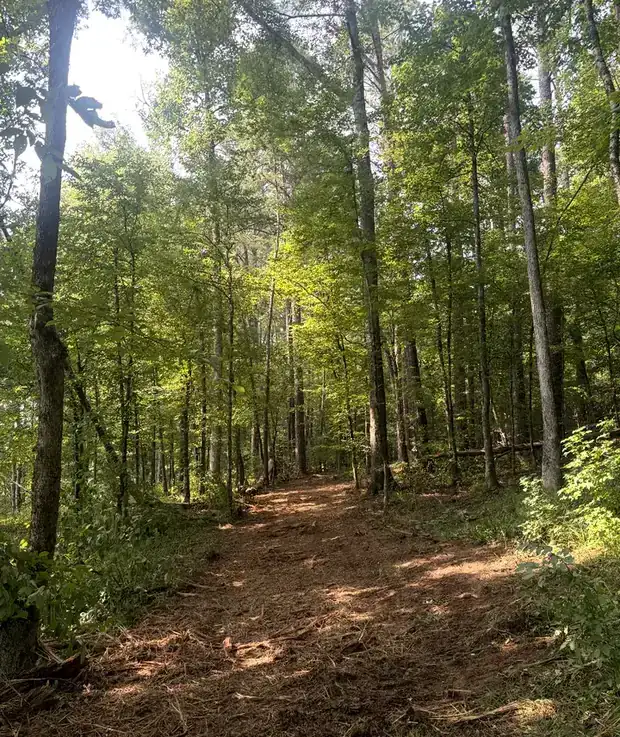
Open woods with a brown chip floor, walkable as soon as the machine pulls off. Stems are cut flush, roots stay in the ground, and the chips rot down in a season or two while holding the dirt. On heavy privet or kudzu, expect sprouts within a year or two. On lighter mixed brush it can be several years before it needs attention. A second pass is far quicker than the first because the big material is already gone. Once it is open, some people keep it that way with a mower. Whether a rotary mower will do the job is covered in bush hog vs forestry mulching.
Real Job Photos
Phone pictures from real jobs, captioned with what they show. See more recent work.
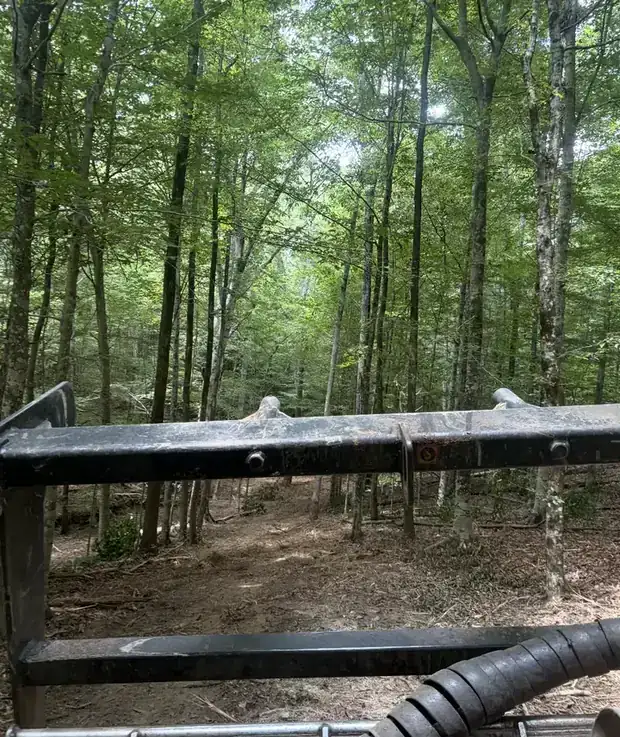
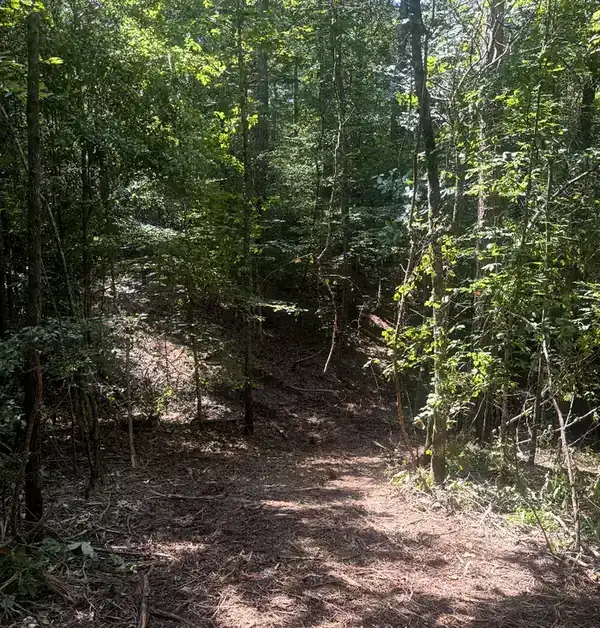
Will underbrush removal hurt the trees I want to keep?
It is done to leave them alone. The mulching head works below the canopy and around the trunks, and the operator runs slow enough to see what he is doing instead of scarring bark. Mark the trees you care most about and tell us before work starts. The machines ride on tracks with low ground pressure, which is easier on soft ground, and the chip layer left behind covers the soil.
How often does privet and underbrush need clearing again?
On heavy privet or kudzu, expect regrowth within a year or two, because both sprout from the root. On lighter mixed brush it can be several years. The second pass is far quicker than the first. Ground that gets mowed, grazed or treated after the first pass stays open much longer. Your county Extension office can tell you what follow-up fits your ground.
What is the difference between underbrush removal and land clearing?
Underbrush removal takes out the brush and small growth and leaves the timber standing, with the roots in the ground and a chip floor on top. Land clearing takes everything off, stumps included, and leaves bare graded dirt you can build on or plow. One is a mulcher job. The other is dozer and excavator work. We do both, and a lot of properties need some of each.
Can you clear underbrush on a wooded lot behind a house?
Yes. A wooded back lot grown up in privet, briars and saplings is normal work. The compact track loaders fit tight spots, and tracks let them cross soft ground and finished areas without cutting ruts. Tell us about the gate width, septic field lines, wells and anything hidden in the brush, such as old wire or junk, so the operator knows before he finds it.
When is the best time of year to clear underbrush on hunting land?
Late winter through summer suits hunting land, because the ground is drier and the deer are not disturbed right before the season. Mulching goes on all year as long as the ground will carry the machine. The leaf-off months let the operator see farther and let you see what you have. If you are calling in September, we still take the job. Just know that every hunter around has the same idea.
How a Job Runs
Tell Us What You Have
Call, text or send the form. County, rough acreage, what is growing on it and how a truck and trailer gets in.
We Look at the Ground
Close by, we come and look. Farther off, we can go over it with you on satellite first, then see it on the ground before the work starts.
A Number to Plan Around
Estimates are free and priced off the property. Small jobs carry a minimum, and you hear the figure before you commit.
The Machines Go to Work
We settle what comes out and what stays. Mark the trees you want kept, or walk it with us and point them out.
Finished, Not Just Knocked Down
Holes filled, ground pulled back to grade, and the fall set so water leaves the site instead of standing on it.
Underbrush Removal Near You
Based in Berry, in Fayette County. Eight west Alabama counties. Pick your county or town, or call or text and ask.
Towns
Pages for your town
Specific underbrush removal jobs
More services
Tree Removal
Dead, leaning and storm-damaged trees taken down by machine, stumps pulled, ground left level.
DetailsExcavating
Footings, trenches, culverts, stumps and the digging jobs that have no name.
DetailsSite Work
Access, drainage, culverts and finish grade, so the rest of the job can happen.
DetailsNeed Underbrush Removal?
Call or text, or send a few details. Estimates are free and priced off the property.