Trail Clearing and ATV Path Cutting
You own the land but you cannot get across it. We open trails, four-wheeler and side-by-side paths and access lanes with a forestry mulcher, and leave a chip floor you can ride.
Trail Clearing, Start to Finish
A lot of land out here only gets used at the edges, because there is no way into the middle. The old logging road grew shut. The trail to the back field is a tunnel of privet. The creek crossing is fine, but the hundred yards on either side of it are not. If you cannot ride it, you cannot hunt it, check fence on it, show it to a buyer or get a tractor to the far side.
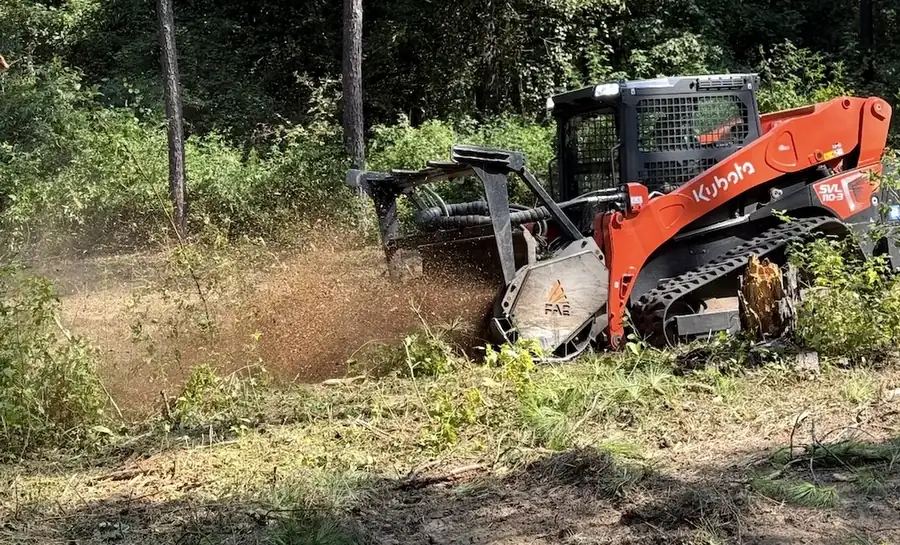
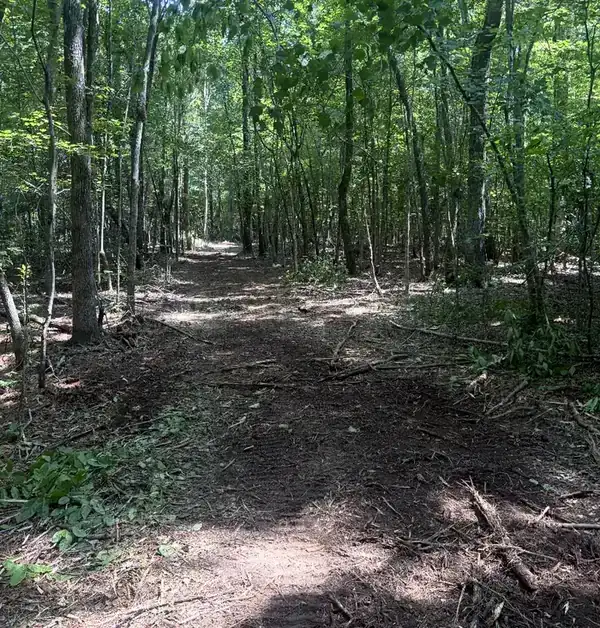
We cut trails with tracked mulchers. The head grinds brush, briars, saplings and standing stems up to roughly six to eight inches on the stump, and lays the chips down in the lane as it goes. One machine, one pass. There are no stumps sticking up to catch an axle, no brush piles down either side and nothing to haul. It is one of the most common uses of our forestry mulching machines.
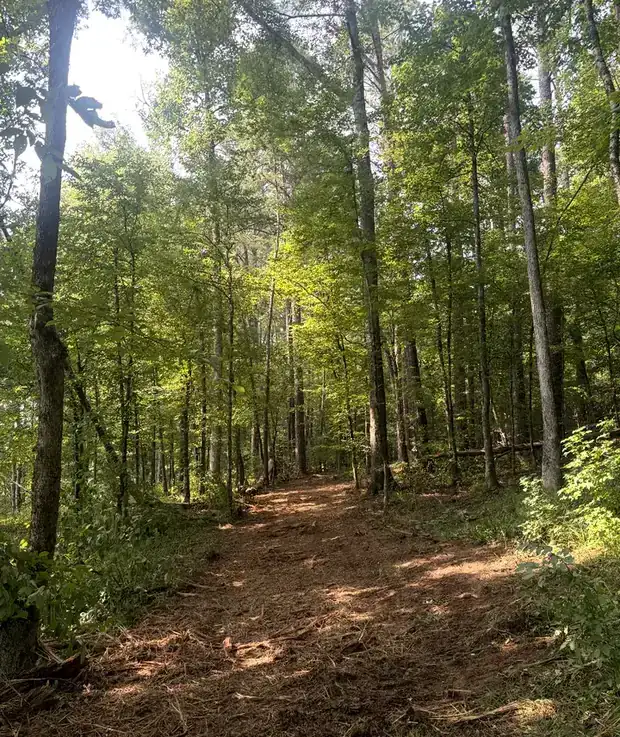
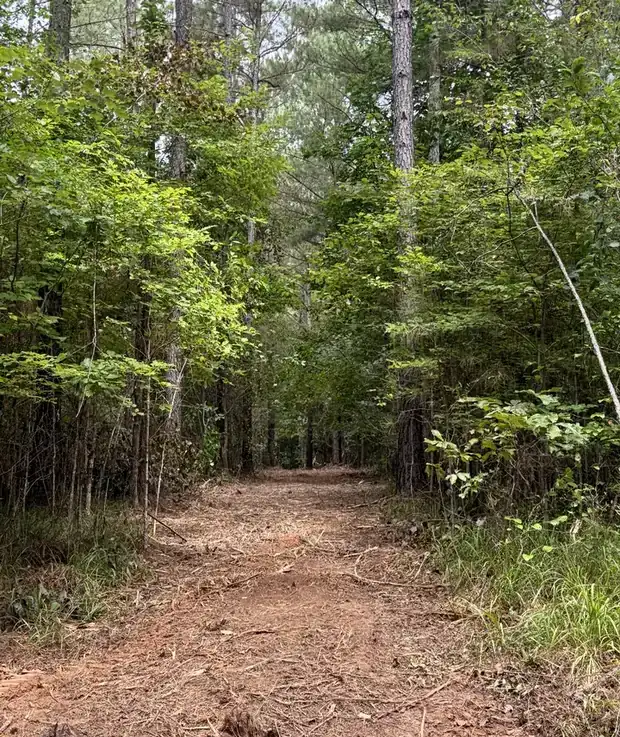
What you are left with is a lane with a chip floor, wide enough for whatever you plan to run down it: boots, a four-wheeler, a side-by-side, or a tractor and a trailer. Fayette County is our home county, and trail work on timber and hunting tracts across Fayette County is close to home. Call or text (205) 535-6376 and tell us roughly how long and how wide.
What trail clearing covers
- Walking trails cut through timber
- Four-wheeler and side-by-side paths
- Old logging roads reopened
- Access lanes to back fields and stands
- Loops and turnarounds where you need them
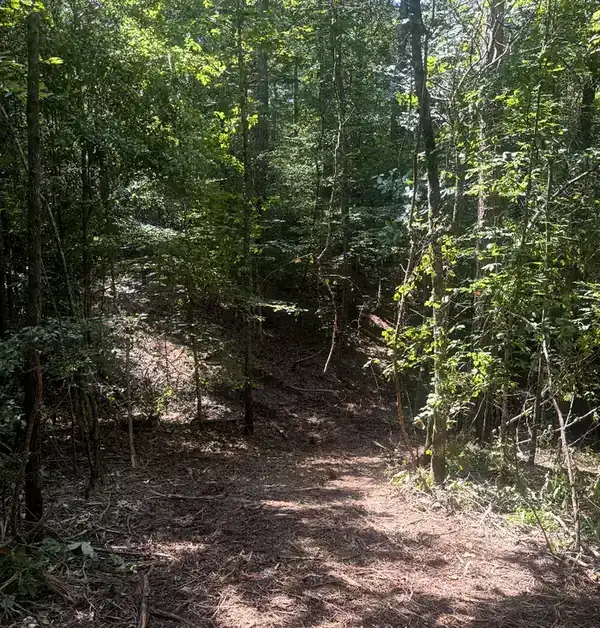
- Chip floor left, no brush piles
How wide, and where it runs
Width is the first decision. A walking trail can be one pass of the head. A four-wheeler path wants a little more, a side-by-side more again, and a lane you plan to take a tractor and trailer down needs room to swing at the bends. Tell us what will use it. Then the route. A trail that follows the lay of the hill stays dry and stays put. A trail that runs straight down a slope becomes a ditch in the first hard rain. We walk or ride it with you first, flag it, and go around the big timber, not through it.
What the machine handles and what it leaves
The mulcher takes brush, vines and stems up to roughly six to eight inches on the stump. Bigger trees on the line are either gone around, which makes a better-looking trail anyway, or taken out as a clearing job with the dozer and excavator. Stumps are cut flush with the ground and the root ball stays, which keeps the ground firm under the trail. The chips left behind cover the dirt so the lane does not turn to mud. Wet crossings and steep pitches are worth a look beforehand. Low ground pressure on tracks lets the machines cross soft spots without rutting them.
Trails on hunting land
On hunting land a trail is how you reach a stand without walking through the cover. Tell us where the stands and plots are, or ride it with us. Twenty minutes on a four-wheeler saves cutting a lane in the wrong place. Timing matters as well: work done well ahead of the season gives the woods time to settle. Our guide on when to cut hunting lanes and food plots covers the calendar. A trail keeps longest when it is ridden or mowed, and a touch-up pass later is far quicker than the first cut.
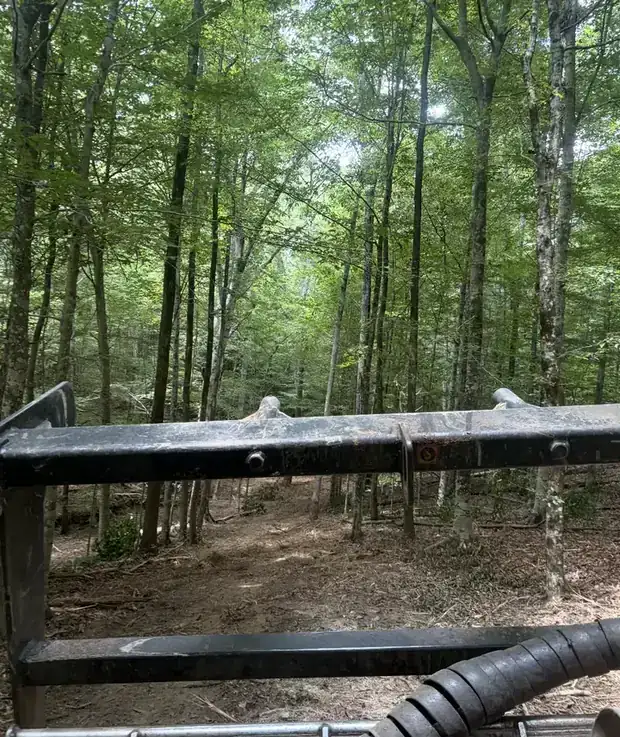
Real Job Photos
Phone pictures from real jobs, captioned with what they show. See more recent work.
Trail Clearing Questions
Not seeing yours? Call or text (205) 535-6376 and ask.
- Forestry Mulching vs Bulldozing: Which Is Right for Your Land in Alabama
- Forestry Mulching Cost Per Acre in Alabama: What Moves the Price
- What Is Forestry Mulching? How It Works and When It Fits
- Forestry Mulching Pros and Cons: An Honest Look
- Bush Hog vs Forestry Mulching: Which Does Your Land Need?
- What to Do After Forestry Mulching: Seeding, Regrowth and Upkeep
- All guides
How wide should an ATV or side-by-side trail be cut?
Wider than the machine, with room to spare at the bends and enough clearance that limbs do not slap the rider. A four-wheeler needs less than a side-by-side. If you ever plan to take a truck or a tractor down it, most people want eight to twelve feet. Wider costs more to cut and is easier to keep open. Tell us what will use the trail and we size the cut to it.
How much does it cost to have trails cut through woods?
A trail is priced on its length and width, what is growing in the line, how steep the ground is and how far the machine has to travel from where the trailer can park. Brush and saplings go fast. Thick stems near the top of the mulcher's range go slowly. Send the rough length, the width you want and a few photos, and we will give you a free estimate.
Will a mulched trail hold up, or will it grow back over?
The trail bed holds up well, because the roots stay in the ground and the chips cover the dirt. The growth along it will try to return, since most brush sprouts from the root. Riding the trail, mowing it or running a bush hog down it once the sprouts start keeps it open for years. Left alone completely, it will slowly close in again.
Can you reopen an old logging road that has grown shut?
Yes. An old road bed is usually the best route on a property, because somebody already picked the grade and firmed up the ground. The mulcher takes out the saplings, briars and privet that have filled it in. Washed-out sections, ruts and soft spots can be regraded, and we can rebuild it as a proper access road if you want more than a trail.
Can you cut a trail across a creek or a wet bottom?
We can cut up to and away from the crossing, and tracked machines handle soft ground better than wheels. The crossing itself needs thought. A culvert can carry a trail over a small branch, and our culvert installation page covers that. Work in a stream or a wetland can come under the U.S. Army Corps of Engineers, so check with them before anything goes in the water.
How a Job Runs
Tell Us What You Have
Call, text or send the form. County, rough acreage, what is growing on it and how a truck and trailer gets in.
We Look at the Ground
Close by, we come and look. Farther off, we can go over it with you on satellite first, then see it on the ground before the work starts.
A Number to Plan Around
Estimates are free and priced off the property. Small jobs carry a minimum, and you hear the figure before you commit.
The Machines Go to Work
We settle what comes out and what stays. Mark the trees you want kept, or walk it with us and point them out.
Finished, Not Just Knocked Down
Holes filled, ground pulled back to grade, and the fall set so water leaves the site instead of standing on it.
Trail Clearing Near You
Based in Berry, in Fayette County. Eight west Alabama counties. Pick your county or town, or call or text and ask.
Towns
Pages for your town
More services
Forestry Mulching
Brush, briars and small timber ground to mulch where they stand. No piles, no hauling.
DetailsLogging Cleanup
Tops, slash and stump sprouts mulched on cutover. Ready for what comes next.
DetailsLand Clearing
Trees pushed, stumps raked out, debris burned or hauled, ground graded and ready to use.
DetailsNeed Trail Clearing?
Call or text, or send a few details. Estimates are free and priced off the property.