Yard Drainage and Grading
Water standing in the yard, running across the shop floor or cutting a gully down the drive. We reshape the grade and cut swales, ditches and culverts so it has somewhere to go.
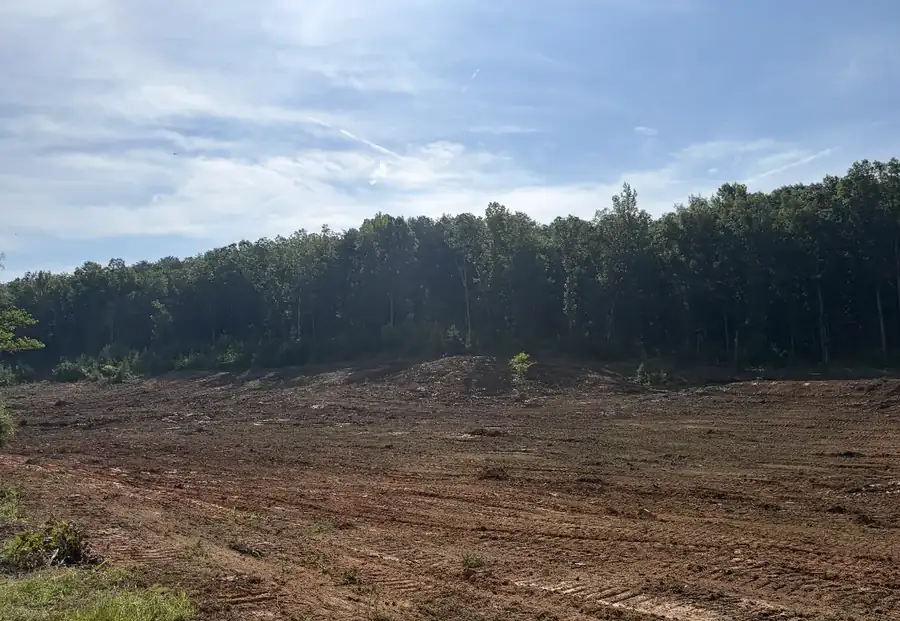
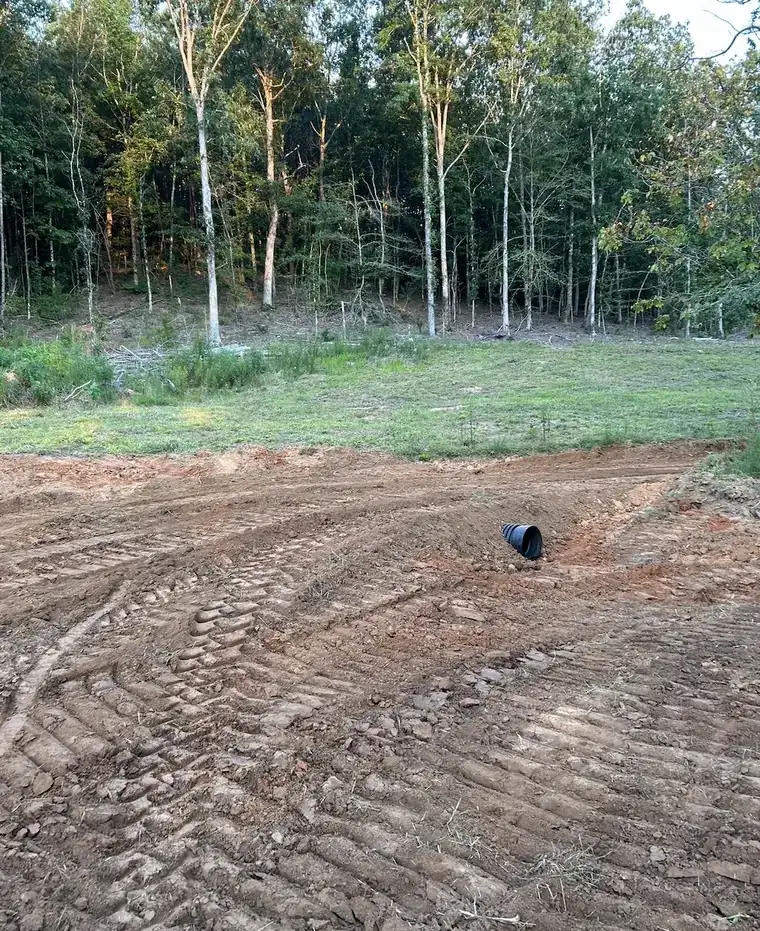
Yard Drainage, Start to Finish
Water is the real problem. A yard that stays soggy for days after a rain. A drive that gullies every storm. A shop that takes water across the slab. A field too wet to get a tractor on until summer. They look like four different problems. They are one: the water has no place to go, so it stands where it lands or runs where you do not want it. Red clay and hardpan make it worse, because very little soaks in.
We fix drainage with dirt work: grading, ditching and trenching. The ground is reshaped so it falls away from the house, the shop or the low spot. A swale, which is a wide shallow channel you can mow across, carries the water around what you want kept dry. A ditch carries it off faster where there is more of it. A culvert takes it under a drive or a path. It is the drainage half of our site work and dirt work, done with a dozer, an excavator and track loaders.
What you are left with is ground that sheds water and dries out, graded smooth and ready for seed or gravel. Fix the water and most of the rest stops happening. The same thing ruins drives, and our guide on gravel driveways washing out shows how. Tuscaloosa County, where the hills meet flatter ground at the fall line, is inside our service area: see Tuscaloosa County. Call or text (205) 535-6376.
What yard drainage and grading covers
- Yards regraded to fall away from buildings
- Swales cut to steer runoff
- Ditches dug and old ones reopened
- Culverts set under drives and paths
- Low spots filled and shaped
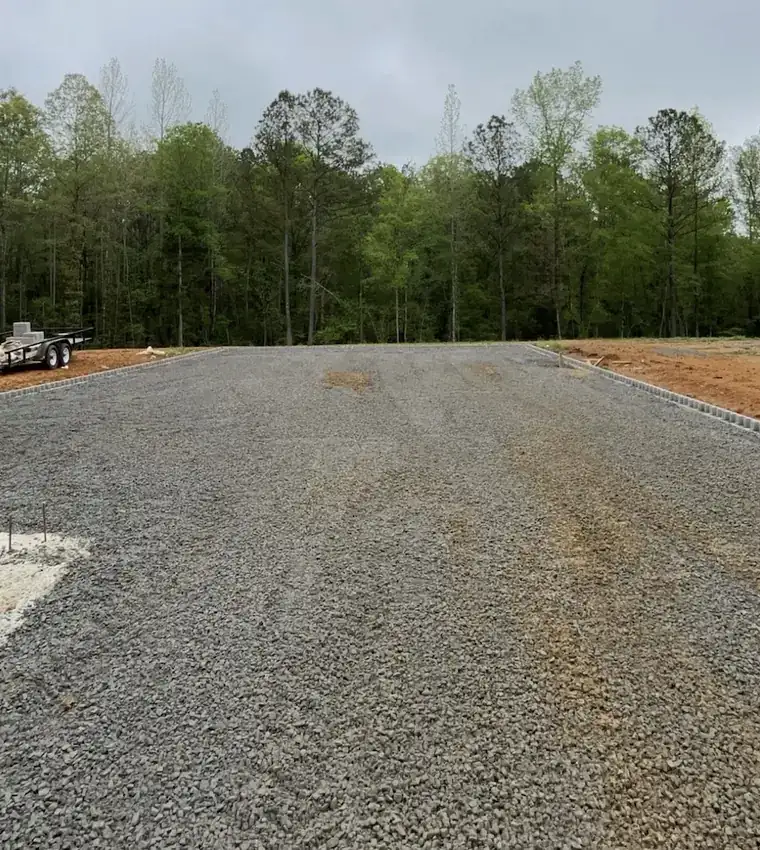
- Finish grade left smooth for seed
Find where the water comes from
The wet spot is where the water ends up. The fix is usually uphill. Roof water dumped at the corner of the house. A neighbor's field or a road ditch shedding onto your lot. A hillside behind the shop with nothing to turn the runoff. A drive that acts as a chute and delivers it to the garage door. The best time to look is during a hard rain, with a phone in your hand. A short video of where the water runs tells us more than any description, and it is often the difference between a small job and the wrong one.
Swale, ditch, culvert or regrade
Regrading is the first tool. A little fall away from a building does a lot, and a low spot that holds water can be filled and shaped so it drains. A swale handles sheet water across a yard and still mows like lawn. A ditch moves more water, faster, along a drive or a field edge. A culvert takes it under whatever is in the way. Most jobs use two or three of these together. The water also has to end up somewhere it is allowed to go, such as a road ditch, a branch or your own low ground, and not in the neighbor's yard.
Water at a shop, a slab or a field
A shop that takes water across the floor was usually built at or below the grade around it. The cure is to cut the ground down along the uphill side and lead the water around both ends. A field that stays wet may need its old ditches reopened, or a new one cut along the low edge. Ground that is wet all year, with standing water and bottom-land plants, may be a wetland, and work in wetlands and streams can come under the U.S. Army Corps of Engineers. Ask before it is ditched. Before any digging, an Alabama 811 locate has to be in place.
Real Job Photos
Phone pictures from real jobs, captioned with what they show. See more recent work.
How do I get rid of standing water in my yard after rain?
Give it somewhere to go. Standing water means the ground is flat or bowl-shaped at that spot and the soil will not soak it up. The usual fix is to fill and reshape the low spot so it falls toward a swale or a ditch, and to turn away any water arriving from uphill. Adding topsoil on its own rarely works, because the water simply moves to the next low place.
What is the difference between a swale and a ditch?
Shape and speed. A swale is wide and shallow with gentle sides, grassed over, and you can mow straight across it. It suits a yard, where it moves sheet water slowly around the house. A ditch is narrower and deeper with steeper sides. It carries more water and carries it faster, which is what you want along a driveway, a road or the edge of a field.
Who fixes yard drainage problems: a landscaper or an excavating contractor?
It depends on the fix. If the answer is moving dirt, such as regrading the yard, cutting a swale, trenching a ditch or setting a culvert, that is machine work, and it is what we do. Not sure which yours is? Text a video of the yard during a rain to (205) 535-6376 and we will tell you what we would do about it.
Will regrading my yard tear up the whole lawn?
Only the part that is reshaped. That area ends up as bare graded dirt and will need grass put back on it. The rest is protected by how the machines are built: they run on tracks with low ground pressure, so they cross a lawn without cutting ruts when the ground is dry enough. We leave the graded area smooth and ready for seed.
How much does yard grading and drainage work cost?
It is priced off the yard after a look, or after good photos and a video. What moves the number is how much dirt has to be cut or filled, how long the swale or ditch runs, whether a culvert is needed, whether fill has to be brought in, and how easily a machine can get to the spot. Small jobs carry a minimum that you hear before you commit.
How a Job Runs
Tell Us What You Have
Call, text or send the form. County, rough acreage, what is growing on it and how a truck and trailer gets in.
We Look at the Ground
Close by, we come and look. Farther off, we can go over it with you on satellite first, then see it on the ground before the work starts.
A Number to Plan Around
Estimates are free and priced off the property. Small jobs carry a minimum, and you hear the figure before you commit.
The Machines Go to Work
We settle what comes out and what stays. Mark the trees you want kept, or walk it with us and point them out.
Finished, Not Just Knocked Down
Holes filled, ground pulled back to grade, and the fall set so water leaves the site instead of standing on it.
Yard Drainage Near You
Based in Berry, in Fayette County. Eight west Alabama counties. Pick your county or town, or call or text and ask.
Towns
More services
Yard Drainage & Grading where you are
Each town has its own page: what the ground is like there, who issues the permit, and what Down South gets called for most.
Need Yard Drainage?
Call or text, or send a few details. Estimates are free and priced off the property.