Site Work & Dirt Work in West Alabama
Access cut in, culverts set, ditches and drainage run so water goes where you want it, laydown areas built, spoil moved and spread. The work nobody thinks about until the concrete truck cannot get back there.
Site Work, Start to Finish
Water is the real problem. Nearly every dirt problem out here is a water problem wearing a disguise. Standing water in a yard, a driveway that gullies every storm, a shop that takes water across the slab, a field that stays too wet to work: all of it comes back to where the water goes and how fast. Fix the water and most of the rest stops happening.
The other half of site work is making the rest of the job possible. A road in that a loaded truck can use. A turnaround at the end of it. A laydown area where material can sit without sinking. A culvert under the low spot so the drive does not wash out the first week. Builders call it site prep. Most people call it dirt work. Either way, it is what has to be right before anything else starts.
We do it with our own Cat dozer, excavator and compact track loaders, out of Berry in Fayette County, across Fayette, Walker, Tuscaloosa, Marion, Lamar, Pickens, Cullman and Winston counties. Homeowners, farmers, builders and commercial lots are all work we take. Estimates are free and priced off the property after a look. Call or text (205) 535-6376 and tell us what the water is doing or what has to get to the site.
What site work covers
- Access roads and truck turnarounds cut in
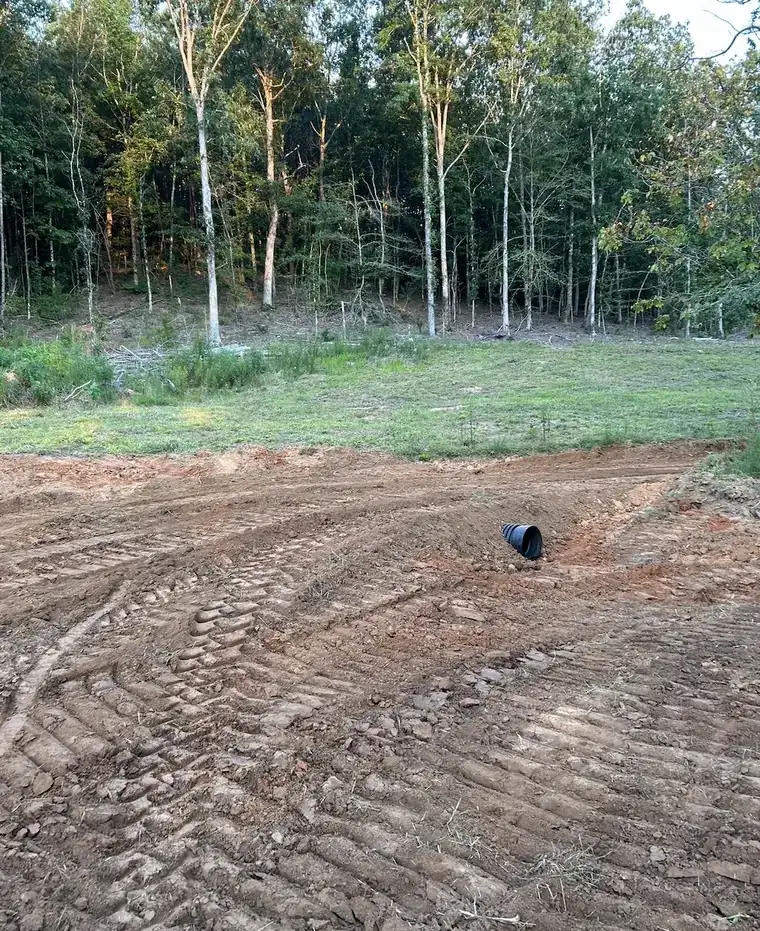
- Culverts set under drives and low spots
- Ditches, swales and French drains
- Yards regraded to fall away from houses
- Laydown areas built for materials
- Rough grade and finish grade
Drainage, which is most of it
Water needs a place to go and a slope to get there. When a yard holds water, the ground usually falls toward the house or sits flat with no outlet. When a shop takes water, the pad sits too low or nothing on the uphill side turns the water around it. The fixes are plain: regrade so the fall runs away from the building, cut a swale or a ditch to carry the water off, set a culvert where it has to cross a drive, or lay a French drain where a wet spot will not dry. We look at where the water comes from before any dirt moves. See yard drainage and grading.
Getting trucks and materials to the job
A concrete truck, a lumber delivery and a well rig all need the same things: a firm road wide enough to drive, a grade they can climb loaded, and room to turn around. We cut the access in, set the culvert at the low spot, and build a laydown area where material can sit without sinking into red clay. On a wooded or sloping lot this is the first work done, not the last. If the road ties into a county road or a state highway, ask the county engineer or ALDOT what is required at the right of way before the pipe goes in. For the drive itself, see driveways and access roads.
Grading: rough grade and finish grade
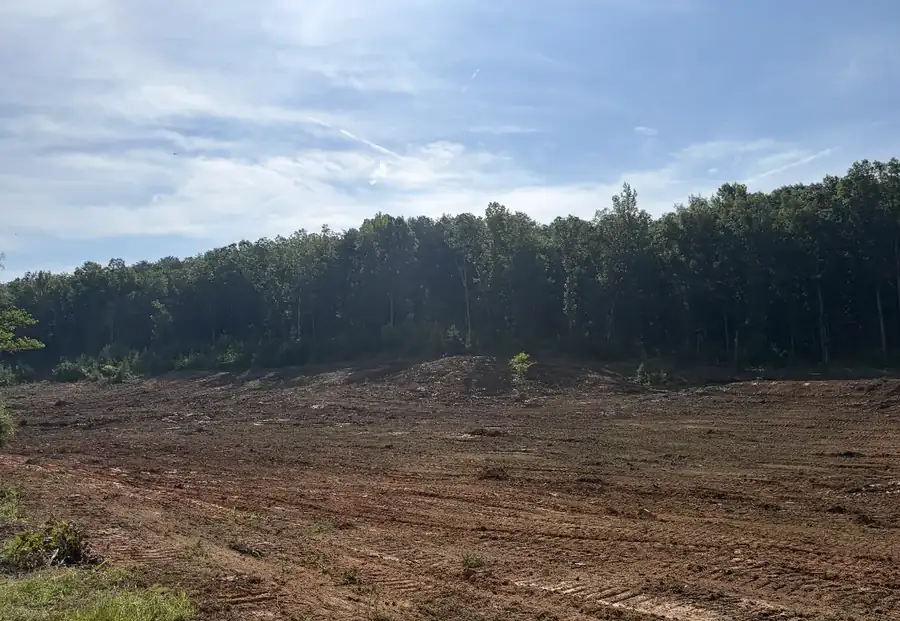
Rough grade is where the dirt ends up. Finish grade is where it is supposed to be. The dozer pulls the site back to plan, feathers the edges into the ground around it so it does not look like a scar, and leaves it ready for seed, gravel or concrete. Spoil gets spread where it is useful or stacked where you want it. Levelling a yard, shaping a building site and smoothing a field are the same skill at different sizes. If grading is the whole job, our land grading and dozer work page covers it.
Gravel, rain and bigger sites
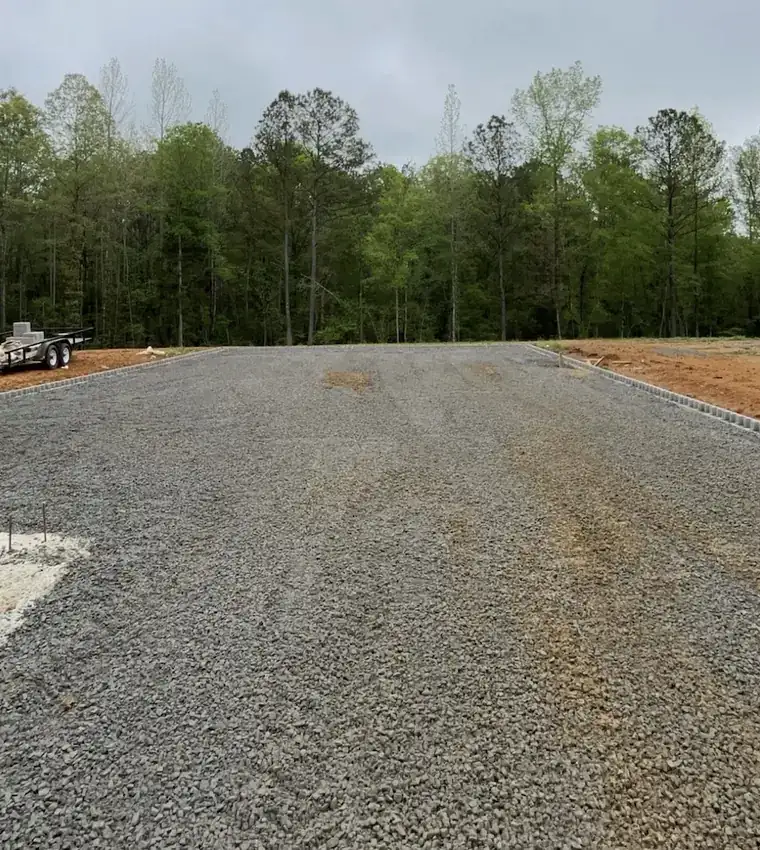
Gravel can come two ways: you have it delivered ahead of us and we place and grade it, which often costs you less, or you ask us about bringing it in. Either works. Weather matters more than most people plan for. Red clay that is too wet will not grade or pack right, so a wet week can mean waiting. On larger sites, know that ADEM runs a construction stormwater permit for land disturbance of one acre or more, and for smaller pieces of a larger development. Check with ADEM and your city or county before work starts. If a drive is your trouble spot, read why gravel driveways wash out.
Real Job Photos
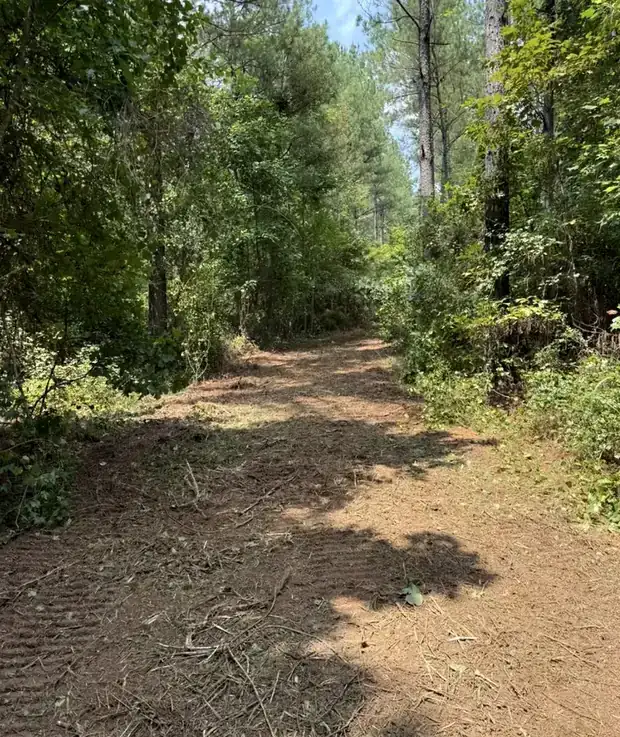
Phone pictures from real jobs, captioned with what they show. See more recent work.
Can you fix a yard that holds water after every rain?
Usually, yes. It is nearly always a grade problem: the ground falls toward the house, or there is a flat spot with nowhere for water to go. The fix is regrading, sometimes with a swale, a ditch or a drain line added. We look at where the water comes from and where it can leave before moving any dirt. Photos taken during a rain help more than anything.
What is the difference between site work and excavating?
Excavating is the digging itself: footings, trenches, stumps and culverts. Site work is the bigger picture of getting a piece of ground ready to use: access, drainage, grade, laydown and gravel. Most jobs are a mix, and the same machines do both here. Tell us what you are building and where the water goes now, and we will lay out what the site needs.
Do you haul in gravel for a pad or an access road?
You can have it delivered and we place and grade it, or you can ask us about bringing it in. Having the rock dumped on site ahead of the machines is often the lower-cost way for you. Tell us what the gravel is for, because a base under a drive, a pad for a building and a parking area do not all take the same rock or the same depth.
Do you do site prep for builders and commercial lots?
Yes. Commercial lots, rights of way, laydown yards and site prep sit alongside the home and farm work. We build to the plans and the stakes you give us: access, drainage, rough grade and finish grade. Larger sites may need ADEM construction stormwater coverage and city or county permits in hand before ground is broken, so check those early. If your project needs more than what is listed here, tell us about it.
Why does water run across my shop floor when it rains hard?
Because the ground around the shop sends it there. Either the pad sits lower than the dirt uphill of it, or nothing turns the water before it reaches the slab. The usual fix is a swale or a ditch cut on the uphill side, the grade around the building reshaped to fall away from it, and a culvert where that water has to cross the drive. It is plain dirt work.
How a Job Runs
Tell Us What You Have
Call, text or send the form. County, rough acreage, what is growing on it and how a truck and trailer gets in.
We Look at the Ground
Close by, we come and look. Farther off, we can go over it with you on satellite first, then see it on the ground before the work starts.
A Number to Plan Around
Estimates are free and priced off the property. Small jobs carry a minimum, and you hear the figure before you commit.
The Machines Go to Work
We settle what comes out and what stays. Mark the trees you want kept, or walk it with us and point them out.
Finished, Not Just Knocked Down
Holes filled, ground pulled back to grade, and the fall set so water leaves the site instead of standing on it.
Site Work Near You
Based in Berry, in Fayette County. Eight west Alabama counties. Pick your county or town, or call or text and ask.
Towns
Specific site work jobs
Yard Drainage
Standing water fixed with regrading, swales, ditches and culverts.
DetailsLand Grading
Rough and finish grading with a Cat dozer for sites, yards and fields.
DetailsMore services
House Pads
Pads cut, filled in lifts and compacted to grade for houses, shops and mobile homes.
DetailsDriveways
Gravel drives and access roads cut in, based, crowned and ditched so they last.
DetailsHouse Demolition
Old houses and outbuildings torn down, hauled off, slab out, lot filled and graded.
DetailsNeed Site Work?
Call or text, or send a few details. Estimates are free and priced off the property.