Land Grading Contractor and Dozer Work
Ground that is humped, rutted, sloped the wrong way or just not level enough to build on. We rough grade and finish grade with a Cat dozer: building sites, yards, fields and lots.
Land Grading, Start to Finish
Nothing gets built, planted or paved on ground that is the wrong shape. A building site with three feet of fall across it. A yard left in humps and ruts after the house went up. A field with stump holes, old terraces and a washed gully. A lot that sheds its water toward the house. You can live with it for years, or you can put a dozer on it and be done.
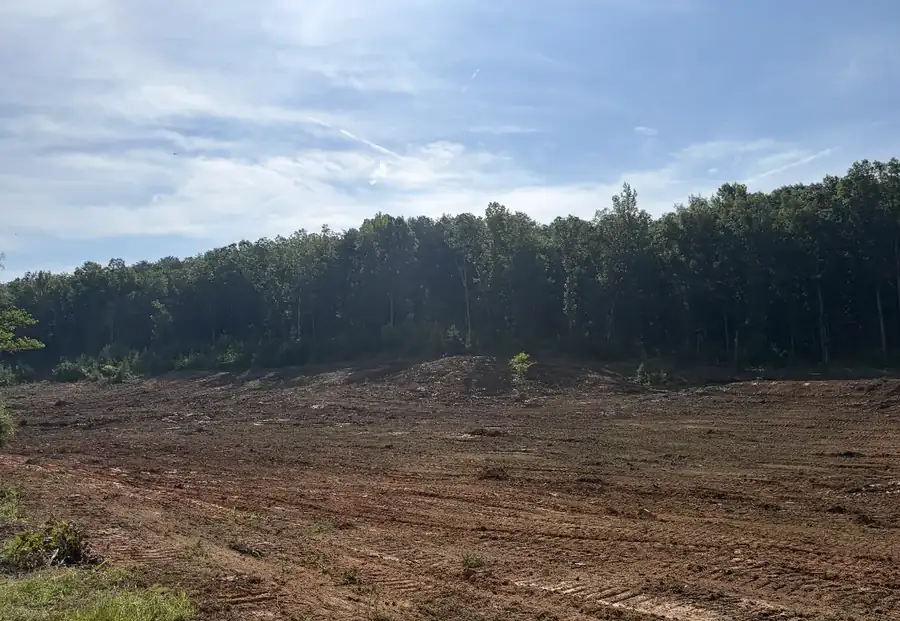
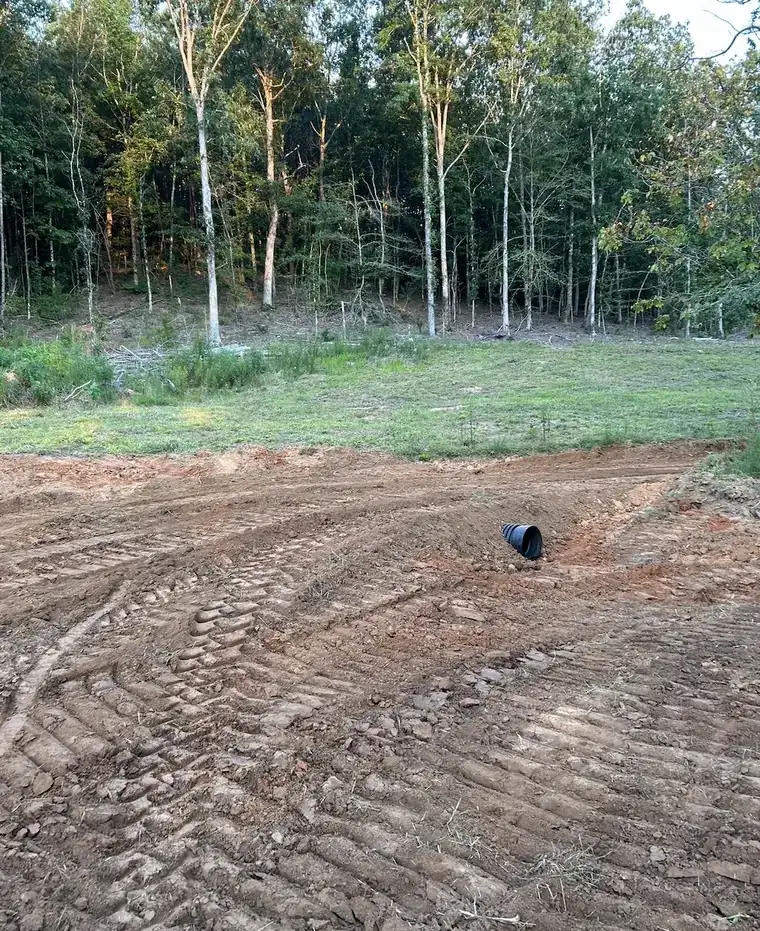
Grading is dozer work, and we run our own Cat dozer. Rough grade comes first: high ground is cut down, low ground is filled, and the site is brought close to the shape it needs. Finish grade comes last: the surface is pulled smooth, the edges are feathered into the ground around it so it does not look like a scar, and the fall is set so water leaves. It is a core part of our site work and dirt work.
What you are left with is ground at the right height and the right slope, ready for seed, gravel or concrete. If you are searching for a grading contractor, dozer work or dirt work near Berry, that is us. Berry is our home town, and we work eight west Alabama counties from there. Call or text (205) 535-6376 and tell us what the ground is for.
What land grading covers
- Rough grading for building sites
- Finish grade pulled smooth
- Yards leveled and reshaped
- Fields and pasture smoothed out
- Fill built up and compacted in lifts
- Fall set so water drains off
Rough grade and finish grade
Rough grade is the heavy half. The dozer cuts the high side, pushes it to the low side and gets the site close to where it needs to be. Fill goes in layers and is packed as it comes up, because fill pushed in one deep lift settles later. Finish grade is the careful half. The blade is run light and slow to take out the track marks and humps and to set the slope. A builder, a concrete crew and whoever puts down your grass all want a different finish, so tell us what follows.
Level is not flat
People ask for level, but almost nothing outside should be dead flat, because flat ground holds water. What you want is even ground with a slight fall in the right direction: away from the house, off the pad, toward the ditch. On a building site we work to your plans or your surveyor's stakes if you have them. If you do not, we set it off the ground that is there, so water runs away from the building and the drive comes in at a slope a truck can use. Our page on yard drainage and grading covers the water side.
Dozer or mulcher: what the job calls for
A dozer moves dirt. It also pushes trees and rakes roots, so clearing and grading are often one job done with one machine. A mulcher leaves the dirt alone and only grinds what is growing on it. If the plan is a house, a shop, a field you will plow or anything that needs the ground reshaped, it is dozer work. If you only want the brush gone and the soil left covered, it is mulching. Our guide on forestry mulching versus bulldozing helps you pick. On larger sites, check with ADEM about its construction stormwater permit, which generally applies once an acre or more is disturbed.
Real Job Photos
Phone pictures from real jobs, captioned with what they show. See more recent work.
What does a grading contractor do?
A grading contractor reshapes ground with machines so it is the right height and slope for what comes next. That covers cutting down high spots, filling low ones, leveling a site for a building, smoothing a yard or a field, and setting the fall so water drains. Grading usually follows clearing and comes before concrete, gravel or grass.
What is the difference between rough grading and finish grading?
Rough grading moves the bulk of the dirt. It brings the site close to its final shape and height by cutting and filling. Finish grading is the last light pass that smooths the surface, takes out humps and track marks and sets the exact slope. Rough grade is what a builder needs to start work. Finish grade is what you need before seed or gravel.
How much does dozer work cost per hour or per day in Alabama?
It depends on the job, and so does the way it is priced. Open-ended work, such as general clean-up and smoothing, often makes more sense by the hour or the day. A defined job, such as grading one building site, is usually priced for the whole job. You know which it is before we start. Small jobs carry a minimum to cover hauling the machine, and you hear that first.
Can you level a sloped backyard?
Yes, by cutting and filling. Dirt is taken from the high side and built up in packed layers on the low side to make a level area. That leaves a bank at the top, the bottom or both, and those banks have to be sloped back gently enough to hold and to mow. How much flat ground you can get depends on how steep the yard is and how much room there is for the banks.
When is the ground too wet to grade?
When it sticks to the tracks and the blade smears it and does not cut it. Wet clay will not pack properly, ruts under the machine and dries into hard clods. We work year round as long as the ground will carry the machine, but wet ground means waiting, or working slower so the site is not torn up. The drier months give the cleanest finish.
How a Job Runs
Tell Us What You Have
Call, text or send the form. County, rough acreage, what is growing on it and how a truck and trailer gets in.
We Look at the Ground
Close by, we come and look. Farther off, we can go over it with you on satellite first, then see it on the ground before the work starts.
A Number to Plan Around
Estimates are free and priced off the property. Small jobs carry a minimum, and you hear the figure before you commit.
The Machines Go to Work
We settle what comes out and what stays. Mark the trees you want kept, or walk it with us and point them out.
Finished, Not Just Knocked Down
Holes filled, ground pulled back to grade, and the fall set so water leaves the site instead of standing on it.
Land Grading Near You
Based in Berry, in Fayette County. Eight west Alabama counties. Pick your county or town, or call or text and ask.
Towns
More services
Need Land Grading?
Call or text, or send a few details. Estimates are free and priced off the property.