Shop Pads, Barn Pads and Building Pads
A metal building is only as level as what it sits on. We build compacted dirt and gravel pads for shops, barns, pole barns, carports and mobile homes: cut, filled and compacted in lifts.
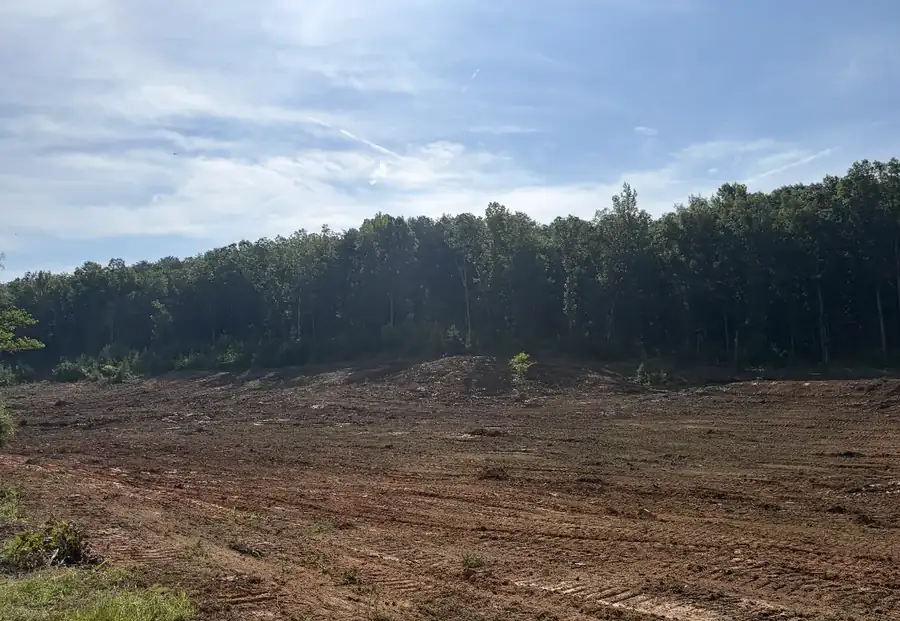
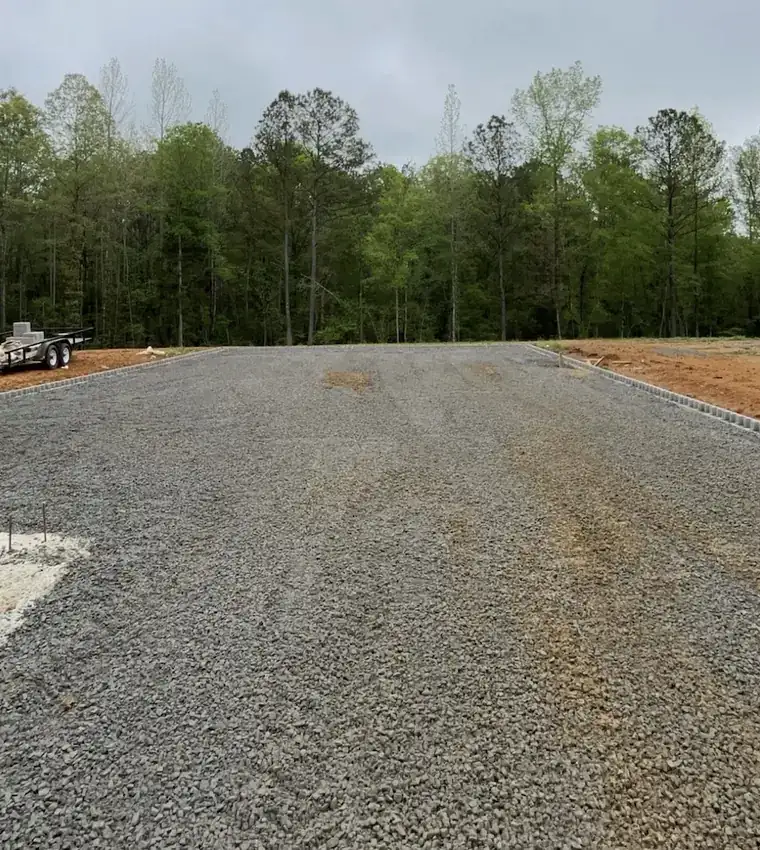
Shop & Barn Pads, Start to Finish
The building is ordered and the delivery date is set. What is not ready is the ground. Metal building kits, pole barns and carports all assume a flat, firm, square place to stand, and the yard is none of those. Set a shop on a pad that was pushed up in one afternoon and never packed, and in a couple of winters the doors stop lining up and the slab cracks along the fill line. The pad is the least exciting part of a building, and it decides how the rest behaves.
We build pads the slow way. Topsoil, roots and soft material come off first. The cut side is taken down to firm ground. The fill side is built up in lifts, thin layers that are each compacted before the next goes on, not dumped in one push and hoped over. The top is graded to drain and finished in dirt or in gravel, depending on what goes on it. It is the same method as our house pads, sized for a shop or a barn.
What you are left with is a pad that is square to your stakes, a little bigger than the building and high enough that water runs away from it. Your builder or concrete crew takes it from there. To see what moves the price, read our house pad cost guide. Winfield, on the Marion and Fayette county line, is close to home: see Winfield. Call or text (205) 535-6376 with the building size.
What shop and barn pads cover
- Shop and metal building pads
- Barn and pole barn sites
- Carport and equipment pads
- Mobile home and manufactured home pads
- Fill compacted in lifts
- Dirt or gravel finish, graded to drain
Cut, fill and compaction
Most pads are part cut and part fill. On the high side the dozer cuts down to firm, undisturbed ground. On the low side the pad is built up, and this is where pads go wrong. Fill placed in one thick push stays loose in the middle, no matter how many times a machine drives over the top. Placed in lifts and packed one layer at a time, it becomes ground you can build on. Spoil from the cut gets spread, stacked or hauled, whichever you want. If trees and stumps are on the spot now, they come out first, roots and all.
Dirt pad or gravel pad
It depends what is going on it. A shop getting a concrete slab usually wants a compacted dirt pad, with whatever stone base your concrete crew asks for under the slab. A pole barn, a carport, an equipment shed or a parking pad often gets a gravel top. Gravel drains, stays firm in wet weather and keeps mud out of the building. A mobile home pad is built to the set-up your installer needs. Tell us which building, its size and who is putting it up, and we build to what they ask for. We can bring the gravel, or you can have it delivered ahead of us.
Size, height and where the water goes
Build the pad bigger than the building, so the edges of the slab are not sitting on the shoulder of the fill and there is room to work around it. Set it high enough that the ground falls away on every side. On a hillside the uphill edge needs a swale or a ditch to turn runoff around the pad, or the first storm will run straight across it. Think about the drive too. A concrete truck has to reach the pad, and the door has to meet the drive at a slope you can pull a trailer up. If the ground needs more shaping than the pad alone, see land grading and dozer work.
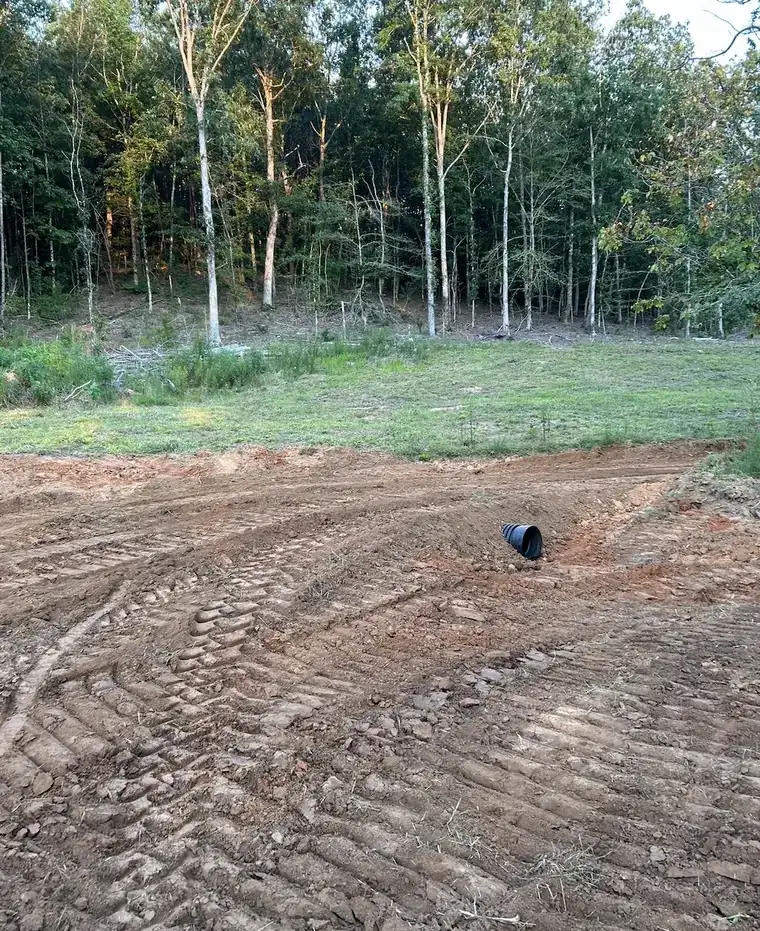
Real Job Photos
Phone pictures from real jobs, captioned with what they show. See more recent work.
How much bigger than the building should a shop pad be?
Bigger on every side, so the slab edge sits on solid pad and not on the sloped shoulder of the fill, and so there is room to set forms and move around the building. Your building supplier or your concrete crew will normally give you the extra they want. Tell us the building size and what they asked for, and we lay the pad out to that.
Do I need a gravel pad or a dirt pad for a metal building?
If the building is getting a concrete slab, a compacted dirt pad is the usual start, and your concrete crew will say what stone they want under the slab. If the building will sit on a gravel floor, as many carports, pole barns and equipment sheds do, the pad is topped with gravel and graded to drain. Ask your building supplier which they require.
How long should a dirt pad settle before pouring concrete?
A pad that was built in thin lifts and compacted as it went up is not relying on time to settle. Waiting matters most for fill that was pushed in loose, and even a full winter does not fix that reliably. Whether to pour right away or wait is a call for your concrete contractor or your builder. Tell us your pour date when you call.
How much does it cost to build a pad for a pole barn or shop?
It is priced off the site. The size of the pad is the start. After that it comes down to how much fall there is across it, since more slope means more cut and fill, whether trees and stumps have to come out, whether fill or gravel has to be brought in, and how easily trucks can reach it. Estimates are free.
Can you build a level pad on a hillside for a barn?
Yes. A level bench is cut into the hill, and the dirt from the cut builds up the low side in compacted lifts. The bank above and the fill slope below are shaped to hold, and the runoff coming down the hill is turned around the pad with a swale or a ditch. Steeper ground takes more dirt work, and the drive up to the pad needs planning too.
How a Job Runs
Tell Us What You Have
Call, text or send the form. County, rough acreage, what is growing on it and how a truck and trailer gets in.
We Look at the Ground
Close by, we come and look. Farther off, we can go over it with you on satellite first, then see it on the ground before the work starts.
A Number to Plan Around
Estimates are free and priced off the property. Small jobs carry a minimum, and you hear the figure before you commit.
The Machines Go to Work
We settle what comes out and what stays. Mark the trees you want kept, or walk it with us and point them out.
Finished, Not Just Knocked Down
Holes filled, ground pulled back to grade, and the fall set so water leaves the site instead of standing on it.
Shop & Barn Pads Near You
Based in Berry, in Fayette County. Eight west Alabama counties. Pick your county or town, or call or text and ask.
Towns
Pages for your town
More services
House Pads
Pads cut, filled in lifts and compacted to grade for houses, shops and mobile homes.
DetailsDriveways
Gravel drives and access roads cut in, based, crowned and ditched so they last.
DetailsHouse Demolition
Old houses and outbuildings torn down, hauled off, slab out, lot filled and graded.
DetailsNeed Shop & Barn Pads?
Call or text, or send a few details. Estimates are free and priced off the property.