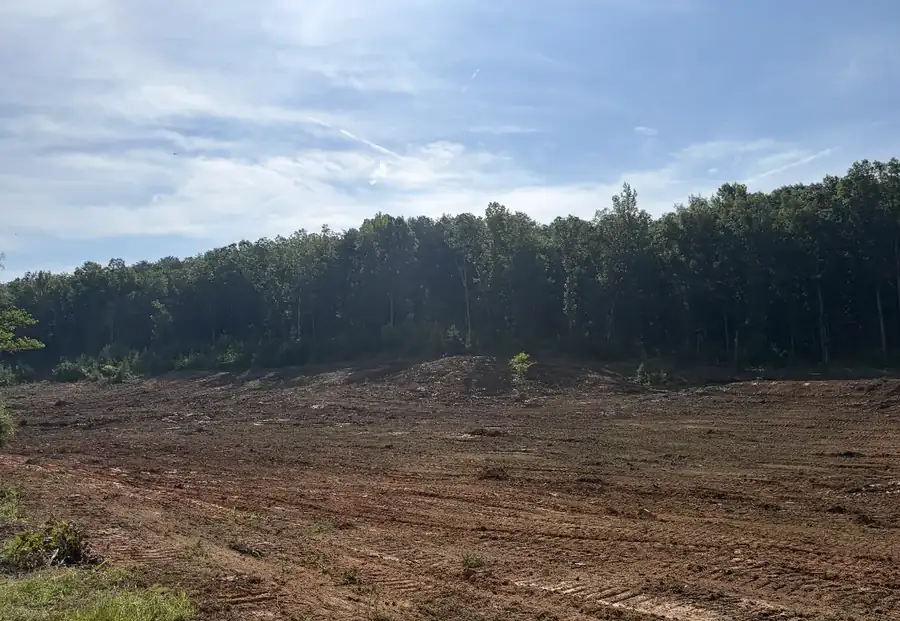
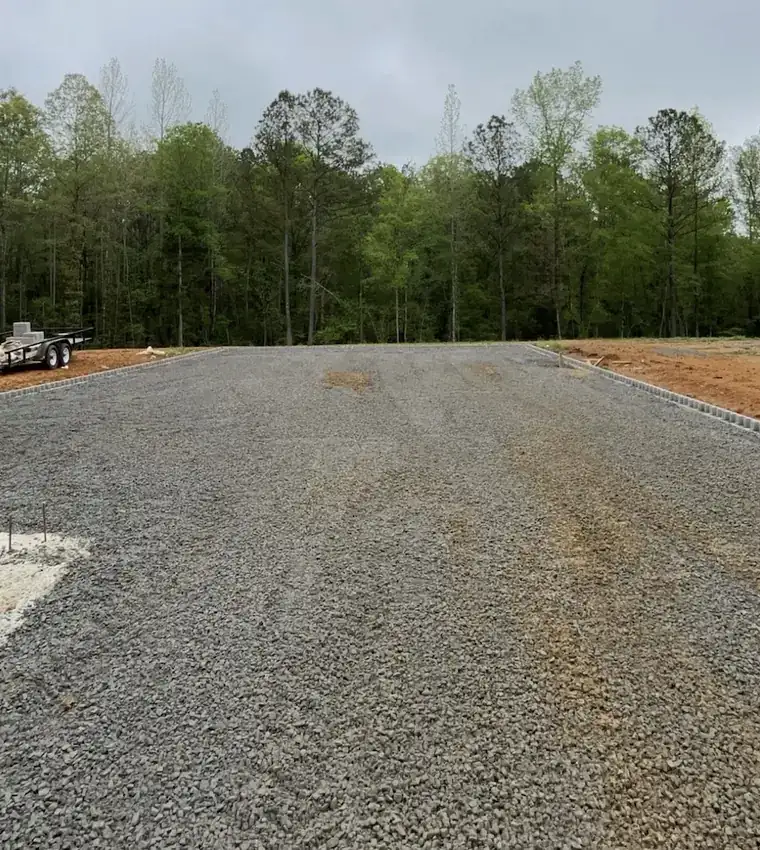
House pad cost in Alabama is set by the size of the pad, how much the ground falls across it, how much dirt has to be cut, filled and compacted, whether that dirt is on site or has to be trucked, and what has to be cleared first. Down South Land Solutions gives a free estimate after looking at the site and your plans.
What a pad price buys
A pad is a compacted platform of dirt at the right height, in the right place, shaped so water runs away from it on every side. You are paying for machine time to cut and move dirt, time to compact the fill in lifts, any dirt or rock that has to be brought in, and the grading around it. Your slab crew should show up to something they can work on instead of something they have to fix first. A level-looking patch pushed out in an afternoon is a different product at a different price, and the difference shows up years later as a crack. See house pads and building pads.
Pad size and working room
The pad is bigger than the house. It needs room around the footprint for forms, for the crew to work, and for the grade to fall away from the building before it meets the yard. A larger footprint is more dirt moved and more surface to compact, and the cost climbs faster than the square footage on sloping ground, because every extra foot of width is a deeper cut on one side and a taller fill on the other. Garages, porches and a parking apron belong in the size you give us. A shop, barn or mobile home pad is priced the same way. See shop and barn pads.
The fall across the site: cut and fill
How much the ground drops from one side of the pad to the other is the largest single driver. On nearly flat ground a pad is a light strip and shape. On a hillside, most pads are part cut and part fill. The cut side is taken down to firm ground. The fill side is built up in lifts and compacted as it goes. The more fall, the more dirt moves, and the taller the fill, the more lifts it takes. A very steep site may need the cut bank laid back to a slope or held with a wall, which is its own line on the quote.
Where the dirt comes from, and where the spoil goes
The cheapest pad is one where the cut makes exactly enough good dirt for the fill. That is called balancing the site, and where the plans allow it we set the pad to get close. When the site is short, fill has to come from somewhere. A borrow spot elsewhere on your own land is the low-cost answer. Fill that arrives by the truckload is material plus hauling, and it moves a pad price more than anything except slope. When the site is long on dirt, the spoil has to be spread, stacked or hauled. Spreading it on your own land costs the least.
What is on the ground and in it
A wooded site has to be cleared first, and the stumps and root balls have to come out from under the pad, because roots left in the ground rot and the fill above them sinks. Topsoil and soft organic dirt are stripped off the footprint, since they will not compact. Then there is what the bucket finds. Red clay cuts and packs well when the moisture is right. Chert and sandstone ledges slow the cut. A wet seep or a soft pocket has to be dug out and replaced. An estimate after a look catches most of this. Rock that could not be seen from the top can still change the plan once digging starts, and you hear about it before the work goes on.
Compaction in lifts is time, and time is price
Fill dumped in one push and smoothed over looks the same on the day as fill placed in thin lifts and compacted. It does not act the same. Loose fill settles under the weight of a house, and a settled pad under a slab is an expensive problem that shows up later. Building in lifts takes more passes and more hours, and that is where an honest pad quote and a low one usually part ways. Dirt that is too wet will not compact either, so a rainy stretch means waiting. If your builder or lender wants the compaction tested, ask them what they need before the fill goes in.
Drainage, the drive and getting trucks to the pad
A pad that sheds water onto its own drive, or sits in the path of the hillside above it, is not finished. Swales to turn water around the pad, a ditch on the uphill side and a culvert under the low spot are small costs while the dozer is there and large ones later. Access counts too. Dirt trucks, the gravel truck and the concrete truck all need a firm way in, so the pad and the drive are often priced and built together in one trip. If the ground only needs shaping and not a full pad, that is land grading, and it costs less.
Comparing quotes, and what to have ready
Ask each contractor: how high is the fill and is it compacted in lifts? Is clearing and stump removal in the price? Where does the fill come from, and is trucking included? What happens to the spoil? Is the pad built to the plans or the surveyor's stakes? Is drainage around it included? For our estimate, have the county, the size of the house, plans or stakes if you have them, what is growing on the site and how a truck gets in. The full order of work is in our guide to clearing land for a house pad.
Common Questions
How much does a house pad cost in Alabama?
It depends on the size of the pad, the fall across the site, how much dirt is cut, filled and compacted, whether fill has to be trucked in, and what has to be cleared first. A pad on nearly flat open ground and one benched into a wooded hillside are far apart. Our estimate is free after a look.
Is a mobile home pad cheaper than a house pad?
Usually it is a smaller job, because the footprint is narrower, but the same things set the price: slope, cut and fill, clearing and where the dirt comes from. The drive can matter more, since a home on a truck needs a wide, firm way in with room to swing.
Does a house pad price include clearing the lot and the driveway?
Only if the quote says so, and that is the first thing to check when two pad prices are far apart. We can price the clearing, the drive, the drainage and the pad together and do them in one trip, which saves hauling the machines in more than once.
Want a Number for Your Ground?
Have the house size, your plans or the surveyor's stakes, and a note of how a truck gets to the site. Call or text (205) 535-6376 with the county, and we will look at the ground and give you a free estimate for a pad built in lifts and ready for your builder.
A guide can only show what moves the price. The number for your job comes from a look at your property, and estimates are free.
See our house pads page or call or text (205) 535-6376.