
Driveway and Field-Road Culvert Installation
Water has to cross your drive somewhere. We set driveway and field-road culverts with the excavator: bedded, backfilled, covered and left with both ends open.
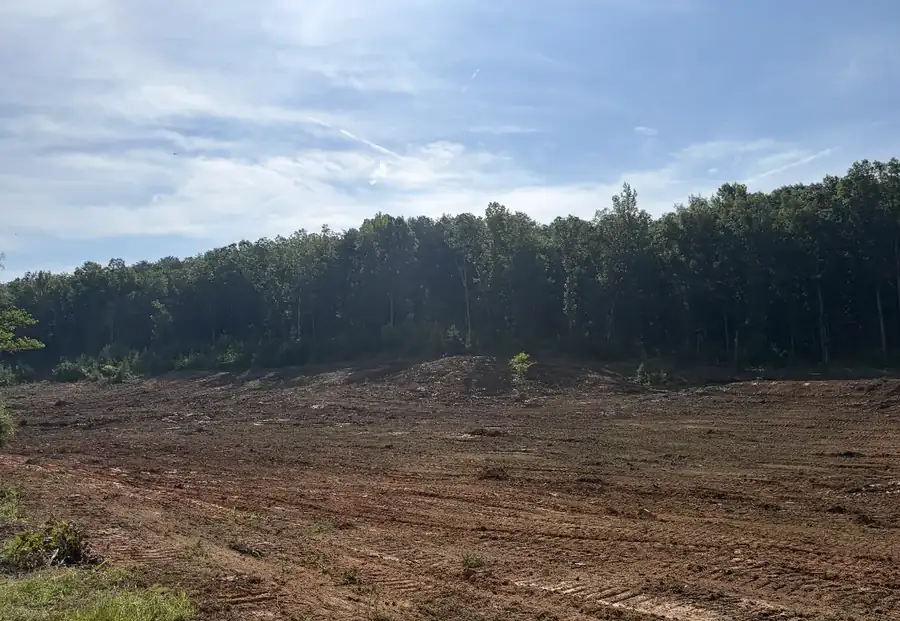
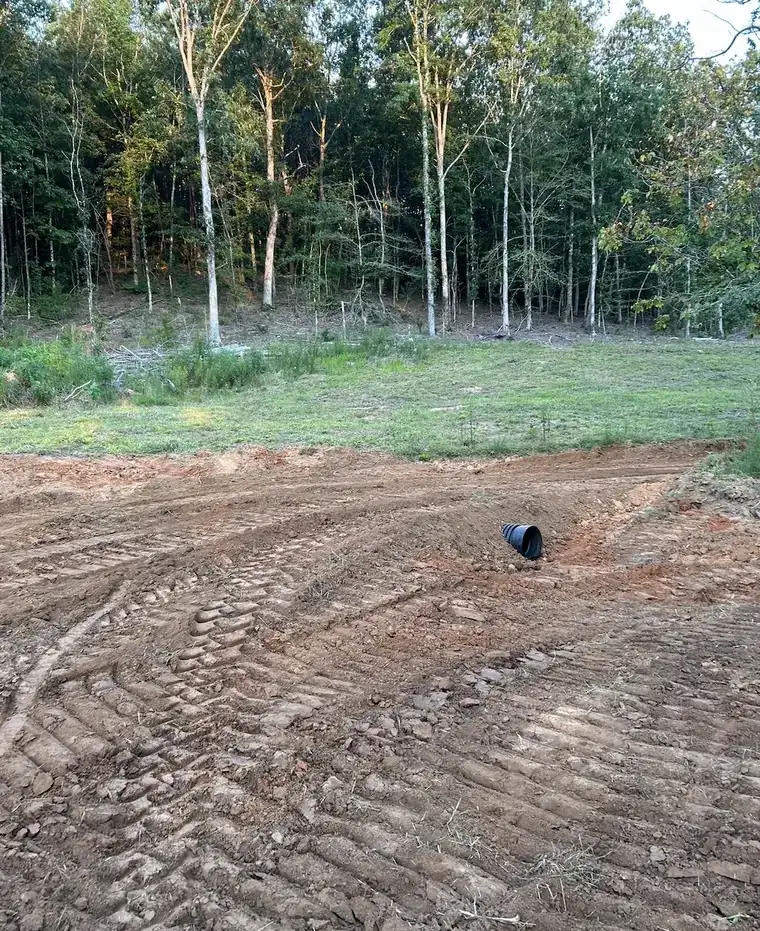
Culvert Installation, Start to Finish
Most drives cross water at least once: the road ditch at the entrance, a wet-weather branch halfway back, a low spot that only runs when it storms. With no pipe there, the water crosses on top. It cuts a gully through the gravel, stands in the low spot until it is a mudhole, or backs up the ditch onto the neighbor. A culvert is a small part doing an important job, and one that is set wrong fails in the first hard rain.
We set them with the excavator. The trench is dug to grade so the pipe falls with the water. The pipe is bedded so it sits evenly along its whole length, then backfilled and packed in layers up both sides and covered deep enough to carry traffic. The ends are kept open and the ditch is shaped to feed it. Culverts are part of how we build driveways and access roads, and we set them on their own as well.
What you are left with is a crossing you can drive a loaded truck over and a ditch that runs. A pipe is one line in the budget for a drive, and our gravel driveway cost guide shows where it fits. Pickens County, with its low ground along the Tombigbee, is inside our service area, and we take culvert work across Pickens County. Call or text (205) 535-6376.
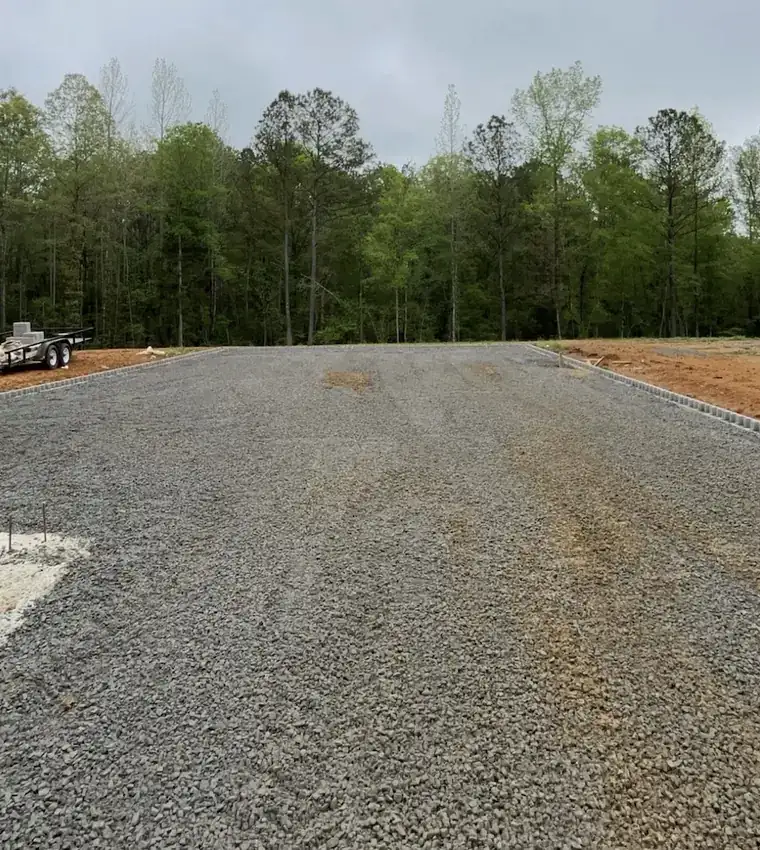
What culvert installation covers
- Driveway entrance culverts at the road
- Field-road and farm-lane crossings
- Trench dug to grade for fall
- Pipe bedded, backfilled and packed
- Cover built up to carry traffic
- Old crushed or clogged pipes replaced
Size it for the water above it
A culvert is sized for the water that reaches it, and that depends on how much ground drains to that spot. A pipe at the bottom of a long hollow sees far more water than one under a flat yard entrance. Too small, and the water goes over the top and takes the drive with it. Watch what the ditch does in a hard rain, and look at the pipes your neighbors up and down the road are using. At a public road the size is often not your choice: the county engineer, the city or ALDOT may set the diameter, the length and the material.
Bedding, backfill and cover
Pipes fail from the outside in. A pipe laid over rocks and humps bends and comes apart at the joints. A pipe with loose dirt thrown in beside it gets pushed out of round the first time a truck crosses. A pipe with too little dirt over it gets crushed. So the trench bottom is shaped and firm, the fill goes in on both sides in layers and is packed as it comes up, and the cover is built up before anything heavy rolls over. The ends matter too. An end that is buried, crushed or choked with brush turns a culvert into a dam.
Permits at the road and in the creek
Where your drive meets a state highway, ALDOT permits the turnout and any drainage pipe in its right of way. On a county road ask the county engineer, and inside a town ask the city. Ask before the pipe goes in, because a pipe of the wrong size at a public road may have to come back out. A pipe in a creek or a branch that runs all year is a different matter: work in streams and wetlands can come under the U.S. Army Corps of Engineers, so check first. Before any digging, an Alabama 811 locate has to be in place. Road ditches are where buried water, phone and fiber lines often run.
Real Job Photos
Phone pictures from real jobs, captioned with what they show. See more recent work.
What size culvert pipe do I need for my driveway?
It depends on how much water reaches that spot in a hard rain, which comes down to how much land drains to it. A flat entrance needs far less pipe than the mouth of a hollow. At a county road or a state highway the county engineer or ALDOT may set the size for you, so ask them first. Away from the road, we look at the ditch and the ground above it and size the pipe to that.
Do I need a permit to put a culvert in at a county road in Alabama?
Ask the county engineer's office before you buy pipe. Counties set their own rules for driveway connections to county roads, and some specify the pipe size, length and material. On a state highway the turnout is permitted by ALDOT, starting at its district office. Inside a town, ask the city. We set the pipe to whatever the road authority requires, so have that answer in hand first.
How deep should a driveway culvert be buried?
Deep enough that the dirt over it spreads the weight of whatever drives across. The amount of cover depends on the pipe material, its diameter and the loads, and the pipe maker publishes a minimum for each. A drive that sees concrete and gravel trucks needs more than a footpath. Where the ditch is too shallow for enough cover, the drive is built up over the pipe.
How much does it cost to install a driveway culvert?
It is priced on the pipe and the digging. What moves it is the diameter and length of the pipe, the material, how deep the ditch is, how much fill and gravel it takes to cover it, and whether an old pipe has to come out first. Setting a culvert while a drive is being built or repaired costs less than a separate trip. Estimates are free.
Why does water go around or over my culvert?
Usually one of four reasons. The pipe is too small for the water reaching it. An end is crushed, buried or blocked with leaves and brush. The pipe was set too high, so water ponds before it can enter. Or the ditch above was never shaped to lead the water in. Each one can be fixed, and the last three do not always mean a new pipe.
How a Job Runs
Tell Us What You Have
Call, text or send the form. County, rough acreage, what is growing on it and how a truck and trailer gets in.
We Look at the Ground
Close by, we come and look. Farther off, we can go over it with you on satellite first, then see it on the ground before the work starts.
A Number to Plan Around
Estimates are free and priced off the property. Small jobs carry a minimum, and you hear the figure before you commit.
The Machines Go to Work
We settle what comes out and what stays. Mark the trees you want kept, or walk it with us and point them out.
Finished, Not Just Knocked Down
Holes filled, ground pulled back to grade, and the fall set so water leaves the site instead of standing on it.
Culvert Installation Near You
Based in Berry, in Fayette County. Eight west Alabama counties. Pick your county or town, or call or text and ask.
Towns
Pages for your town
More services
Culvert Installation where you are
Each town has its own page: what the ground is like there, who issues the permit, and what Down South gets called for most.
Need Culvert Installation?
Call or text, or send a few details. Estimates are free and priced off the property.