Brush Clearing and Brush Removal
Briars over your head, privet you cannot see through, saplings where the yard used to stop. We grind it where it stands with a forestry mulcher and leave ground you can walk, mow and use.
Brush Clearing, Start to Finish
Brush does not ask permission. Leave a lot, a field edge or the back of a property alone for a few seasons in this part of Alabama and it fills with briars, privet, honeysuckle and sweetgum whips. A few seasons more and you cannot walk through it, a bush hog cannot cut it, and you no longer know what is in there. Snakes like it. Buyers do not. By then it is well past a weekend with a chainsaw.
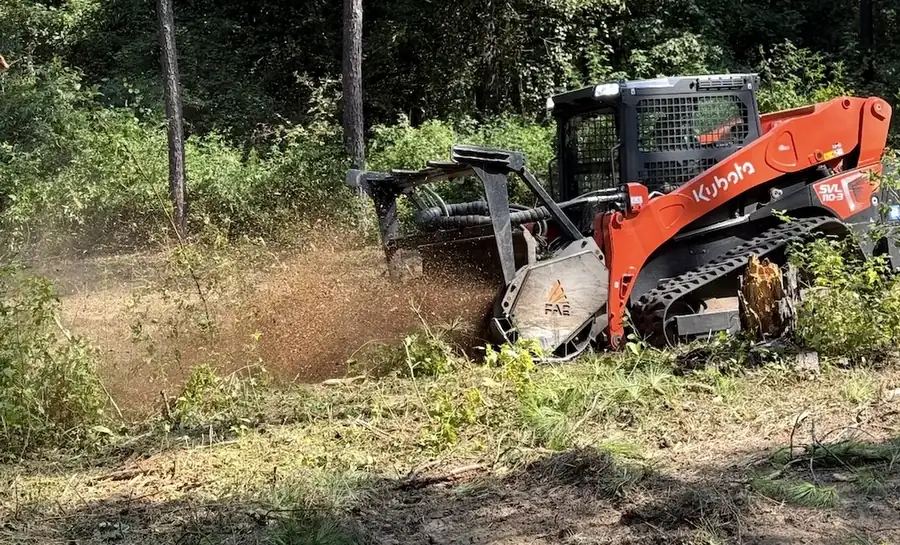
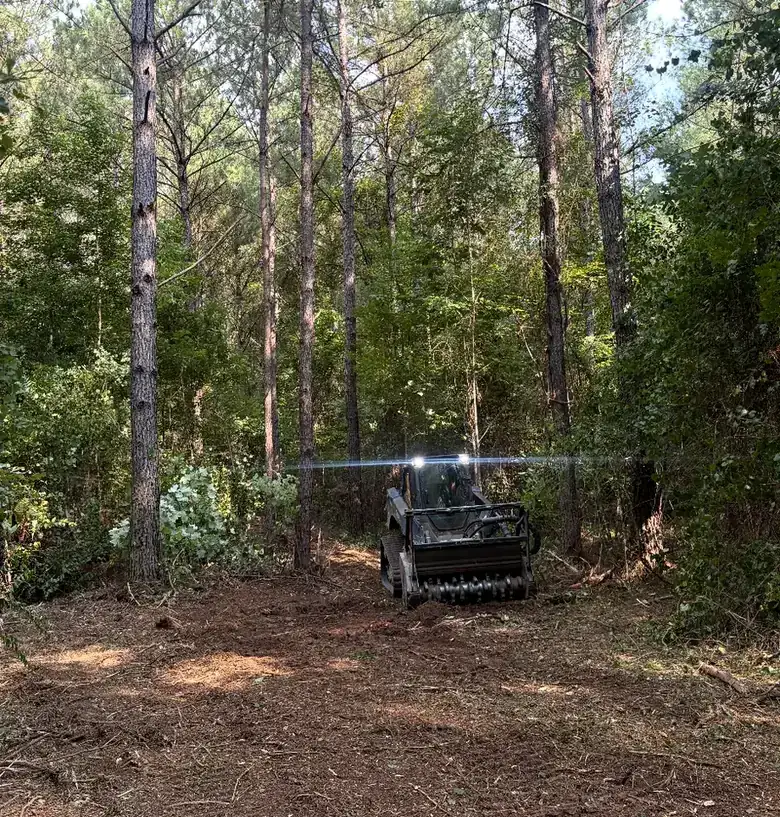
We clear it with tracked mulching machines: a Cat compact track loader with a drum mulching head, and a Kubota SVL110-3 with an FAE head. The head grinds brush, briars, vines and saplings where they stand and lays the chips down as mulch. No piles to burn and nothing to haul. The trees you want to keep stay standing with the junk gone from under them. If you searched for brush removal, this is the same work our underbrush removal page describes.
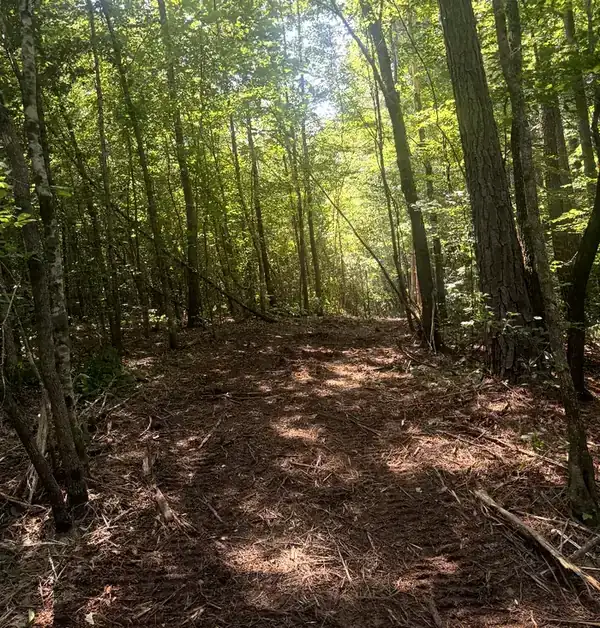
What you are left with is open ground with a chip floor that holds the dirt and slows the next round of sprouts. It will try to come back, because privet and kudzu always do. Our guide on clearing privet, kudzu and underbrush explains what grows back and how to stay ahead of it. Text a photo of the mess to (205) 535-6376 and we can tell you where it falls.
What brush clearing covers
- Briars, blackberry and greenbrier ground down
- Privet thickets and honeysuckle cleared
- Kudzu patches mulched to the ground
- Pine saplings and sweetgum whips removed
- Overgrown lots and field edges opened
- Keeper trees left standing and unscarred
What the mulcher takes and where it stops
The working range on our machines runs from briars and vines up to standing hardwood roughly six to eight inches on the stump. That covers nearly everything people call brush: privet, kudzu, greenbrier, honeysuckle, pine saplings and sweetgum whips. Past that size it is timber, and timber is a clearing job for the dozer and excavator, which we also run. Mulching cuts stumps flush and leaves the roots in the ground. For a yard edge, a view, a field border or hunting land, that is what you want. If the ground is going to be plowed or built on, tell us, because then the stumps should come out.
Bush hog, mulcher or dozer
A bush hog mows grass, weeds and stems about as thick as your thumb. Once the saplings get past that, it rides over them or breaks something. A dozer will clear anything, but it scrapes the topsoil into the pile along with the brush and leaves bare dirt to wash. A mulcher sits between the two. It cuts what a bush hog cannot and leaves the soil where it is, covered. That is why it suits overgrown lots, fence rows, ditch banks and the back corners of a place. Our bush hog versus forestry mulching guide goes through it.
Town lots and small jobs
Half an acre behind a house is a normal job for us. The machines run on tracks with low ground pressure, so they cross a lawn or soft ground without cutting ruts. Tell us the gate width, where the septic tank and field lines are, and anything hidden in the brush like old wire, a well or a pile of block, since the head finds those the hard way. Very small jobs carry a minimum, and you hear the figure before you commit. Jasper, the Walker County seat, is next door to us, and overgrown lots around Jasper are close to home.
Real Job Photos
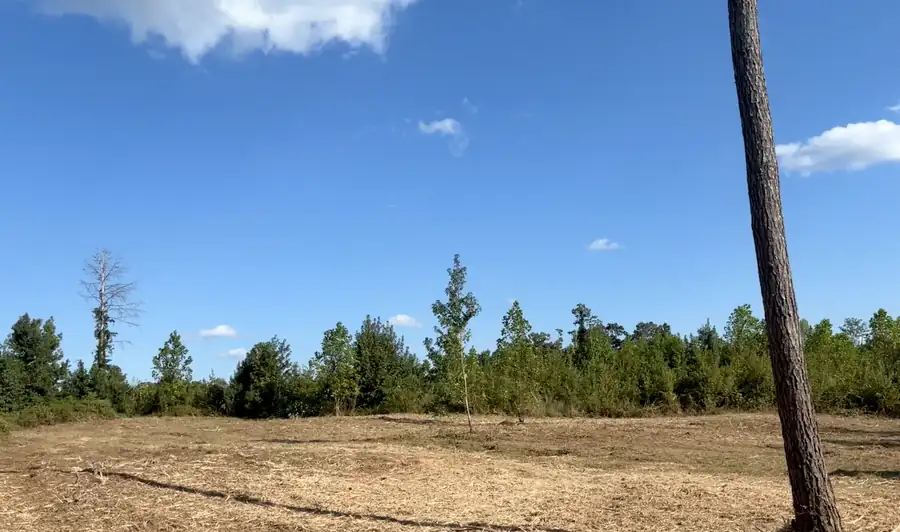
Phone pictures from real jobs, captioned with what they show. See more recent work.
What is the fastest way to clear thick brush and briars?
A forestry mulcher. One tracked machine grinds briars, vines, privet and saplings where they stand and leaves the chips on the ground, so there is no cutting, dragging, piling, burning or hauling. Hand clearing is slow, and a bush hog stops once stems get much thicker than your thumb. A dozer is quick too, but it leaves bare dirt and piles to deal with.
Will brush grow back after it has been mulched?
Some of it will. Mulching cuts everything off at the ground and leaves the roots, and privet, sweetgum, briars and kudzu all sprout from roots. One pass is a reset, not a cure. Mowing or bush hogging the regrowth while it is small keeps it open, and a second mulching pass later is far quicker than the first. Your county Extension office can advise on follow-up for specific plants.
How much does brush clearing cost per acre in Alabama?
No per-acre figure fits every property. An acre of briars and thumb-sized saplings is a different job from an acre of six-inch hardwood. Price moves with stem size, how thick it stands, slope, how wet the ground is, and whether a trailer can get close. Small jobs carry a minimum that you hear before you commit. Send the county, the rough size and a few photos for a free estimate.
Can you clear brush without damaging the trees I want to keep?
Yes. That is the point of using a mulcher. The operator works around the trees you mark and takes the privet, briars and saplings out from under them. We work at a pace that lets the operator see what he is doing, not one that makes time and scars bark. Flag the keepers, or walk the property with us and point them out.
Can a mulcher clear brush on a steep bank or on wet ground?
Often. The machines run on tracks, which spread the weight and grip better than tires, and the chips they leave help hold a bank in place. Slope and soft ground both slow the work, and some banks are too steep for any machine to hold safely. Wet ground can mean waiting for it to dry or working slower so the site is not torn up. Send photos and we will tell you.
How a Job Runs
Tell Us What You Have
Call, text or send the form. County, rough acreage, what is growing on it and how a truck and trailer gets in.
We Look at the Ground
Close by, we come and look. Farther off, we can go over it with you on satellite first, then see it on the ground before the work starts.
A Number to Plan Around
Estimates are free and priced off the property. Small jobs carry a minimum, and you hear the figure before you commit.
The Machines Go to Work
We settle what comes out and what stays. Mark the trees you want kept, or walk it with us and point them out.
Finished, Not Just Knocked Down
Holes filled, ground pulled back to grade, and the fall set so water leaves the site instead of standing on it.
Brush Clearing Near You
Based in Berry, in Fayette County. Eight west Alabama counties. Pick your county or town, or call or text and ask.
Towns
Pages for your town
More services
Underbrush Removal
Privet, briars and saplings mulched out from under the trees you are keeping.
DetailsTree Removal
Dead, leaning and storm-damaged trees taken down by machine, stumps pulled, ground left level.
DetailsExcavating
Footings, trenches, culverts, stumps and the digging jobs that have no name.
DetailsNeed Brush Clearing?
Call or text, or send a few details. Estimates are free and priced off the property.