Ask what the price covers, what happens to the stumps and the debris, who will be on the machine and how the ground will be left. Those four questions sort a real quote from a guess, and the full checklist is below.
How to use this list
Use it on every contractor you talk to, us included. A good one will answer all of it without getting short with you. If the answers are vague, the invoice usually is too. You do not need to know the trade. You only need to ask the same questions of everyone and compare what comes back. Write the answers down next to each name. When two prices are far apart, the reason is almost always sitting in those notes: one quote has the stumps coming out and the debris leaving, and the other one does not.
Who is doing the work
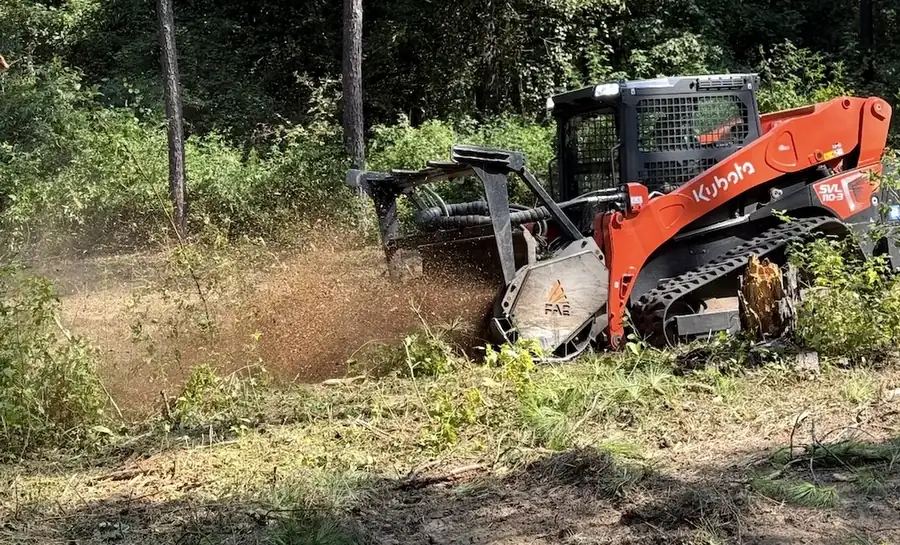
Are you the company that will do the job, or do you pass the lead to someone else? Where are you based, and where do the machines come from? Do you own the equipment or rent it for each job? Who will be running the machine on my land? Can I see photos of your own machines on jobs like mine? A lot of land clearing websites are lead sellers. They take your details and sell them to whoever is buying that week. Asking who shows up finds that out quickly. A real outfit names its town and its machines without having to think about it.
Paperwork: damage, permits and 811
How do you handle damage on my property if something goes wrong? Does this job need a permit, and who gets it? Has Alabama 811 been contacted before any digging? Ask to see the paper, not just hear about it. On permits, a straight answer sounds like: ask the county or the city, and here is why we think you should. On locates, Alabama 811 is free. Its website gives a minimum of 2 to 10 working days before digging, not counting the day you ask, and the utilities then mark their own lines. Lines you ran yourself, such as water to a barn, are yours to point out.
What the price covers
Is this a price for the whole job, or an hourly or daily rate? If it is a rate, what happens when the day ends and the job has not? Is there a charge for hauling the machines in? Is there a minimum? What is left out? Will you put it in writing? Neither kind of pricing is wrong. Open-ended clean-up often suits a rate. A marked tract with a clear edge suits a job price. What matters is that you know which one you have before the machine is unloaded. Our land clearing cost guide shows what moves the number.
Stumps, roots and debris
Are the stumps coming out or staying? Is this mulching or clearing, and why that one? What happens to the trees and brush: mulched, burned or hauled? If burned, who gets the burn permit and who stays with the fire? If hauled, is that in the price? Debris is the line most often missing from a low quote. Mulched in place adds nothing. Burned adds some. Hauled to a permitted site adds the most. If you are not sure which method your ground needs, read forestry mulching vs bulldozing before you compare prices, because the two leave different ground behind.
How the ground is left
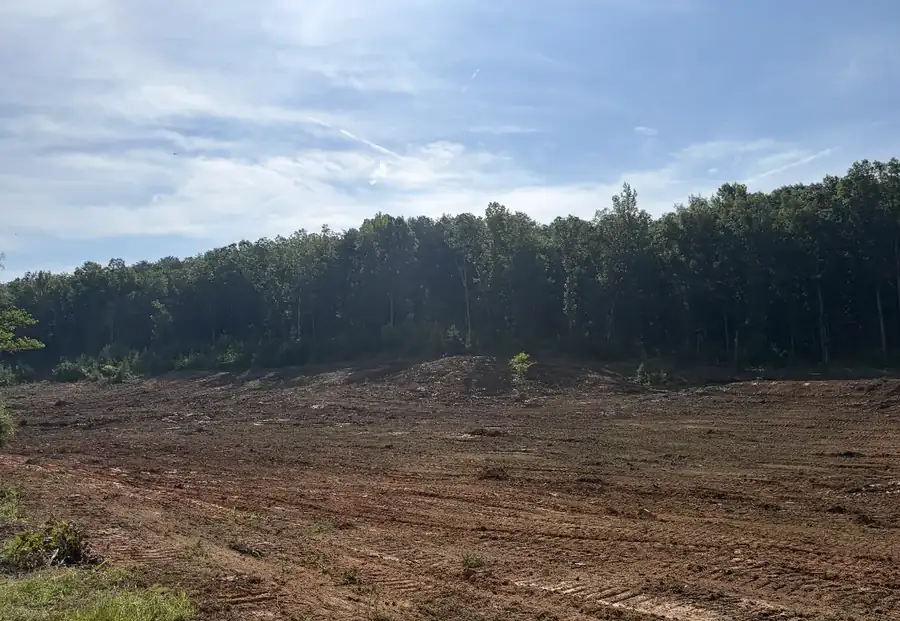
Will the holes be filled and the ground graded? Which way will water run when you are done? What do you do about ruts? Which trees are staying, and how will you protect them? Clearing that stops when the trees are down leaves rough ground full of stump holes. Ask what finished looks like, and make sure both of you mean the same thing. On our land clearing jobs, finished means holes filled, ground pulled back to grade, spoil spread or stacked where you want it, and the fall set so water leaves the site.
Schedule and weather
When can you start, and how firm is that date? What happens if it rains for a week? How long will the job take once you start? Wet ground slows everything and can tear up a site, so a contractor who says it depends on the weather is telling you the truth. Be wary of a firm promise made in a wet month. Ask instead what the plan is when the ground will not carry the machine: wait, move to the high ground first, or work slower so the site is not rutted. An honest answer here is worth more than an early date.
Signs to walk away
A per-acre price over the phone, from someone who has not looked at the land in person or on a map. No answer on stumps or debris. An out-of-area phone number and no named town. A promise that the brush will never grow back. Pressure to decide today. Two tracts of the same size can be far apart in price because of what is standing on them, the slope and the access. A number given blind is either too low and will climb, or padded for the worst case. Either way, you are the one who pays for the guess.
Common Questions
Should I get more than one quote for land clearing?
Yes, and ask each contractor the same questions. Compare what each price covers, not just the totals. A low number that leaves out the stumps, the debris or the finish grading is not the cheaper job. It is a smaller job with the rest still to pay for.
Is an hourly rate or a job price better for land clearing?
It depends on the job. Open-ended clean-up with no clear edge often makes more sense by the hour or the day. A defined tract is usually priced for the whole job. Make sure you know which one you are getting, and what happens if the work runs past the time allowed.
What should a written land clearing quote include?
What is being cleared and where the edges are, whether stumps come out, what happens to the debris, how the ground is left, any haul-in charge or minimum, how weather delays are handled and what is left out. If any of those is missing, ask before you sign.
What to Do Next
Take this list to every contractor, and bring it to us too. Down South Land Solutions is based in Berry and works eight west Alabama counties with our own machines. Call or text (205) 535-6376 for a free estimate priced off your property.
See our land clearing page or call or text (205) 535-6376.