Right-of-Way and Survey Line Clearing
A line you cannot walk is a line you cannot survey, fence, build on or maintain. We cut fence lines, survey lines and rights of way straight and wide enough to work in.
Right-of-Way Clearing, Start to Finish
Lines grow shut faster than anything else on a property, because nobody mows them. A boundary last walked when the land changed hands. A power or water easement with privet meeting over the top. A strip a builder needs open before a road or a utility can go in. The surveyor cannot shoot through it, the fence crew cannot work in it and nobody can drive it. Somebody has to open it first.
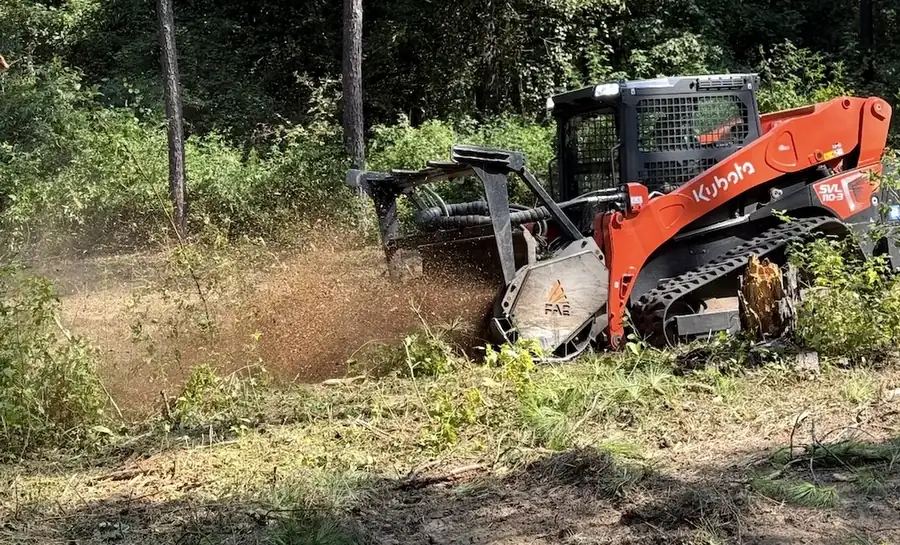
That is mulcher work. Our tracked machines grind brush, briars, vines and stems up to roughly six to eight inches on the stump in a straight pass and leave the chips on the ground. The line comes out clean, with no brush pushed over onto the neighbor and no piles. Landowners, surveyors, utilities and builders all call for it, and it is the same work as our fence line and survey line clearing, at any length.
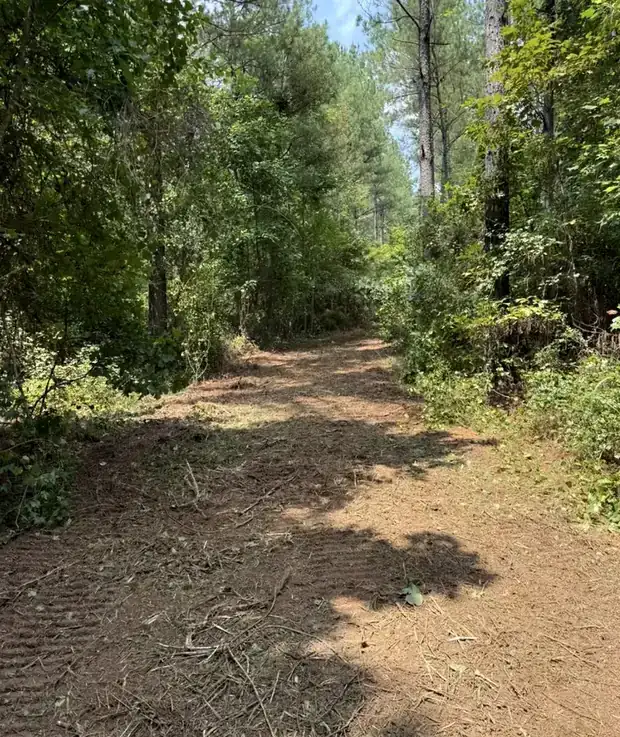
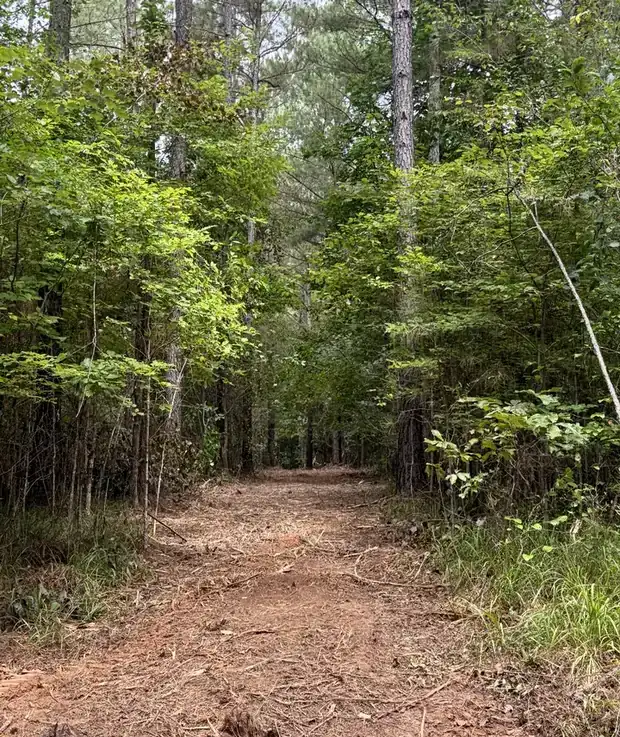
What you are left with is a lane you can see down, walk down and get a truck or a tractor down. We clear to the line you show us. The line itself comes from your surveyor, your deed or your easement papers. Walker County, the next county over from ours, is inside our service area, and we take line work across Walker County. Call or text (205) 535-6376 with the length and what it crosses.
What right-of-way clearing covers
- Property and boundary lines opened
- Survey lines cut for sight and access
- Fence lines cleared for new wire
- Utility and access easements reopened
- Road and driveway strips for builders
- Chips left in place, no piles
How wide is wide enough
Width depends on who has to use the line. A surveyor needs a clear sight line and room to walk it. A fence crew needs room for a tractor and a post driver on at least one side. For a line you plan to keep open with a tractor or drive in a truck, most people want eight to twelve feet. Wider costs more and is easier to keep. An easement often has its own width written into it, so read the document or ask whoever holds it. Tell us what the line is for and we size the cut to it.
Whose line it is
Before a machine goes down a line, be sure whose side you are on. On a boundary, that means pins and flags from a surveyor, or a line both neighbors agree on. On an easement, it means knowing what the holder allows: a power company or a pipeline may have its own rules for work inside its right of way, so ask them first. Old wire, T-posts, gate hardware and survey pins hide in a grown-up line. Tell us what you know is in there, so the operator can work around it and leave the pins where they are.
Lines that cross creeks, roads and wet ground
Long lines cross things. Where a line drops into a creek or a wet bottom, the mulcher can clear up to the bank. Work in a stream or a wetland can come under the U.S. Army Corps of Engineers, so ask before anything goes in the water. Where the line meets a public road, ask the county engineer or ALDOT about working at the road right of way. Our guide on whether you need a permit to clear land in Alabama lists the offices to ask. Tracks and low ground pressure let the machines cross soft ground without leaving ruts.
Real Job Photos
Phone pictures from real jobs, captioned with what they show. See more recent work.
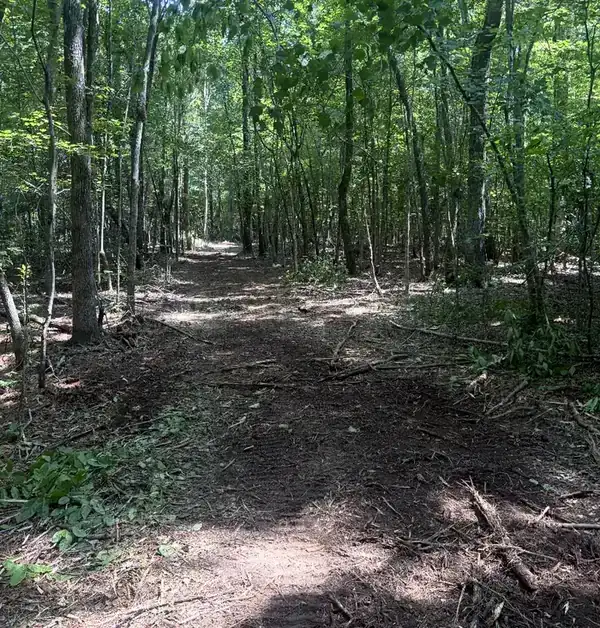
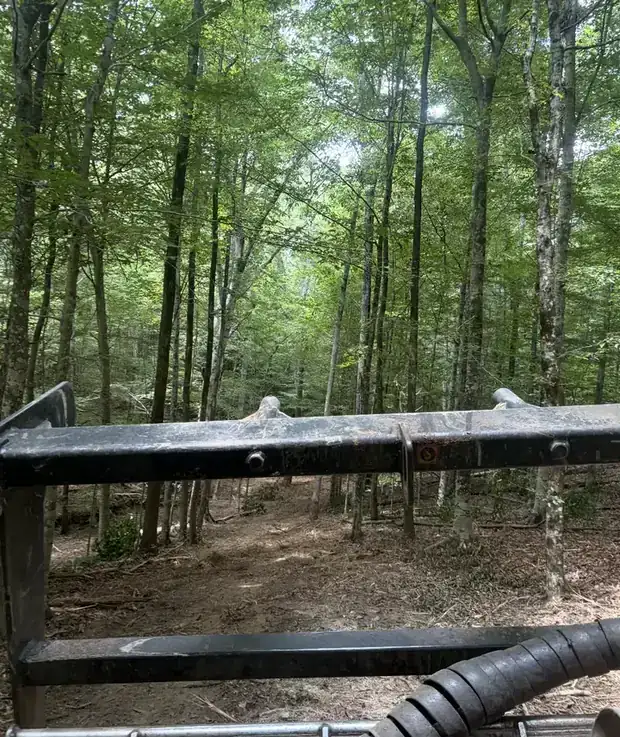
How wide should a property line be cleared for a new fence?
Wide enough for the fence crew to work and for you to keep it open afterward. Most people want eight to twelve feet, which lets a truck or a tractor down the line. A narrower cut costs less now and grows shut sooner. Ask your fence builder what they need, and remember that the clearing has to stay on your side of the line unless your neighbor agrees.
Who is responsible for clearing a utility easement on my land?
The easement document answers that, and they are not all the same. Some utilities keep their own lines cleared. Some access and private easements leave it to the landowners who use them. Read the paperwork or call the company that holds the easement before any work starts, and ask what they allow inside it. Once that is settled, we can clear to the width it gives.
Do I need a survey before clearing a boundary line?
If you are not certain where the line runs, yes. Old fences, tree lines and what a past owner told you are often off by more than the width of the cut. We clear to the pins, flags and paint you show us. Many surveyors would also sooner flag a rough line first and set final pins after it has been opened, so ask yours how they want it done.
How much does right-of-way clearing cost per foot or per mile?
There is no fixed rate per foot, because two lines the same length can be very different jobs. Price moves with the width of the cut, what is growing in it, how steep and how wet the ground is, and how many places the machine can get onto the line from. Give us the length, the width and a few photos, and you get a free estimate priced for the whole job.
Can you clear a line with an old barbed wire fence still in it?
Yes. It just needs knowing about first, so the operator can work accordingly. Wire wraps a mulching head and old posts hide in brush, so tell us where the fence runs and whether it is staying or coming out. If it is staying, we clear up to it on the side you want opened. Mark any survey pins or corner posts you want left alone.
How a Job Runs
Tell Us What You Have
Call, text or send the form. County, rough acreage, what is growing on it and how a truck and trailer gets in.
We Look at the Ground
Close by, we come and look. Farther off, we can go over it with you on satellite first, then see it on the ground before the work starts.
A Number to Plan Around
Estimates are free and priced off the property. Small jobs carry a minimum, and you hear the figure before you commit.
The Machines Go to Work
We settle what comes out and what stays. Mark the trees you want kept, or walk it with us and point them out.
Finished, Not Just Knocked Down
Holes filled, ground pulled back to grade, and the fall set so water leaves the site instead of standing on it.
Right-of-Way Clearing Near You
Based in Berry, in Fayette County. Eight west Alabama counties. Pick your county or town, or call or text and ask.
Towns
More services
Fence Line Clearing
Fence rows and survey lines mulched straight and wide enough to drive and work in.
DetailsHunting Lanes & Food Plots
Shooting lanes, trails and food plots cut on hunting land and left ready to plant.
DetailsFirebreaks
Firebreaks and fire lanes cut around homes, timber and property lines before you need them.
DetailsNeed Right-of-Way Clearing?
Call or text, or send a few details. Estimates are free and priced off the property.