
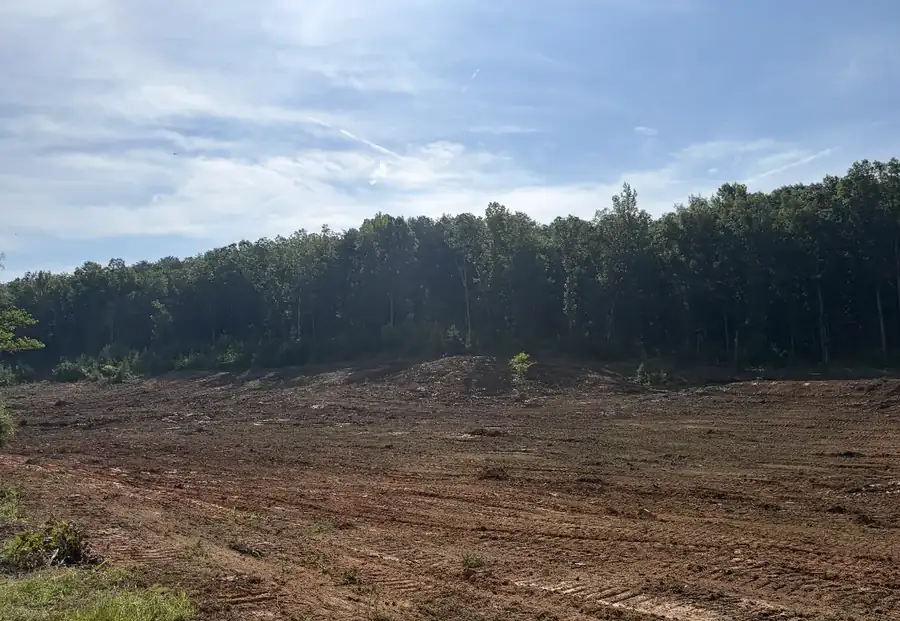
Clearing land yourself is cheaper when the patch is small, the growth is light brush you can handle with a chainsaw or a tractor and rotary cutter, and you already have the tools and the time. Once the job means renting a machine, pulling stumps, felling real trees or getting rid of the debris, hiring a contractor often costs less in the end, because a rental runs by the clock while you learn to use it.
Is it cheaper to clear land yourself?
Sometimes, and it is worth being exact about when. What a contractor charges for is machine time, skill and the trip to get there. If your job needs very little of the first two, doing it yourself wins. A fence corner gone to briars, a few saplings along the yard or a path to the creek are weekend jobs. The sums change when the growth is thicker than a mower will take, when trees are big enough to hurt someone, or when stumps have to come out. Then you are paying for a machine either way, and the question is who runs it.
When doing it yourself makes sense
Four things point toward doing it yourself. The area is small, a fraction of an acre and not several. The growth is light: weeds, briars, vines and stems you can cut with loppers, a brush saw or a small chainsaw. You own or can borrow the tools, since a tractor with a rotary cutter handles grown-up pasture well while the stems are still thin. And you are not in a hurry, because hand clearing is slow and the debris has to be piled, burned or chipped afterward. Plenty of west Alabama landowners keep their own ground open this way for years and only call for a machine when it gets ahead of them.
What the do-it-yourself bill really includes
Write it all down before you compare it with a quote. The rental, plus delivery and pickup if you have no trailer and truck rated to haul it. Fuel. The damage waiver, and whatever the yard charges for worn teeth or a cut hose. Saw chains, bar oil, chaps, a helmet and eye and ear protection. Then the debris, and then your own time, including the first day spent learning the controls. Leave a line for what does not get finished. A weekend rental that clears half the ground costs the same as one that clears all of it. Our guide to the cheapest way to clear land shows where the real savings are.
Where can I rent a forestry mulcher?
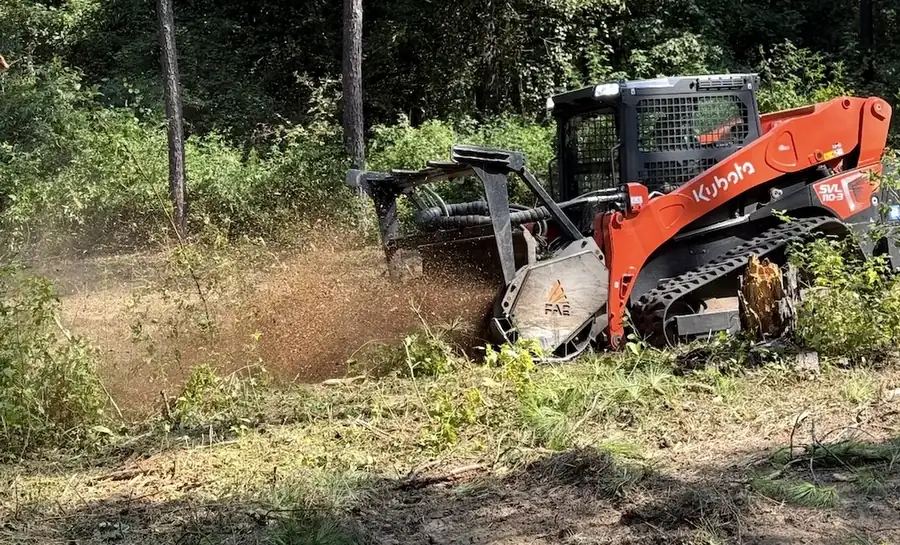
Heavy equipment dealers with rental stores, the national rental chains and some independent rental yards rent compact track loaders with mulching heads, by the day, week or month. Call ahead, because not every branch stocks one. Ask whether the loader has the high hydraulic flow the head needs, since rental guidance from equipment makers says high flow is what handles thick brush and small trees. Ask about the cab door and guarding, about delivery, and about how tooth wear is billed. Be honest with yourself about the learning curve. A mulching head throws material a long way, and a first-time operator covers much less ground in a day than someone who runs one for a living.
Stumps, debris and burning: the half people forget
Getting trees on the ground is the quick half. What is left is tops, trunks and stumps. Stumps do not come out with a chainsaw, and digging them calls for an excavator or a dozer and a request to Alabama 811 before the bucket goes in. Check al811.com for the notice period. Piles have to be burned, hauled or ground up. The Alabama Forestry Commission says state law requires its burn permit for fires over a quarter acre or within 25 feet of woods or grass, and our Alabama burn permit guide covers the rest. Forestry mulching avoids the piles by grinding brush where it stands.
How to get land cleared for free
It happens, though seldom, and never without a trade. If the tract has enough good timber, a logger may pay you for it, which leaves a smaller clearing job behind. Our guide to selling timber before you clear explains how that works and why a forester should look first. Someone who burns firewood may cut and carry off hardwood you were going to pile. The Alabama Forestry Commission lists federal cost-share programs, such as EQIP through the USDA Natural Resources Conservation Service, that help pay for forest health and wildlife habitat practices. Ask your local USDA service center what your land qualifies for. Be wary of free clearing offered in exchange for the trees unless the terms are in writing.
The middle path: do the hand work, hire the machine work
Most owners save more by splitting the job than by doing all of it. Do the parts that take time and no machine. Flag the trees you want kept and the lines you want cut to. Haul off the old wire, tin, tires and junk, since a mulcher cannot grind them and a dozer should not bury them. Open the gate, trim the low limbs over the drive and clear a place to unload. Find and mark any water line or septic field lines you know about. Then the machine spends its hours clearing. Time on the machine is what you pay for, so every hour you take off the front of the job comes off the price.
Who do I call to clear land?
A land clearing or forestry mulching contractor for brush, saplings and overgrown ground. A contractor with a dozer and an excavator for timber, stumps and grade, which is the work on our land clearing page. In west Alabama that can be one call, because Down South runs both kinds of machine. Call Alabama 811 before anyone digs, the Alabama Forestry Commission before anyone burns, and the city or county office if the clearing is for a building. Have the county, the acreage, what is growing and the access ready. The land clearing cost guide explains what a quote should cover.
Common Questions
Is renting a forestry mulcher worth it for a few acres?
It can be if you have run a tracked loader before, the brush is light and you can haul the machine yourself. For a first-time operator in thick growth, the rental days, delivery, fuel and tooth wear add up quickly, and the ground covered each day is small. Get a contractor's price for the same acres and compare the two side by side.
How long does it take to clear an acre of land by hand?
There is no honest single figure. An acre of weeds and briars is a few long days with a brush saw. An acre of saplings and small trees can take one person many weekends once cutting, dragging and piling are counted. An acre of grown timber is not a hand job. Stumps stay in the ground in every case.
What is the safest way to clear trees yourself?
Stay with what you can cut from the ground with both feet planted, and wear chaps, a helmet and eye and ear protection. Do not work alone. Leave leaning trees, storm-damaged trees and anything hung up in another tree, because those move in ways that are hard to read. Trees near a house or a power line need more than a saw.
What to Do Next
Not sure which side of the line your job falls on? Call or text (205) 535-6376 with the county, the acreage and a few photos, and tell us which parts you would like to do yourself. The estimate is free and priced off the property, so you can set it beside your rental figures.
See our land clearing page or call or text (205) 535-6376.