If the tract has enough merchantable pine or hardwood to bring a logging crew in, sell the timber first, because a buyer pays you for trees you would otherwise pay to have pushed over and burned. If it is a small lot, scattered trees or young growth, there is usually too little wood to sell, and clearing it in one job is the simpler course.
Why the order matters
On a clearing job, big timber is the expensive part. It is slow to push, the stumps are large and the wood has to be burned or hauled. If that same wood has a market, the sum runs the other way: a buyer pays you, the logs leave on his trucks, and what is left to clear is stumps, tops and brush. You are paid for the trees and then pay less for the clearing. It does not work on every tract, and it adds time, but on the right ground it is the largest saving available.
When there is enough to sell
A logger has to move a crew and heavy equipment to your land, so there has to be enough wood to make the trip pay. Acreage, the size and species of the trees, how much volume is there, how far it is to the mills and whether log trucks can get in and out all count. Alabama Extension points out that a seller needs road access to the tract or a way to create it. A few big yard oaks or a small patch of pine rarely adds up. A larger stand of grown pine or hardwood often does. A forester can tell you in one visit.
Get a forester before you get an offer
The Alabama Forestry Commission encourages landowners to work with a Registered Forester, which it describes as someone with a four-year degree in forest management who has passed a credentialing exam. The Commission's own staff offer management advice and plans at no cost, and consulting foresters are private professionals you hire to represent you in a sale. Alabama Extension notes that research shows landowners who use a consulting forester average more net income on timber sales than those who do not. Call a forester before you answer a knock on the door.
How timber is sold in Alabama
Alabama Extension describes two main ways. In a per-unit sale, also called pay-as-cut, the buyer pays an agreed price for each unit of wood after it is harvested, backed by the mill's scale tickets. In a lump-sum sale the buyer pays a fixed price for the standing timber before any trees are cut, set either by direct negotiation or by sealed bids from several buyers, and the sale usually includes a timber deed. Pine is sorted into classes such as pulpwood, chip-n-saw and sawtimber, and each class sells at its own price.
Put the clearing plan in the contract
A timber sale and a land clearing job want different things from the same acres, so tell the forester what the land is for before the sale is written. Say which trees stay. Ask for a firm cutting deadline so the harvest does not hold up your build. Settle where the loading area goes, since that packed, open spot can become your home site or your drive. The Commission's forestry water quality guidelines are voluntary for the most part, and Extension's version of them calls for a buffer of at least 35 feet along each side of a perennial stream.
What a logging crew leaves behind
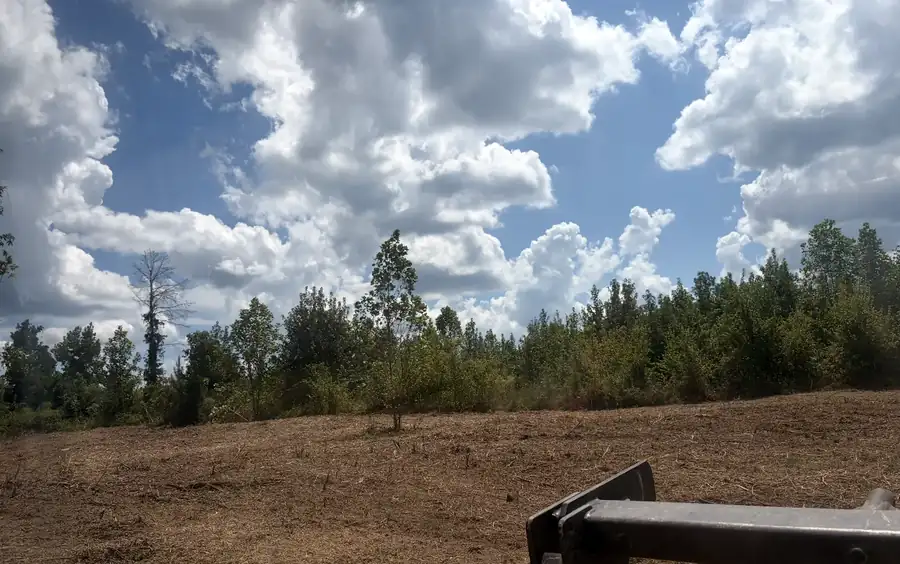
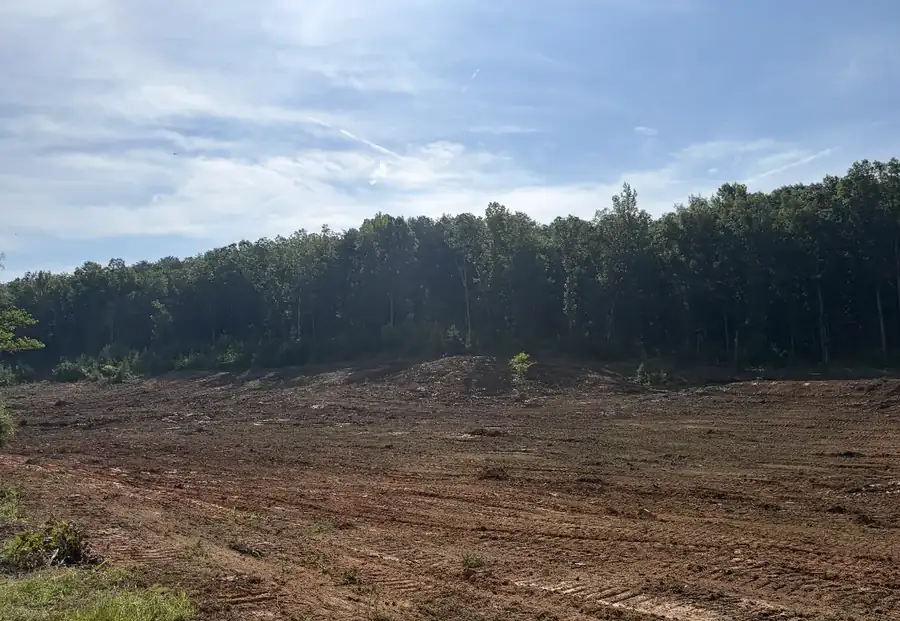
A harvest is not a clearing. When the trucks leave you have stumps, tops, limbs, ruts on the skid trails and every tree the logger had no market for still standing. Within a season the stumps sprout and briars move in. This is the point where we come in. Mulching the tops, slash and sprouts opens it back up for replanting, pasture or hunting, and is what our logging cleanup work covers. If the ground is going to be built on or plowed, the stumps are pulled as part of a land clearing job.
When to skip the sale and just clear
Skip it when the trees are few, small, scattered or hard to reach, when the lot is a house site of an acre or two, or when your builder's date will not wait on a logger's schedule. In those cases the wood can still do some good. If you burn firewood, ask about the wood when we look at the job. The rest is burned on site where that is allowed, or hauled. Our guide to the cheapest way to clear land covers the other ways to hold the cost down.
Common Questions
How many acres of timber do you need before a logger will buy it in Alabama?
There is no fixed number. It depends on the volume and kind of wood, the size of the trees, access for log trucks and the distance to the mills. A Registered Forester or the Alabama Forestry Commission's county staff can look at the stand and tell you whether it is worth offering for sale.
Do loggers remove the stumps when they cut timber?
No. A harvest takes the logs and leaves the stumps, tops and limbs. If the land is going to pasture, a food plot or a building site, the cleanup is a separate job: mulching the slash and sprouts, or pulling the stumps and grading where the ground will be built on or plowed.
Is it better to sell timber by sealed bid or pay-as-cut?
Alabama Extension describes both. A lump-sum sale, often by sealed bid, pays a fixed price before cutting. A per-unit or pay-as-cut sale pays by the load after harvest, based on mill scale tickets. Which suits your tract depends on the stand and the market, and that is the kind of call a consulting forester is hired to help with.
What to Do Next
If a logger has already been through, or you have decided the trees are not worth selling, call or text (205) 535-6376. Tell us the county, the acreage and what the land is for, and we will look at it and give you a free estimate.
See our land clearing page or call or text (205) 535-6376.