The cheapest way to clear land is to do only what the end use requires: forestry mulch the brush and small trees wherever stumps can stay, and pay for full clearing with stumps out only on the ground that will be built on, dug or plowed. After that, the biggest savings come from dry weather, easy access, dealing with debris on site and doing the whole job in one trip.
Match the method to what the land is for
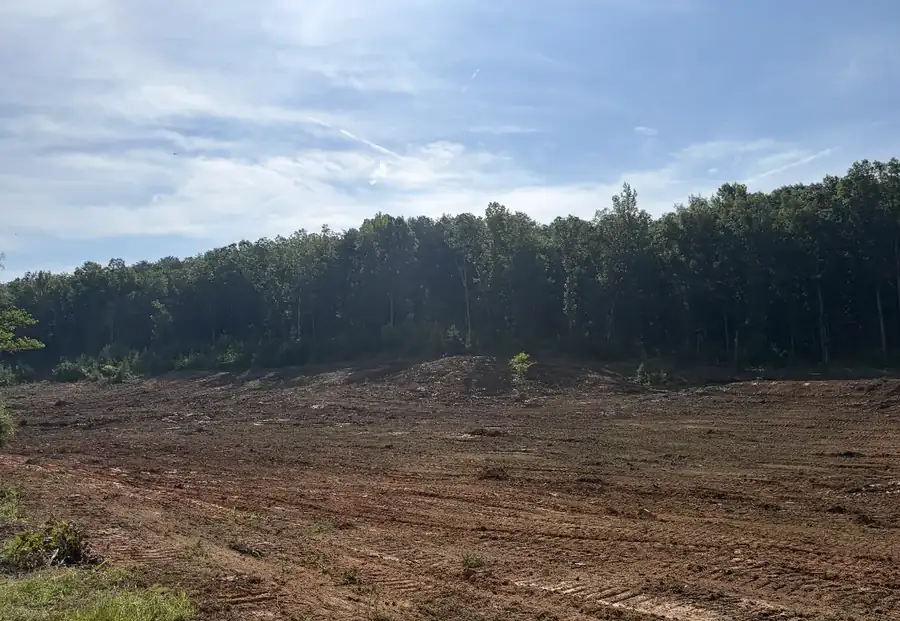
Most overspending on clearing comes from buying more than the land needs. Stumps out, graded and ready to mow is one job. Knocked down and walkable is another, and it costs far less. So start with the end use. A trail, a view, a fence line, a hunting lane or pasture you will mow does not need a single stump pulled. A house pad does, but the house pad is a small part of the tract. Clear the footprint, the drive and the septic area, and mulch or leave the rest.
Mulch where the stumps can stay
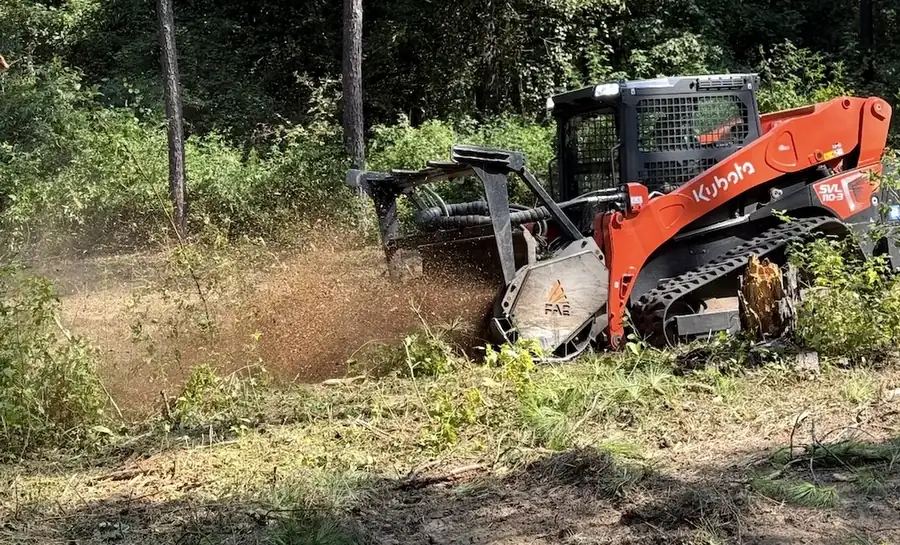
On brush, briars, privet and trees up to roughly six to eight inches on the stump, forestry mulching is almost always the less costly method, usually by a wide margin. It is one machine in place of three, and there is nothing to pile, burn or load out. The dirt is left covered, so there is no erosion repair to pay for later. The limit is the stumps. They stay in the ground, so mulching saves money only where that is acceptable.
Keep the debris on site
What happens to the wood is a line that often goes unmentioned in a low quote. Mulched in place costs nothing extra. Windrowed and burned on site costs some, and it depends on a burn permit and a safe day. Loaded and hauled to a permitted site costs the most, because it takes trucks, trips and tipping. If you have room to burn and the rules allow it, burning beats hauling on price. If you burn firewood, ask about the wood when we look at the job.
Pick dry weather and open the gate
Time on the machine is what you are paying for, and two things waste it. The first is mud. Wet ground slows every pass and leaves ruts to regrade, so a job done in a dry spell costs less than the same job done in a wet one. The second is access. If a truck and trailer can pull in and unload beside the work, the clock starts on clearing. If the machine has to walk in half a mile or a gate has to be widened first, you pay for that before a stem is cut.
Do it in one trip
Getting equipment loaded, hauled, unloaded and back costs the same for one acre as for twenty, and the same for two hours as for two days. That is why small jobs carry a minimum, and why the cost per acre falls as the tract gets bigger. Use it. If you need a lot cleared, a drive roughed in, a culvert set and a pad cut, having them done while the machines are already there costs less than four visits. Neighbors who both want fence lines cleaned up can share the trip the same way.
Sell what is worth selling first
If the tract has real timber on it, a logger may pay you for trees you were about to pay to have pushed over. That can turn the most expensive part of a clearing job into income, and it leaves a smaller job behind. It only works when there is enough good wood to bring a crew in, and a forester can tell you that in one visit. Our guide on selling timber before you clear covers how it works in Alabama.
What about doing it yourself
You can clear land with a chainsaw, a rented machine and a burn pile, and for a small patch of light brush that can make sense. Be honest about three things. The rental clock runs whether you are productive or not, and a mulcher has a learning curve. The stumps and the debris are still there when the trees are down. And felling timber is dangerous work. Many owners do the light parts themselves, such as marking keepers, moving old junk and opening the gate, and hire the machine work.
How to compare quotes without getting caught
A low number with holes in it usually ends up the expensive one. Ask whether debris is included. Ask whether stumps are coming out or staying. Ask whether the price is for the whole job or a day rate that stops when the day does. Ask what happens if it rains for a week, and whether there is a transport charge on top. Our land clearing cost guide lists what moves the price, and the land clearing page shows what a finished job includes.
Common Questions
Is it less expensive to mulch land or bulldoze it?
Mulching, almost always, on brush and small trees. It is one machine in place of three with nothing to pile, burn or haul. Bulldozing costs more because the stumps come out, the debris has to go somewhere and the ground has to be graded. If the land will be built on, that extra work is not optional.
Can I clear land myself to save money?
For a small patch of light brush, sometimes. For anything with real trees, stumps or slope, count the rental time, the learning curve, the debris and the risk of felling timber before you decide. A common middle path is doing the hand work yourself and hiring the machine work.
Does clearing more acres at once lower the cost per acre?
Yes. Moving the equipment in and out costs the same for one acre as for twenty, so that cost is spread thinner on a bigger job. It is also why very small jobs carry a minimum. We tell you that figure before you commit to anything.
What to Do Next
Tell us what the land is for and we will show you the least work that gets you there. Call or text (205) 535-6376 with the county, the acreage and a few photos for a free estimate priced off the property.
See our land clearing page or call or text (205) 535-6376.