
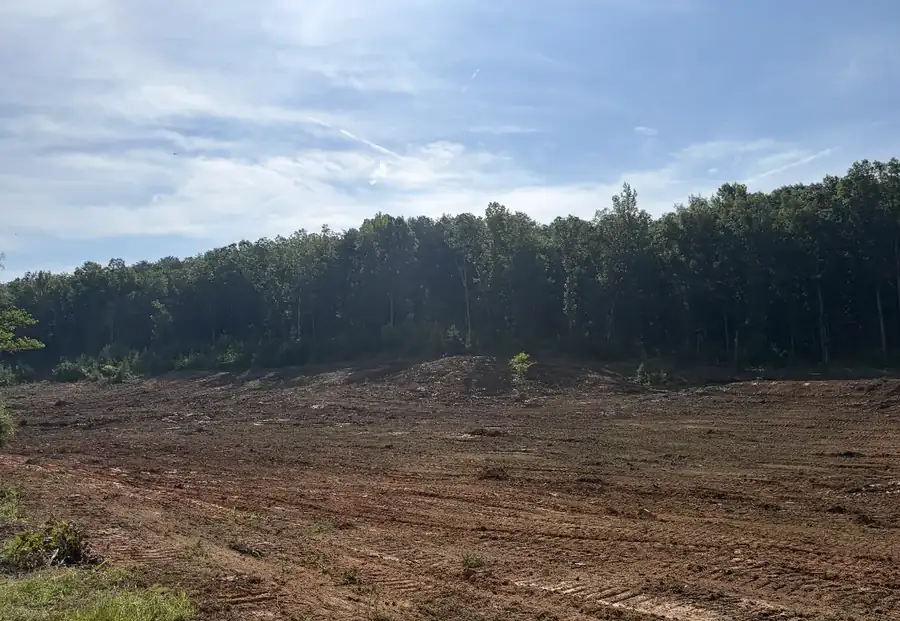
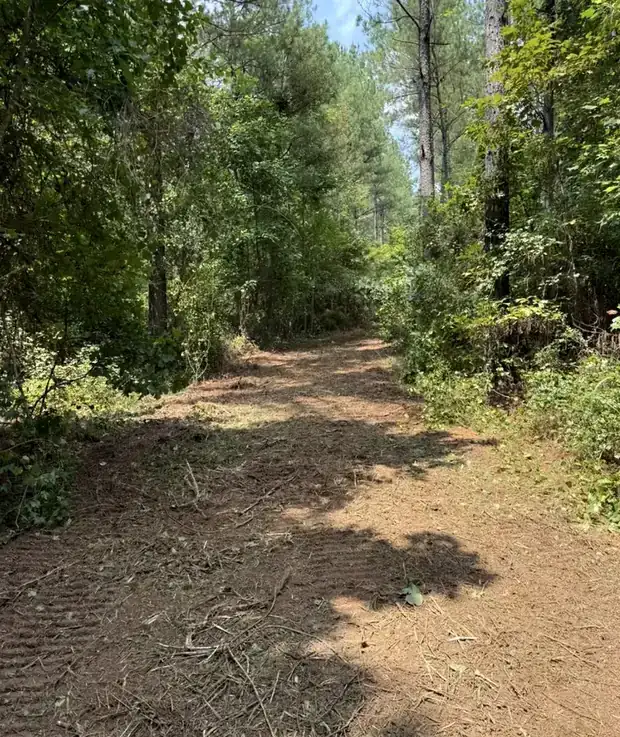
To build a gravel driveway that lasts, strip the topsoil and stumps off the route, shape and pack the dirt, then lay a compacted base of crushed stone with a surface layer over it, crowned in the middle with ditches on the sides and a culvert wherever water has to cross. Most gravel drives that fail were built as rock spread on unprepared dirt with nowhere for the water to go.
Pick the route by where the water goes
Water is the real problem on every gravel drive, so settle the drainage before the rock. Walk the line after a hard rain. A route that follows higher ground and crosses draws at a right angle needs fewer pipes and less ditching than a straight line through a low spot. Decide what the drive has to carry. A pickup needs less width and less base than a concrete truck or a mobile home on a trailer. Mark the turnaround and the parking area now, because they are built the same way as the drive. Our driveways and access roads page shows how we cut one in.
What should I put down before a gravel driveway?
Nothing, until the soft stuff is off. Sod, topsoil, leaves, roots and stumps all rot or pump under load, and gravel laid over them sinks. So the first step is to strip the route down to firm ground and pull every stump. The second is to shape that dirt the way the finished drive will be shaped, higher in the middle, and pack it. On soft or wet ground a geotextile fabric goes down next. The federal Gravel Roads Construction and Maintenance Guide describes fabric as a separator that keeps weak soil from pumping up into the new stone. On firm, dry ground many drives are built without it.
The layers: base first, then surface
A gravel drive is two layers doing two jobs. The base carries the load. The surface takes the wear and sheds the rain. Common guidance from stone suppliers is four to six inches of compacted base with a couple of inches of surface stone over it, and more base on soft ground or under heavy trucks. Where fabric is used over weak soil, the federal guide calls for a first layer of at least six inches. Stone goes down in layers a few inches thick, and each one is shaped and packed before the next. Rock dumped in one thick lift and driven on never tightens up the same way.
What kind of gravel is right for a driveway?
Stone with fines in it. Crusher run, which some quarries call dense grade or crush and run, is crushed stone from about an inch and a half down to dust. The dust fills the gaps and the mix packs into something close to a pavement, which is why it is the usual base and often the surface too. Number 57 stone is clean rock around half an inch to an inch with almost no fines. It drains well and looks tidy, but it does not lock together, so it rolls under tires and moves on a hill. On very soft ground a bed of larger stone, such as number 3 or number 4, can go under the base.
How much gravel do I need for my driveway?
Multiply length by width by depth, all in feet, to get cubic feet. Divide by 27 for cubic yards. Then multiply by the weight of the stone, which for crushed stone is commonly about 1.4 to 1.5 tons per cubic yard. Ask the quarry for its own figure. Here is one worked through: a drive 200 feet long and 12 feet wide, with 4 inches of stone, is 200 x 12 x 0.33, or about 800 cubic feet. That is close to 30 cubic yards, or roughly 41 to 45 tons. Figure the base and the surface separately, and allow some extra, because stone loses depth as it packs.
Crown, ditches and culverts
The federal gravel roads guide recommends about half an inch of crown per foot, close to four percent, so rain runs off sideways within a few feet. Water shed off the crown needs a ditch on each side to carry it, and each ditch needs somewhere to empty. Wherever water has to get from one side of the drive to the other, a pipe goes under: at the road ditch, at a draw, at the low spot. See culvert installation for sizing and bedding. Leave any of the three out and you get the trouble described in our guide to why gravel driveways wash out.
The entrance, and doing it yourself
Where the drive meets a public road, ask before you build. A new drive onto a state highway needs a permit from ALDOT. For a county road, ask the county engineer's office what it requires, and inside a city ask City Hall. Check al811.com for the notice period before any digging. As for the labor, a short, flat drive on firm ground is a fair job for an owner with a tractor, a box blade and patience. Stump pulling, ditch cutting, culverts, hillside cuts and real compaction are machine work. The gravel driveway cost guide lists what moves the price if you hire it out.
Keeping it after it is built
A new drive settles through its first wet season. Wheel tracks pack down, loose stone drifts to the edges and the crown flattens. Pull the stone back to the middle and reshape it before the middle goes flat, because a flat drive starts carrying water. Keep the ditches and both ends of every pipe clear of leaves and silt. Add surface stone when the base starts to show, not before. If ruts and potholes keep returning in the same place, the cause is under the surface, and gravel driveway repair covers what a regrade and re-rock involves.
Common Questions
Do I need fabric under a gravel driveway?
On soft, wet or clay ground it helps. The federal Gravel Roads Construction and Maintenance Guide describes geotextile fabric as a separator that keeps weak soil from working up into the stone under traffic. On firm, well-drained ground many drives hold up without it. Fabric does not replace stripping the topsoil, shaping the dirt or draining the water.
How thick should the gravel be on a new driveway?
Common guidance from stone suppliers is four to six inches of compacted base with about two inches of surface stone over it. Soft ground, a steep grade or heavy trucks call for more base. Over fabric on weak soil, the federal gravel roads guide calls for a first layer of at least six inches. Depth is measured after packing.
What are the downsides of having a gravel driveway?
It needs upkeep. Gravel ruts, washboards and drifts to the edges, so it has to be reshaped now and then and topped up every few years. It makes dust in dry weather and it can wash where drainage is poor. A drive built with a packed base, a crown and working ditches needs far less of all of that.
What to Do Next
Pace off the route, count the places water crosses it and note which road it meets. Then call or text (205) 535-6376 with the county and what the drive has to carry, and we will walk it and give you a free estimate. If you plan to do part of it yourself, tell us which part.
See our driveways page or call or text (205) 535-6376.