
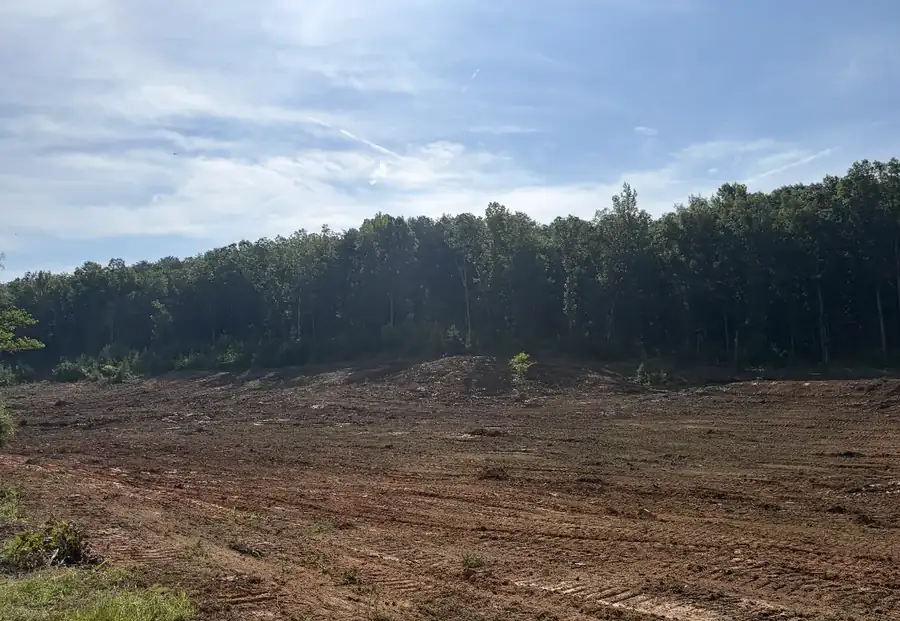
An acre of light brush can be mulched in part of a day, and mulching attachment makers give a general range of about one to four acres a day for a skid steer mulcher, while an acre of real timber cleared with the stumps out and the debris gone takes far longer because it is several jobs in a row. What is growing, the slope, how wet the ground is, access and what happens to the debris set the time far more than the acreage does.
Why the honest answer is a range
An acre is a measure of ground, not of work. One acre can be knee-high briars and broom sedge on a flat. Another can be forty-year-old oak and pine on a hillside above a creek. The first is hours with a mulcher. The second is days with a dozer, a root rake and an excavator, plus whatever it takes to burn or haul the wood. Anyone who gives you one figure for an acre without seeing it is describing somebody else's acre. Ask what is being assumed about the stems, the stumps and the debris.
Mulching: a general guide
For a general idea only, companies that make mulching attachments publish figures for a skid steer mulcher of roughly three to four acres a day in light brush on flat ground, one to two acres a day in dense growth, and an acre or less where the ground is rough or broken up by obstacles. Those are makers' general numbers, not a promise about any job and not our production rate. They do show the spread. The same machine can cover several times as much ground in one stand as in another. See forestry mulching for what the method covers.
Clearing with stumps out takes longer
Full clearing is several jobs done in order. The dozer pushes the timber. The root rake combs the stumps and root balls out of the dirt, and the excavator lifts the big ones whole. The debris is windrowed and then burned or loaded out. The holes are filled and the ground is pulled back to grade so water leaves the site. Each step takes its own time, and a wooded acre done this way runs far behind a mulched one. That is the price of ground you can build on, dig in or plow.
What is standing: stem size and density
Stem size is the single biggest factor. A mulcher goes through two-inch saplings about as fast as it can travel. Stems near the top of its range, roughly six to eight inches on the stump, take several times as long each. Density stacks on top of that. A privet thicket you cannot walk through is slower than open woods with brush underneath. On a clearing job, big hardwood with deep roots is slower than pine, and every stump is its own small excavation.
Slope, wet ground and rock
Steep ground slows every machine. The operator works across the hill in shorter runs and takes more care with footing. Wet ground is worse. Red clay that carries a machine in August can bog it in February, and working it wet tears up the site, so wet ground means waiting or working slower. Sandstone ledges and chert near the surface slow a root rake and wear mulcher teeth. None of this shows on a map. It shows when somebody walks the property, which is why a look comes before a schedule.
Access and what happens to the debris
Everything runs on tracks and arrives on a trailer, so the gate, any bridge and the first hundred feet of the drive decide how the job starts. If the machine has to walk half a mile in, that is time before anything is cleared. Debris is the other clock. Mulched in place adds nothing. Burning on site waits on a burn permit, a safe day and a pile dry enough to go. Loading and hauling to a permitted site takes trucks and trips. Ask which of the three a time estimate assumes.
How to get a real answer for your acre
Send the county, the acreage, a few photos of what is growing and a word on access, or ask us to come look. We can go over it with you on satellite first if you live away. You will get a straight read on whether it is a mulching job, a clearing job or some of each, and what that means for time and price. Our land clearing page covers the full process, and the land clearing cost guide lists the same factors from the money side.
Common Questions
How many acres can a forestry mulcher clear in one day?
As general guidance, makers of skid steer mulching attachments publish a range of about one to four acres a day, with light brush on flat ground at the top and dense or rough ground at the bottom. That is an industry rule of thumb, not a rate for any one job. Stem size and density move it more than anything else.
How long does it take to clear an acre of land with an excavator?
It depends on what is standing. An excavator takes trees and stumps one at a time, so an acre of scattered trees goes quickly, and an acre of thick mature timber is days of work once the stumps are out, the debris is burned or hauled and the holes are filled. Slope, wet ground and rock add time. On most wooded acres the excavator works alongside a dozer, which pushes and rakes open ground faster.
Does rain delay a land clearing job in Alabama?
Often, yes. Wet ground will not carry heavy machines without rutting, and working it wet tears up the site. A wet spell means waiting or working slower so the ground is not torn up. Dry stretches in late summer and fall are usually the easiest time to hold a schedule.
What to Do Next
Tell us about your acre and we will tell you what kind of job it is. Call or text (205) 535-6376 with the county, the acreage and a few photos, and you will have a free estimate priced off the property.
See our land clearing page or call or text (205) 535-6376.