
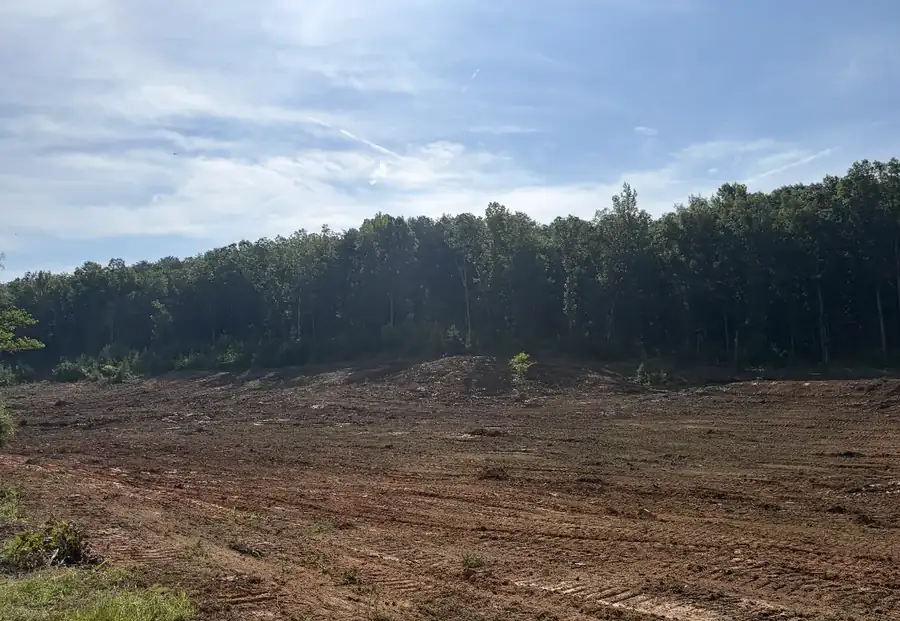
It depends on where the land is, how much ground you disturb, whether water is involved and what you do with the debris. In Alabama the rules that most often apply are ADEM's construction stormwater permit once a project disturbs one acre or more, U.S. Army Corps of Engineers rules for wetlands and streams, an Alabama Forestry Commission burn permit, and city or lake rules where the property falls under them.
There is no single office to ask
People expect one counter with one form. Land clearing does not work that way. Different offices cover the dirt, the water, the fire and the city limits, and each has its own trigger. A five-acre tract outside any town, mulched and left covered, touches fewer rules than a one-acre lake lot graded for a house. The sections below list the rules we see apply most often and the office behind each one. They are a starting point, not legal advice. Rules change, so confirm with the office named before you rely on any of it.
Disturbing an acre or more: ADEM stormwater
The Alabama Department of Environmental Management runs the state construction stormwater program under General NPDES Permit ALR100000. ADEM says it covers construction with land disturbance equal to or greater than one acre, and smaller sites that are part of a common plan of development or sale that adds up to one acre or more. Coverage starts with a Notice of Intent, and the operator has to keep erosion and sediment controls in place under a plan prepared by a qualified credentialed professional. If you are clearing and grading to build, ask ADEM's Water Division where your project falls before the dozer unloads.
Wetlands, creeks and low ground: the Corps
The U.S. Army Corps of Engineers Mobile District covers Alabama. Under Section 404 of the Clean Water Act a Corps permit is required to discharge dredged or fill material into waters of the United States, and many wetlands and streams count. Pushing dirt or stumps into a wet bottom, filling a draw or piping a creek can all fall under it. The EPA lists exemptions for established farming, ranching and forestry work, but bringing a wetland into a new use is not one of them. If part of the tract stays wet, ask the Corps Regulatory Division before you clear it.
Burning the piles: Forestry Commission and ADEM
The Alabama Forestry Commission issues burn permits by phone through its dispatch center at (800) 392-5679. Its burn permit page says fires under a quarter acre fall outside that permit, and it tells burners to check county and city restrictions too. ADEM's open burning rules add that only clean vegetation may be burned, on the property it came from, at least 500 feet from the nearest occupied dwelling, started between 8 a.m. and 3 p.m. Our Alabama burn permit guide has the details. Mulching in place leaves nothing to burn.
Inside a city, or beside a lake
Cities add their own layer. The City of Tuscaloosa requires a Land Development Permit for clearing, grading, excavating or otherwise disturbing soil on commercial property or on property directly adjacent to Lake Tuscaloosa. On Lewis Smith Lake, Alabama Power requires a written permit before construction on its fee-owned and flood easement lands along the shore. Other towns handle clearing through zoning, subdivision or building rules. If the land is inside city limits or a police jurisdiction, call the city's building or engineering office first. Our lake lot clearing guide covers both lakes.
The driveway, the dig and the property line
Three more things come up on most clearing jobs. A new drive onto a state highway needs an access permit from ALDOT, and the county engineer or the city covers county roads and streets. Alabama 811 has to be contacted before any digging, stump pulling included, and its website gives a minimum of 2 to 10 working days of notice, not counting the day you ask. A locate does not mark private lines, so tell your contractor about any water line, power run or field lines you know of. Last, clearing follows the line you show us. A surveyor finds the line. Clearing a strip of the neighbor's woods is the most expensive mistake on this list.
Who gets the permit
Unless something else is agreed in writing, the property owner is responsible for the permits, the property lines and telling us about private utilities. That is normal in this trade, and it keeps the paperwork in the name of the person who owns the ground. What we can do is tell you which of these rules your job looks likely to touch once we have seen it. Have your permit in hand before work starts, or ask us what to line up first. If you are clearing to build, our guide to clearing land for a house pad puts the steps in order, and land clearing covers the work itself.
Common Questions
Do I need a permit to clear my own land in Alabama if I am not building?
It can still depend on the size of the disturbance, wet ground, burning and whether the land is in a city or on a lake. ADEM's stormwater permit is tied to construction disturbance of an acre or more, the Corps covers fill in wetlands and streams, and the Forestry Commission covers burn permits. Check with each office that fits your tract.
How many acres can you clear before you need an ADEM stormwater permit?
ADEM's construction stormwater permit applies to land disturbance equal to or greater than one acre, and to smaller sites that are part of a common plan of development or sale totaling an acre or more. A single lot in a subdivision can fall under it for that reason. Confirm your case with ADEM's Water Division.
Does forestry mulching need the same permits as bulldozing?
Mulching leaves the roots in the ground and the soil covered, and there are no piles to burn, so some rules may not come into play the way they do with grading. That is not the same as being exempt. Wetlands, lake shore rules and city rules can still apply, so ask the office that covers your land.
What to Do Next
Call or text (205) 535-6376 and tell us where the land is and what you plan to do with it. We will look at the property, tell you which of these rules it is likely to touch, and give you a free estimate.
See our land clearing page or call or text (205) 535-6376.