Sometimes, yes. USDA's Natural Resources Conservation Service runs the Environmental Quality Incentives Program, or EQIP, for agricultural producers and forest landowners, and its 2026 Alabama practice list includes brush management, fence and firebreak work. Payment comes after the work is done to NRCS standards, the brush practice covers existing pasture and woods rather than turning timber into a new field, and the work cannot start before your contract is signed.
What EQIP is
EQIP is a USDA program that helps pay for conservation work on farms and private forest land. NRCS says it serves agricultural producers and forest landowners, and that applications are taken on a continuous basis but ranked against state ranking dates, which decide the funding cycle you land in. Applications are scored on local resource concerns, the expected conservation benefit and the applicant's needs. It is a competitive program, so a sound application can still wait a cycle.
Which Alabama practices touch clearing work
NRCS publishes the practices and scenarios it will fund in Alabama each year. The 2026 list includes Brush Management (practice 314) with mechanical and chemical scenarios, Fence (382), Firebreak (394) with bare-soil scenarios, Forest Stand Improvement (666) with mechanical treatment by light or heavy equipment, and Pasture and Hay Planting (512). Those are the pieces of a pasture reclamation, a fence row, a firebreak or an understory thinning that the program can share in. Which practices go in your plan is decided by the NRCS planner, not by a contractor.
What brush management covers, and what it leaves out
Alabama's Brush Management standard defines the practice as the management or removal of woody plants, including invasive and noxious ones, and names Chinese privet, multiflora rose, Cherokee rose, Macartney rose, tallowtree and tropical soda apple. It applies on all land except active cropland. Its purposes include improving forage for livestock and wildlife, restoring cover to protect the soil and managing fuel loads.
The same standard excludes land clearing for a change in land use. Pushing out standing timber to make a brand new field is not brush management. Bringing an existing pasture back from privet, briars and sweetgum is much closer to what it describes, so be ready to tell the planner what the land is used for now.
The rule that trips people up: do not start early
NRCS's EQIP contract appendix says the participant must not start any financially assisted practice before NRCS executes the contract, unless NRCS approves a waiver. Clear the field in March and sign in June, and the March work is on you. Payments are made after a practice is completed and NRCS certifies that it meets NRCS standards and specifications, and the participant files a completion form to be paid. NRCS says some producers can qualify for an advance payment. So the order is plan, contract, work, certify, then payment.
How to apply in west Alabama
Start at the USDA Service Center that covers your county. The NRCS website has a locator by state and county, and the first step is a conversation with the local NRCS office, followed by a planner's visit to the land. NRCS lists three things you need: an official tax ID, a property deed or lease showing you control the land, and a farm number from the Farm Service Agency. If your land lies in Fayette, Walker, Tuscaloosa, Marion, Lamar, Pickens, Cullman or Winston County, the locator gives you the office for that county.
Where a contractor fits
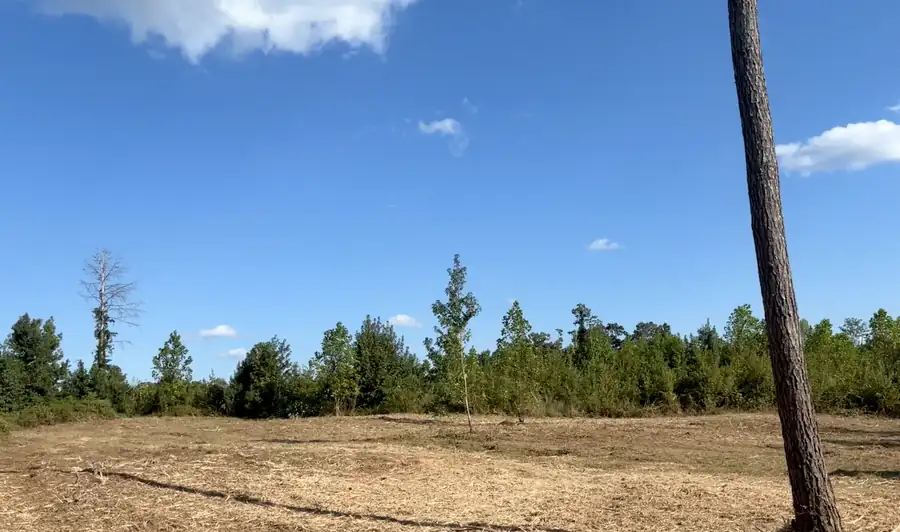
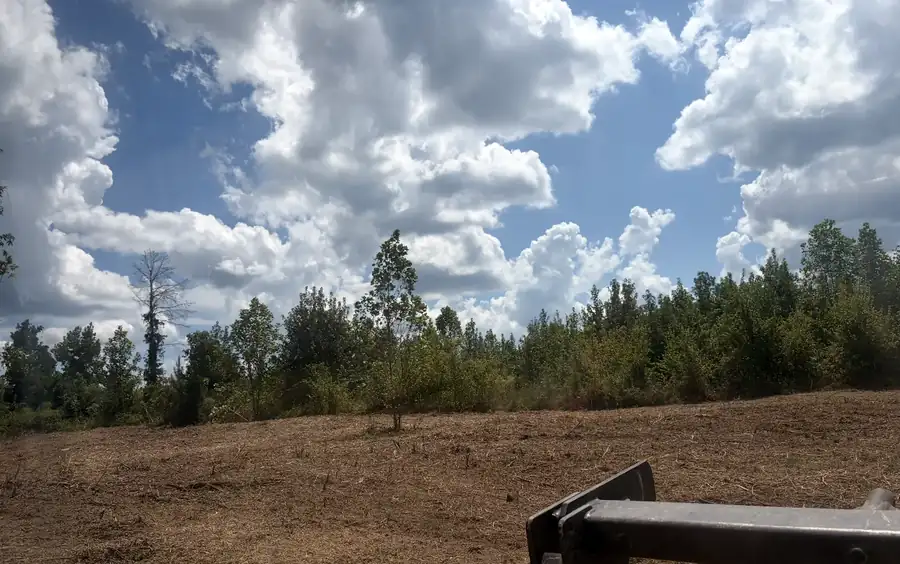
If you get a contract, the plan says what has to be done, where and to which standard, and NRCS checks the finished work. Alabama's Brush Management standard asks the plan to list the equipment and techniques to be used, and where erosion potential is high and regrowth is slow or uncertain, it calls for the method with the least soil disturbance. On grown-up pasture that is often a forestry mulcher, which grinds woody growth in place and leaves the soil covered.
Bring your plan when you ask for an estimate, so the price matches the practice, the acres and the dates in your contract. See pasture reclamation, fence line clearing and firebreaks for how that work is done.
Without cost share
Without a contract, the work is still worth planning well on a field you mean to graze or cut for hay. Our guide to clearing land for pasture in Alabama lays out the steps in order, and the land clearing cost guide explains what moves the price. Your county Extension office can run a soil test before you spend money on seed.
Common Questions
Does NRCS pay for land clearing in Alabama?
Not for clearing timber to create a new field. Alabama's Brush Management standard excludes land clearing for a change in land use. It does cover managing or removing woody plants such as privet and invasive roses on land other than active cropland, which fits a lot of overgrown pasture. Ask your local NRCS office what fits your land.
Can I clear the brush first and apply for EQIP later?
Not if you want the work paid. NRCS's EQIP contract says the participant must not start any financially assisted practice before NRCS executes the contract, unless NRCS approves a waiver. Apply, get the plan and the signed contract, then schedule the work.
What do I need to apply for EQIP in Alabama?
NRCS lists an official tax ID, a property deed or lease showing you control the land, and a farm number from the Farm Service Agency. Start at the USDA Service Center for your county, where an NRCS planner sets up a visit and works through the conservation plan with you.
Does EQIP cover firebreaks and fences in Alabama?
Both appear on NRCS's 2026 Alabama practice list: Firebreak (394) with bare-soil scenarios and Fence (382) with several wire types. Whether they go in your plan depends on your resource concerns and the planner's recommendations, and the work has to meet NRCS standards before it is paid.
What to Do Next
Call the USDA Service Center for your county and ask about EQIP before you clear anything you hope to have shared. Once you have a plan, call or text (205) 535-6376 with the practices, acres and dates, and we will look at the ground and give you a free estimate.
See our pasture reclamation page or call or text (205) 535-6376.