A bush hog is a tractor-drawn rotary mower for grass, weeds and light brush, and a forestry mulcher is a tracked machine that grinds saplings, thick brush and small trees into chips. If you can drive a tractor through it and the stems are thinner than your thumb or two, bush hog it; if it has gone to saplings, privet and briar thickets, it needs a mulcher.
What a bush hog is
Bush Hog is a brand name that became the everyday word for a rotary cutter: a heavy mower deck pulled behind a farm tractor, with swinging blades underneath. It is built to knock down grass, weeds and light brush and leave the cuttings where they fall. Makers rate their cutters by the stem they will take. As general guidance from implement makers, standard-duty cutters are rated for material up to about one inch and medium-duty ones for about two inches, with heavier models above that. It is a mowing tool, and a good one.
What a forestry mulcher is
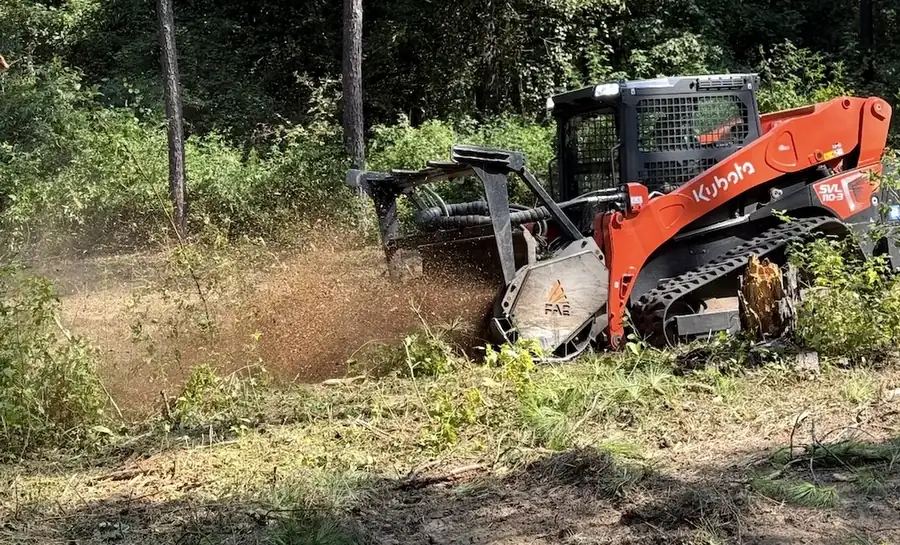
A forestry mulcher is a steel drum with carbide teeth on the front of a tracked loader. It does not mow. It grinds. The machine takes standing brush and small trees down from the top and chews them into chips on the ground. Ours handle briars, privet, kudzu, sweetgum whips, pine saplings and standing hardwood up to roughly six to eight inches on the stump. Because it runs on tracks, it works slopes, soft ground and tight woods where a tractor and cutter cannot go. The full scope is on our forestry mulching page.
Where the line falls
Stem size and time. A field mowed last year is bush hog work. A field skipped for two or three seasons has sweetgum and briars in it, and a heavy cutter can still win if the stems are small. Skip five and it is a thicket. Skip ten and there is real timber in it. Somewhere in there the tractor stops being able to push through, and the cutter starts riding up on stems when it should be cutting them. That is the point where the job changes machines.
What each one leaves behind
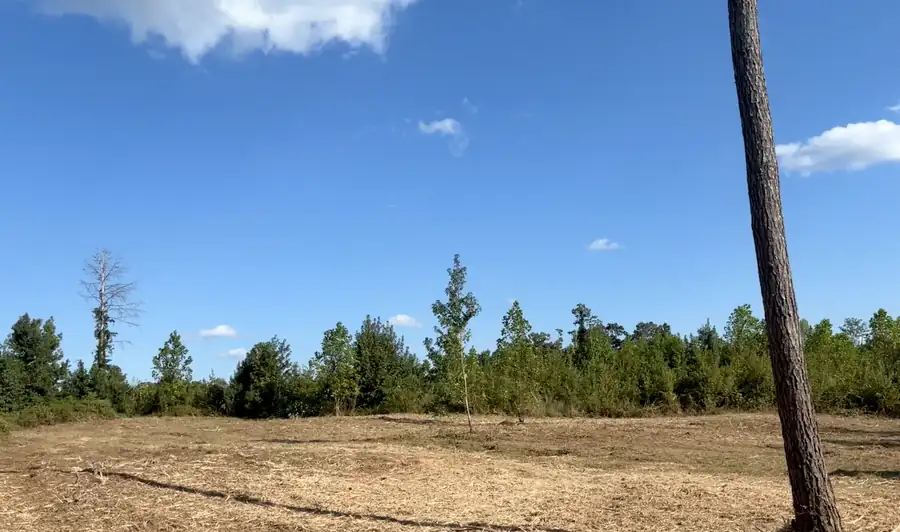
A rotary cutter shears a stem off a few inches above the ground. On grass that is a mowed field. On saplings it is a field of sharp stobs, hard on tractor tires, boots, horses and cattle, with the cut tops lying in whole pieces. A mulcher grinds the stem to chips and can take the stump down flush with the ground, so what is left is a mat you can walk, ride and mow over. If the plan is to keep the field open with a tractor afterward, that flush finish is what makes it possible.
Ground a tractor cannot work
Even where the brush is light, some ground is wrong for a tractor. Steep hillsides, creek banks, wet bottoms, woods with standing timber and old fence rows full of wire and posts are all hard on a tractor and cutter. A tracked mulcher has low ground pressure and a low center of gravity, turns in its own length and works between trees. It can clean out under timber you want to keep, which no mower deck can do. Tell us about old wire before the work starts so the operator can plan for it.
Use both, in the right order
The two machines are partners, not rivals. The usual plan for a grown-up field is to mulch it once to take it back to open ground, then keep it open by mowing or grazing. The first job is the hard one. After it, a cutter can hold the line with a pass or two a year. That is how pasture reclamation works: one reset with the mulcher, then routine upkeep with whatever tractor is already on the place. Land goes back fast when the upkeep stops.
How to tell which your land needs
Walk into it. If you can walk through it and the woody stems are thinner than a broom handle, a bush hog will likely do. If you have to push through it, if it is over your head, or if the stems are as thick as your wrist, it is mulcher work. Photos tell most of the story, so send a few with the county and the acreage. Not sure which side of the line yours is on? Call or text and ask. Our brush clearing page shows the kind of growth we take on.
Common Questions
How thick of a tree can a bush hog cut?
It depends on the cutter. As general guidance, implement makers rate standard-duty rotary cutters for material up to about one inch thick and medium-duty cutters for about two inches, with heavy-duty models rated higher. Past the rating the cutter rides up on stems, and what it does cut is left as sharp stobs.
Is forestry mulching worth it over bush hogging an overgrown field?
When the field has gone to saplings, privet or briar thickets, yes. A mulcher grinds the stems to chips and takes the stumps flush, so the ground can be mowed afterward. A cutter leaves stobs and whole tops. For grass, weeds and light brush, a bush hog is the right tool and the quicker one.
Can I keep land open with a bush hog after it has been mulched?
Yes, and that is the usual plan. Mulching resets the ground to something a tractor can drive over. Mowing once or twice a year after that keeps sweetgum, privet and briars from getting ahead again. Skip a few seasons and the land goes back.
What to Do Next
Send us a few photos of the field with the county and the acreage and we will tell you what it needs. Call or text (205) 535-6376 for a free estimate priced off the property.
See our forestry mulching page or call or text (205) 535-6376.