
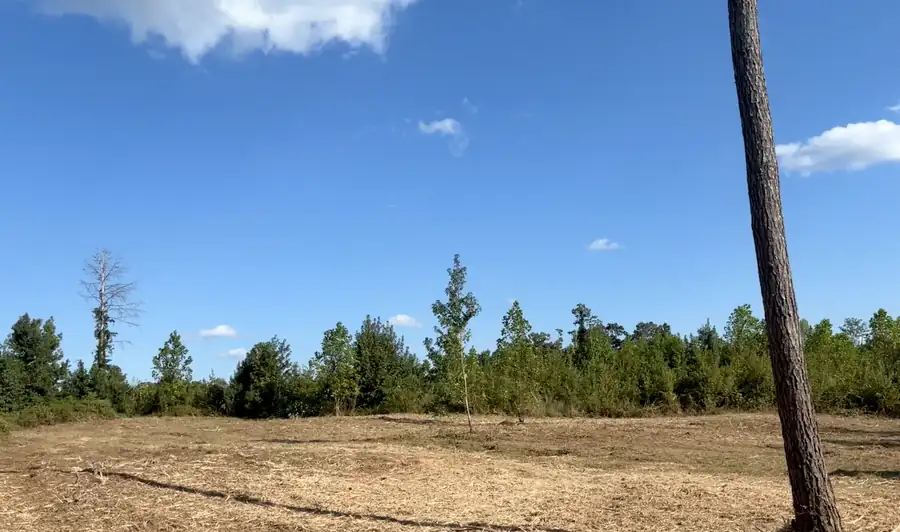
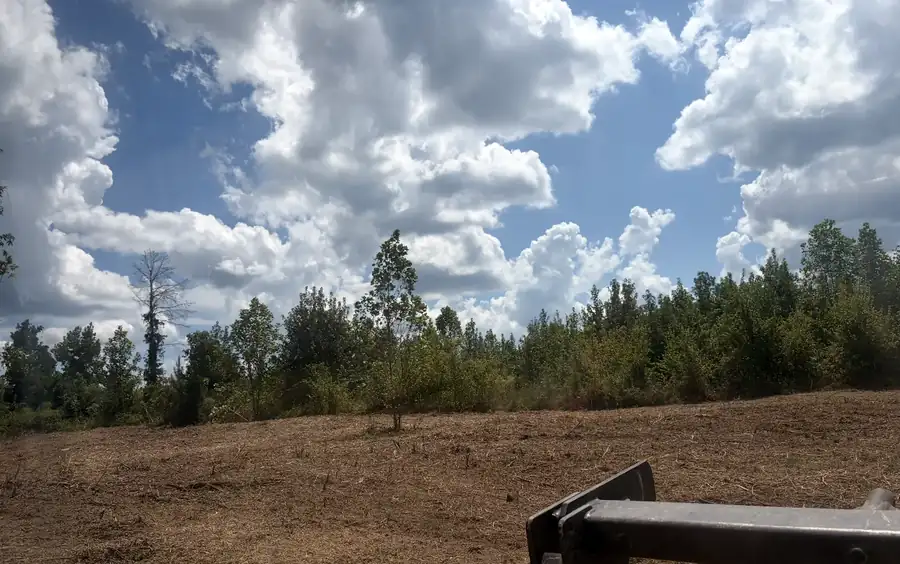
To clear land for pasture in Alabama, decide first whether the ground will only be grazed and mowed or will be plowed, then mulch the brush or clear the timber to match, fix the drainage, soil test and lime, and plant in the window Alabama Extension gives for your grass. Grown-up fields can usually be mulched back in one pass, while woods being turned into pasture you will plow need the stumps out.
Step 1: Decide how the pasture will be used
Everything follows from one question. Will this ground be grazed and mowed, or will it be disced, plowed or cut for hay with equipment that cannot hit a stump? A grazing pasture can live with stumps ground flush. A hay field or a field you plan to work needs them out. Also decide what stays: shade trees for the cattle, a windbreak on the north side, the timber along the creek. Mark them. Trees are easy to leave and slow to grow back.
Step 2: Walk it and find the wet spots, the lines and the wire
Walk the ground before any machine does. Find the property corners, because clearing follows the line you show us and a surveyor is the one who finds it. Find the old fence, since wire and posts buried in brush need knowing about first. Find the wet ground. A spring head, a draw that holds water or a bottom along a creek changes the plan, and filling or draining a wetland to bring it into pasture is the kind of new use that can need a U.S. Army Corps of Engineers permit. Ask the Corps before touching ground that stays wet.
Step 3: Mulch a grown-up field
Two or three seasons out of use and an open field here is knee deep in sweetgum and blackberry. Five and it is a thicket. If the growth is brush and trees up to roughly six to eight inches on the stump, mulching takes it off in one pass and leaves the topsoil where it is, which matters on ground you want grass on again. Stumps are ground flush so a tractor can cross them. This is the core of our pasture reclamation work, and it is the least costly way to get a field back.
Step 4: Clear timber where stumps must come out
Woods are a different job. Timber is pushed with the dozer, the stumps and roots are combed out with the root rake, and the big ones are lifted with the excavator. The debris is windrowed and burned where that is allowed, or hauled. If the stand has value, sell it first and clear behind the logger. Ask the Alabama Forestry Commission about a burn permit before the windrows are lit. It issues them by phone through its dispatch center. Full land clearing costs more than mulching, so save it for the acres that will be worked.
Step 5: Grade it and give the water somewhere to go
Once the stumps are out, the holes are filled and the ground is pulled smooth enough to mow and cut hay on. This is the time to fix water. A field that stays too wet to work usually has a place where the fall is wrong or a ditch has filled in. Reshaping the grade, opening a swale or setting a culvert under the field road is quick work while the machines are there and a much bigger job after the grass is up. Bare ground washes, so do not leave a slope open longer than you have to.
Step 6: Soil test, lime and plant in the window
Ground that has been in woods or brush is rarely ready for grass. Alabama Extension's advice is to test the soil and apply lime and fertilizer to the test's recommendations, and your county Extension office will tell you what that specific ground needs. Its forage planting guide for north and central Alabama puts tall fescue in September and October, seeded bermudagrass from about April into mid July, and bermudagrass sprigs from late February to mid August. Time the clearing so the ground is ready ahead of the window, not in the middle of it.
Step 7: Keep it open
Clearing does not kill sweetgum, privet or briars. They sprout from the roots, and the first two summers decide whether you have a pasture or a thicket again. Grazing and mowing do most of the work once grass is established. Field edges and fence rows are where it creeps back in first, so keep them cut wide enough to get a tractor down. Our fence line clearing page covers that, and the guide to privet, kudzu and underbrush explains what grows back and why.
Common Questions
Can you turn woods into pasture in Alabama?
Yes. Timber is pushed, the stumps and roots are raked out, the debris is burned or hauled and the ground is graded. Then the soil is tested, limed and planted. It is a bigger job than reclaiming an old field, so many owners sell the timber first and clear behind the logger.
Do stumps have to come out for a cattle pasture?
Not always. A pasture that will only be grazed and mowed can work with stumps ground flush by the mulcher. A hay field, or any ground you plan to disc or plow, needs the stumps out so equipment does not find them.
When should I plant grass after clearing land for pasture in Alabama?
Follow Alabama Extension's planting guide for your grass. For north and central Alabama it lists tall fescue in September and October and seeded bermudagrass from about April into mid July. Soil test first and lime to the results, and plan the clearing so the ground is ready before the window opens.
What to Do Next
Tell us the county, the acreage and whether it is old field or woods, and we will look at it and give you a free estimate. Call or text (205) 535-6376. If you want grass on it by a certain season, say so and we will work back from the planting date.
See our pasture reclamation page or call or text (205) 535-6376.