
After forestry mulching, leave the chip mat in place to hold the soil, seed only where seed can reach dirt, and plan to mow, graze or cut the sprouts again within the first year or two, because the roots are still alive. The stumps and root balls are still in the ground too, so any spot you will build on, dig or plow needs them pulled first.
What you have the day the machine leaves
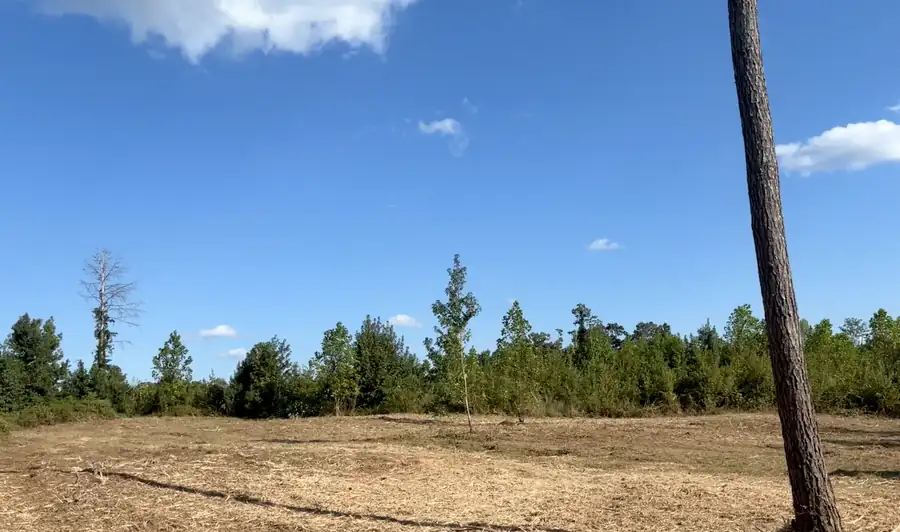
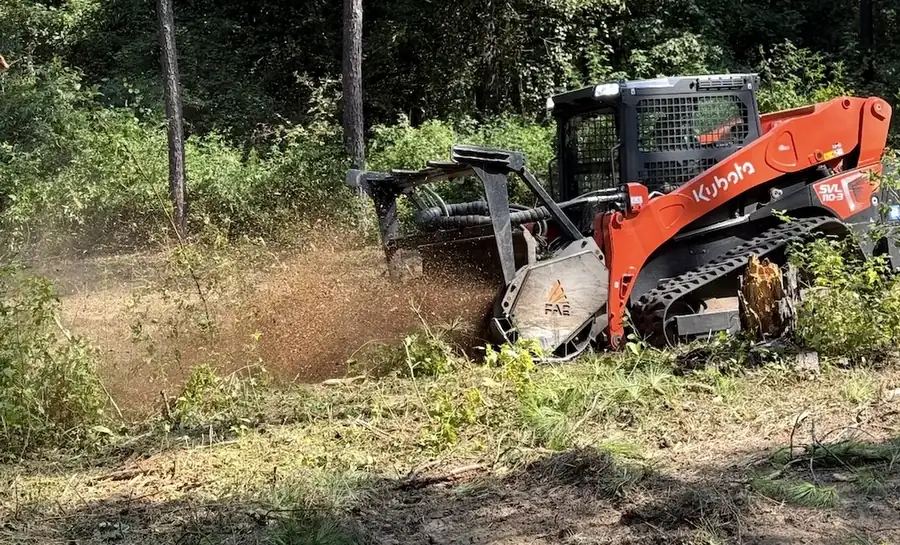
A floor of chips over dirt that was never scraped. The brush, briars and small trees are gone from view, the trees you marked are standing, and you can walk and ride ground you could not see into before. Under the mat, nothing has changed. The roots of everything that was cut are alive and in place, and the stumps are sitting at or just under the surface. So the work after forestry mulching comes down to three choices: what to do with the chips, what to do about the stumps, and how to keep the sprouts from taking the ground back.
Leave the mulch or take it off?
Leave it, in most cases. The mat covers the soil through the next hard rains, holds moisture and shades out some weed seed while it settles. University Extension guidance on wood chip mulch says chips left on the surface draw nitrogen mainly at the thin line where chips meet soil, and warns against working fresh wood into the dirt, where it ties up nitrogen as it rots. So do not disc a thick mat in and then plant. Where a thicket stood and the chips lie deep, rake or blade them thinner, or push them to the edge, on any spot you plan to seed. Everywhere else, time does the work.
Can a forestry mulcher grind stumps?
Partly. A mulching head can take a stump flush with the ground and a little below, which is enough for a trail, a lane, a fence line or a field you will mow. It is not the same as taking the stump out. The root ball stays in the dirt, and on most hardwoods it sprouts. If the ground is going to carry a slab, a pad, a pond or a plow, the stumps have to come out whole with the excavator or the dozer's root rake, and the holes get filled and graded. That is stump removal, and it can be done on the spots that need it while the rest stays mulched.
Seeding after forestry mulching
Grass seed has to touch soil to take. Seed thrown on top of a thick chip mat mostly sits there. Seed where the mat is thin, or thin it first. Alabama Extension's advice for any new stand is to soil test and apply lime and fertilizer to the results, since ground that has been in brush is seldom ready for grass. Its forage planting guide lists annual ryegrass for late August through September in north Alabama and into October in central Alabama, tall fescue for September and October, and seeded bermudagrass from about April to mid July. Your county Extension office can match a grass to your ground and your use.
What grows back, and how soon
Mulching cuts. It does not kill. Sweetgum, privet, briars and kudzu sprout from the roots, and in west Alabama you will usually see green the next growing season. Left alone, light brush takes a few years to matter and a privet or kudzu bottom takes far less. The first year is when the sprouts are small, soft and easy to deal with, so it is the year that counts. Our guide to clearing privet, kudzu and underbrush covers what Extension says about treating regrowth. Land goes back fast here. Put the follow-up on the calendar before the chips have settled.
Upkeep that holds the ground open
There are four tools, and most owners use two of them. Mow it: once the stems are small, a tractor and rotary cutter can keep them small, and our comparison of bush hog vs forestry mulching shows where each one fits. Graze it: cattle and goats on established grass leave brush less room. Mulch it again: a second pass a year or two later is far quicker than the first because the big material is gone. Treat it: for stubborn species, ask your county Extension office about product, rate and timing. Tell us before the first pass if you plan to mow, so stumps are cut low where the tractor will run.
Slopes, draws and wet spots
The chip mat is good erosion cover, and that is one reason mulching suits hillsides, creek banks and lake lots. It still pays to walk the ground after the first few hard rains. Look where water gathers: the bottom of a draw, a trail running straight downhill, the outlet of a ditch. If chips are floating off or a rill is starting, the fix is small while it is new. Keep machines and trucks off soft ground until it firms up, and do not strip the mat off a slope unless something is going back on it right away.
If the plan for the land changes
Mulched ground is not locked in. If part of it later becomes a house site, a shop pad, a driveway or a food plot you will disc, that part gets cleared the other way: stumps pulled, roots raked, holes filled and the dirt graded so water leaves. The earlier mulching is not wasted, because the machines can see and reach what they are working on. If you are still deciding how much to open up, the forestry mulching cost guide explains what moves the price of a first pass and of a follow-up pass.
Common Questions
Should I remove the mulch after forestry mulching or leave it on the ground?
Leave it unless you are planting that spot. The chips protect the soil from washing, hold moisture and shade out some weed seed while they rot down. Where you want grass or a food plot and the mat is deep, thin it or pull it back so seed can reach dirt. Do not disc a heavy layer of fresh chips into the soil ahead of a planting.
How soon can I plant grass seed after forestry mulching?
As soon as seed can reach soil and the season is right for the grass. Thin mulch over old pasture can often be seeded in the next planting window. A deep mat needs thinning first. Soil test before you buy seed, and follow Alabama Extension's planting dates for your part of the state and the grass you choose.
How often does mulched land need to be cut again to stay open?
It depends on what was growing there. As general guidance, ground that is mowed or grazed every year stays open. Ground that is left alone usually needs a second mulching pass in a year or two where privet, sweetgum or kudzu was thick, and later than that on lighter brush. The second pass is much faster than the first.
What to Do Next
Walk the ground a few weeks after the machine leaves and note where you want grass, where you will mow and where stumps have to come out. Then call or text (205) 535-6376 and tell us the plan. If your project needs more than what is described here, ask us about it.
See our forestry mulching page or call or text (205) 535-6376.