Stump removal pulls the whole stump and its root ball out of the ground and leaves a hole to fill, while stump grinding chews the stump down to below the surface and leaves the roots in the ground to rot. Choose removal when something will be built, dug or plowed on that spot, and grinding when you only need a stump out of sight and out of the mower's way.
What stump removal is
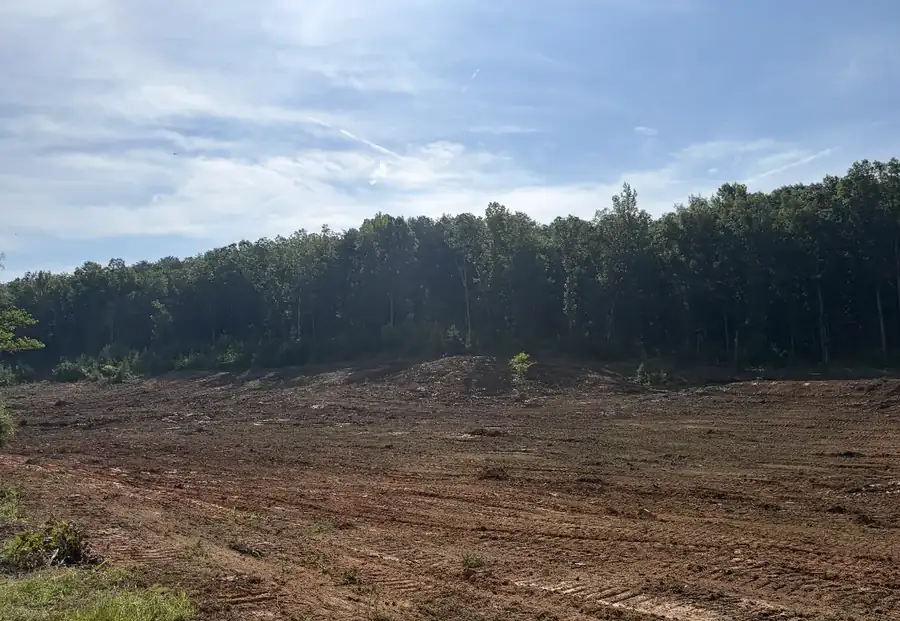
Removal means the stump comes out, root ball and all. An excavator digs around it, breaks the main roots and lifts the whole thing free. On a clearing job a dozer with a root rake combs smaller stumps and roots out of the dirt in passes. What is left is a hole and loose ground, so removal is only finished when the hole is filled, packed and graded. The stump itself has to go somewhere too: hauled off, burned with the clearing debris where that is allowed, or buried on site where there is a sensible place and the rules allow it.
What stump grinding is
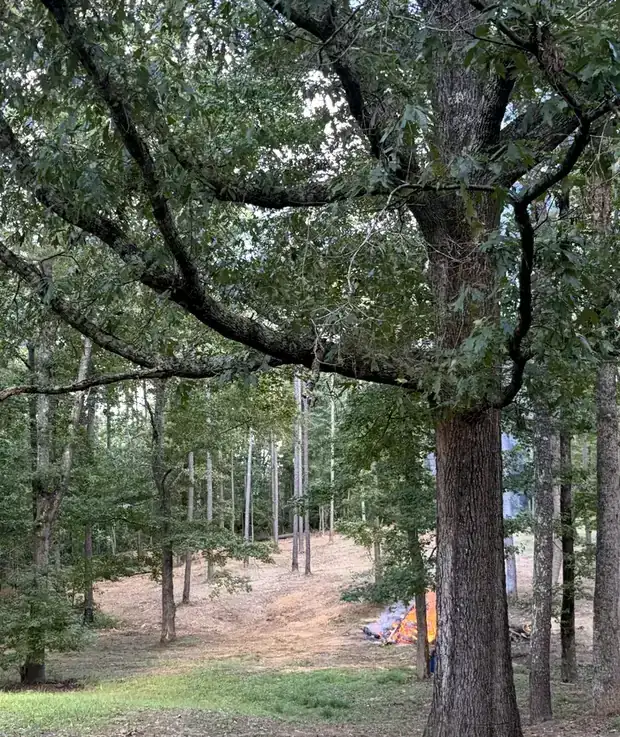
Grinding leaves the stump where it is and takes it apart from the top. A stump grinder is a machine with a spinning cutting wheel that is swept back and forth across the stump, turning it into chips a little at a time until it is some inches below the surface. The main roots and the root ball below that depth stay in the ground and rot over the years. What is left is a shallow bowl of wood chips mixed with dirt, which settles as it breaks down. It is a neat method for a single stump in a finished yard.
When removal is the right call
Any time the ground has work ahead of it. A house pad, a shop slab, a footing, a driveway bed, a pond or a septic field cannot sit on top of buried wood, because wood rots and the ground above it settles. A field that will be disced or plowed needs the stumps gone, or the implement finds them. Fence lines, culverts and water lines go in easier too. If you are clearing to build, removal is not the upgrade. It is the job. See our stump removal page for how we do it.
When grinding is the right call
When the only goal is a surface you can mow, walk or plant grass over. A stump in the middle of a lawn, beside a sidewalk or close against a house is a good case for grinding, because digging a root ball out there would tear up the yard and whatever is buried near it. Grinding disturbs a small circle. It also suits places where there is no room to swing an excavator. The trade is that the roots stay, some species sprout from them, and the spot may sink a little as the wood below rots.
What each one leaves you with
After removal you have clean dirt: no wood below, nothing to rot, and ground that can be built on once it is packed. You also have a bigger disturbed area, which is why the fill and the grading matter. After grinding you have a tidy patch of chips and almost no disturbance, with the root system still below. Neither is the better method in general. One gives you ground you can build on. The other gives you a lawn you can mow next week. The plan for the spot picks the method.
How we handle stumps
We pull them. The stump and root ball come out whole with the excavator, or are raked out with the dozer's root rake on a clearing job, and the hole is filled, packed and pulled back level so it is not a trip hazard or a place water stands. Where a stump only needs to be flush, our mulching head can take it down to the ground and a little below while it is mulching the brush around it. Not sure which your stumps call for? Call or text and ask. Stump work is part of our excavating and land clearing jobs.
Before any stump comes out
Roots and buried lines share the same ground. Alabama 811 has to be contacted before any digging, on private land too, and its website gives a minimum of 2 to 10 working days of notice, not counting the day you ask. A locate does not mark private lines such as a water line you ran yourself, the wire to a shop or the field lines off a septic tank, so tell your contractor where those are. Say how old the tree was and how close the stump is to a building, a drive or a fence. Those three things decide how the stump comes out.
Common Questions
Is it better to grind a stump or pull it out before building?
Pull it. Anything that carries a load, such as a slab, a footing, a pad or a driveway, needs the wood out from under it, because buried stumps and roots rot and the ground settles over them. Grinding is for places where nothing will be built and you only need the surface clear.
What happens to the roots after a stump is ground down?
They stay in the ground and rot over time. That is fine under a lawn or a flower bed. The spot can settle as the wood breaks down, and some species send up sprouts from the roots for a season or two. If the roots need to be gone, the stump has to be pulled.
How big a hole does pulling a stump leave?
It depends on the tree. A pine with a tap root leaves a deep, narrow hole and a big oak can lift a wide plate of roots and dirt. Either way the hole is filled, packed and graded as part of the job, so you are left with level ground and not a soft spot.
What to Do Next
Tell us how many stumps, about how big, and what is going on that ground next. Call or text (205) 535-6376 and we will look at it and give you a free estimate priced off the property.
See our stump removal page or call or text (205) 535-6376.